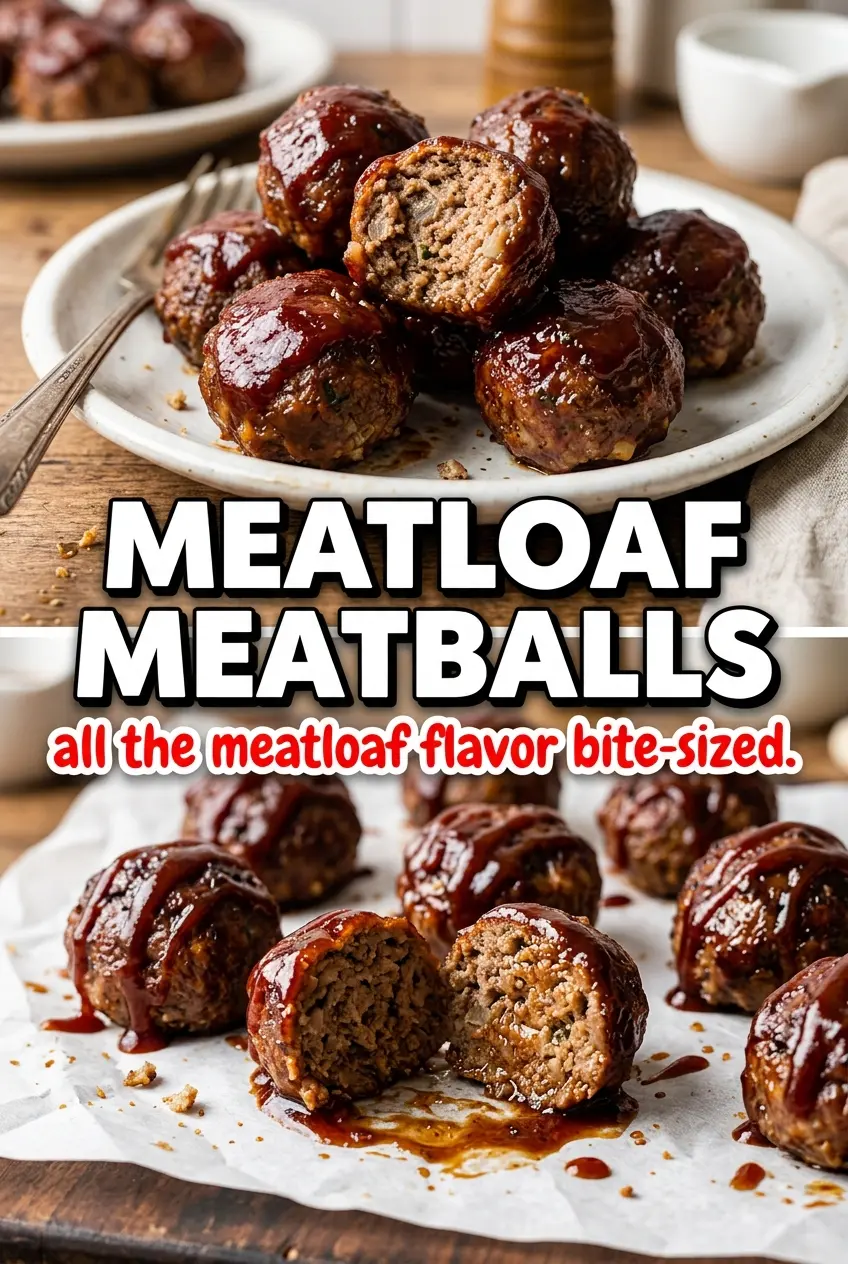
Meatloaf meatballs hit that sweet spot between cozy and practical: all the familiar savoriness of classic meatloaf, but in a form that cooks faster, stays juicy, and gets more caramelized glaze in every bite. The edges brown up in the oven while the ketchup topping turns sticky and glossy, so you end up with meatballs that taste like the best part of a meatloaf slice without waiting an hour for a loaf pan to do its thing.
The key is treating the mixture like meatloaf, not like a tender restaurant meatball. A little milk, breadcrumbs, and grated onion keep the texture soft, while Worcestershire and garlic powder build that old-school diner flavor that makes these taste familiar in the best way. The glaze goes on before baking, so it bakes into the surface instead of sliding off at the end.
Below you’ll find the simple trick that keeps them from turning dense, plus a few smart swaps if you want to use ground turkey, make them gluten-free, or get them on the table with mashed potatoes and a little extra glaze.
The glaze caramelized right on top and the meatballs stayed tender all the way through. I served them over mashed potatoes and my husband asked if we could put this on regular rotation.
Save these ketchup-glazed meatloaf meatballs for the nights when you want classic meatloaf flavor without the loaf pan or the long bake time.
The Reason These Stay Tender Instead of Turning Dense
Meatloaf-style meatballs can go from juicy to compact fast if you treat them like something you need to knead. The mix should come together just until everything looks evenly combined, with no dry breadcrumbs left behind and no streaks of egg. Once the meat starts feeling sticky and pasty, you’ve gone too far and the finished texture will be tight instead of soft.
The grated onion pulls double duty here. It adds moisture without leaving chunky bits that can break the shape, and the liquid from the onion helps the breadcrumbs do their job. That tiny amount of milk matters for the same reason: it keeps the mixture supple, especially since these bake uncovered and need enough internal moisture to stay tender under the glaze.
- Ground beef — An 80/20 blend gives you enough fat for flavor and juiciness. Lean beef works, but the meatballs will taste drier and the glaze won’t have quite the same contrast against the rich interior.
- Breadcrumbs and milk — This is the panade that keeps the texture soft. If you need a gluten-free version, use gluten-free breadcrumbs or crushed gluten-free crackers in the same amount.
- Worcestershire sauce — This is where the classic meatloaf taste comes from. There isn’t a perfect substitute, but soy sauce plus a splash of vinegar can cover the salty-savory note if that’s what you have.
- Grated onion — Finely grated onion disappears into the mix and seasons it from the inside. Chopped onion won’t break down the same way, so the meatballs can feel chunkier and more fragile.
Building the Glaze So It Bakes In, Not Slides Off
Mix the meat just enough
Combine the beef, breadcrumbs, eggs, milk, onion, garlic, Worcestershire, and seasonings in a large bowl, then stop as soon as the mixture looks uniform. Use your hands, but don’t squeeze the mixture into a paste. If you pack it too tightly, the meatballs will bake up dense and the glaze won’t have that soft, juicy bite underneath.
Shape for even browning
Roll the mixture into golf ball-sized portions and keep them all close to the same size so they finish at the same time. A 1.5-inch meatball gives you a good ratio of glazed top to tender center. If the mixture sticks to your hands, lightly dampen them instead of adding more breadcrumbs, which can dry the meat out.
Brush on the glaze before baking
Stir the ketchup, brown sugar, and mustard together until smooth, then brush it generously over each meatball. That first coat caramelizes in the oven and gives you those browned, sticky tops that make these taste like meatloaf with better edges. If you wait to glaze them after baking, you’ll miss the lacquered surface that makes this recipe special.
Bake until the glaze darkens at the edges
Put the tray in a 400°F oven and bake until the meatballs are cooked through and the glaze looks set, glossy, and a little darkened around the edges. For me, that’s usually 18 to 22 minutes, depending on size. If your oven runs hot, start checking at 18 minutes so the sugar in the glaze doesn’t burn before the center is done.
Use ground turkey for a lighter version
Ground turkey works well, but it needs the moisture from the grated onion and milk even more than beef does. Use dark meat turkey if you can, and expect a milder flavor that depends more on the glaze and Worcestershire for depth.
Make them gluten-free without changing the texture too much
Swap in gluten-free breadcrumbs or crushed gluten-free crackers in the same amount. The mixture should still hold together easily; if it feels looser than expected, let it sit for 5 minutes before shaping so the crumbs can absorb the liquid.
Turn them into a make-ahead dinner
Shape the meatballs a few hours ahead and keep them covered in the refrigerator until you’re ready to glaze and bake. This saves time at dinner and actually helps them hold their shape a little better because the mixture firms up before it hits the oven.
Storage and Reheating
- Refrigerator: Store in an airtight container for up to 4 days. The glaze softens a little, but the flavor gets even better the next day.
- Freezer: These freeze well after baking. Let them cool, freeze on a tray until solid, then transfer to a bag or container for up to 3 months.
- Reheating: Warm covered in a 325°F oven until hot, or reheat gently in the microwave with a splash of water to keep the glaze from tightening up. High heat will dry out the meat before the center gets warm.
Questions I Get Asked About This Recipe
Meatloaf Meatballs
Ingredients
Equipment
Method
- Preheat the oven to 400°F and line a sheet pan with parchment (a shiny pan helps the bottoms brown evenly).
- Combine ground beef, breadcrumbs, eggs, milk, grated onion, minced garlic, Worcestershire sauce, garlic powder, onion powder, salt, and pepper just until mixed—stop as soon as no dry spots remain to avoid tough meatballs.
- Roll the mixture into golf ball-sized balls (about 1.5 inches) and place on the prepared sheet pan with space between each one.
- Mix ketchup, brown sugar, and mustard, then brush generously over each meatball until the tops are well coated (use extra glaze in the brush strokes so it pools slightly).
- Bake for 18–22 minutes at 400°F until the meatballs are cooked through and the glaze is caramelized with browned edges, watching for a glossy, sticky surface.
- Serve hot with extra glaze or spoon them over mashed potatoes, letting the browned glaze cling to the meatballs before serving.