Meatloaf brasciole lands in that sweet spot between Sunday sauce comfort and a sliceable, showy main dish. The outside browns first, then the roll braises until the beef turns tender and the filling melts into the sauce. When you cut into it, you get neat spirals of prosciutto, parmesan, and egg instead of the loose, crumbly texture that can happen with stuffed meatloaf.
The trick is treating it like a rolled roast instead of a mound of meat. A sturdy mixture with just enough breadcrumb to hold together, a tight roll, and a proper sear all matter here. The braise finishes the job slowly in marinara and red wine, which keeps the loaf from drying out and gives the sauce a deeper, richer edge.
Below, I’m walking through the part that matters most: how to roll it without tearing, how to keep the filling centered, and what to look for so you slice into clean layers instead of a mess on the cutting board.
The roll held together beautifully and the sauce picked up all the browned bits from searing. Slicing it after the rest made a huge difference — the filling stayed put and every piece looked like a cross-section from a restaurant.
Save this meatloaf brasciole for a braised dinner with a tight spiral, prosciutto filling, and rich Sunday-style marinara.
The Roll-Up That Keeps the Filling Where It Belongs
Stuffed meatloaf falls apart most often when the meat mixture is too loose or the roll gets handled too much. The base needs enough binder to hold a clean shape, but not so much that it turns bready. Here, the eggs and breadcrumbs work together to make a mixture that can be pressed thin, rolled tightly, and still stay tender after a long braise.
The other place people get into trouble is the seam. If the log isn’t rolled with a little tension, the eggs and prosciutto push outward during cooking and the whole thing opens up in the pot. Tuck the sides in as you roll, then let the seam sit down in the pan when you sear it. That gives the loaf a chance to set before it ever sees the sauce.
- Ground beef or beef-pork mix — Beef brings the classic meatloaf flavor, while a little pork adds softness and keeps the texture from getting dense after braising. If you use all beef, choose something with some fat so the finished roll stays juicy.
- Breadcrumbs and eggs — These are the structure here. Too little and the roll can crack; too much and the slice becomes heavy. The mixture should feel cohesive and a little tacky, not wet.
- Prosciutto — This gives the filling its salty edge and keeps the center from tasting flat against the marinara. Thin slices work best because they lay down evenly and don’t force the roll open.
- Hard-boiled eggs — They’re traditional for this style and give each slice that unmistakable brasciole look. Slice them in half lengthwise if they’re large and arrange them in a row so the roll stays even.
- Marinara and red wine — A good jarred marinara is fine here because the long braise deepens it. The wine adds body and a little sharpness; if you skip it, add a splash of water or broth so the sauce still has enough liquid to braise properly.
What Each Ingredient Is Actually Doing in This Meatloaf
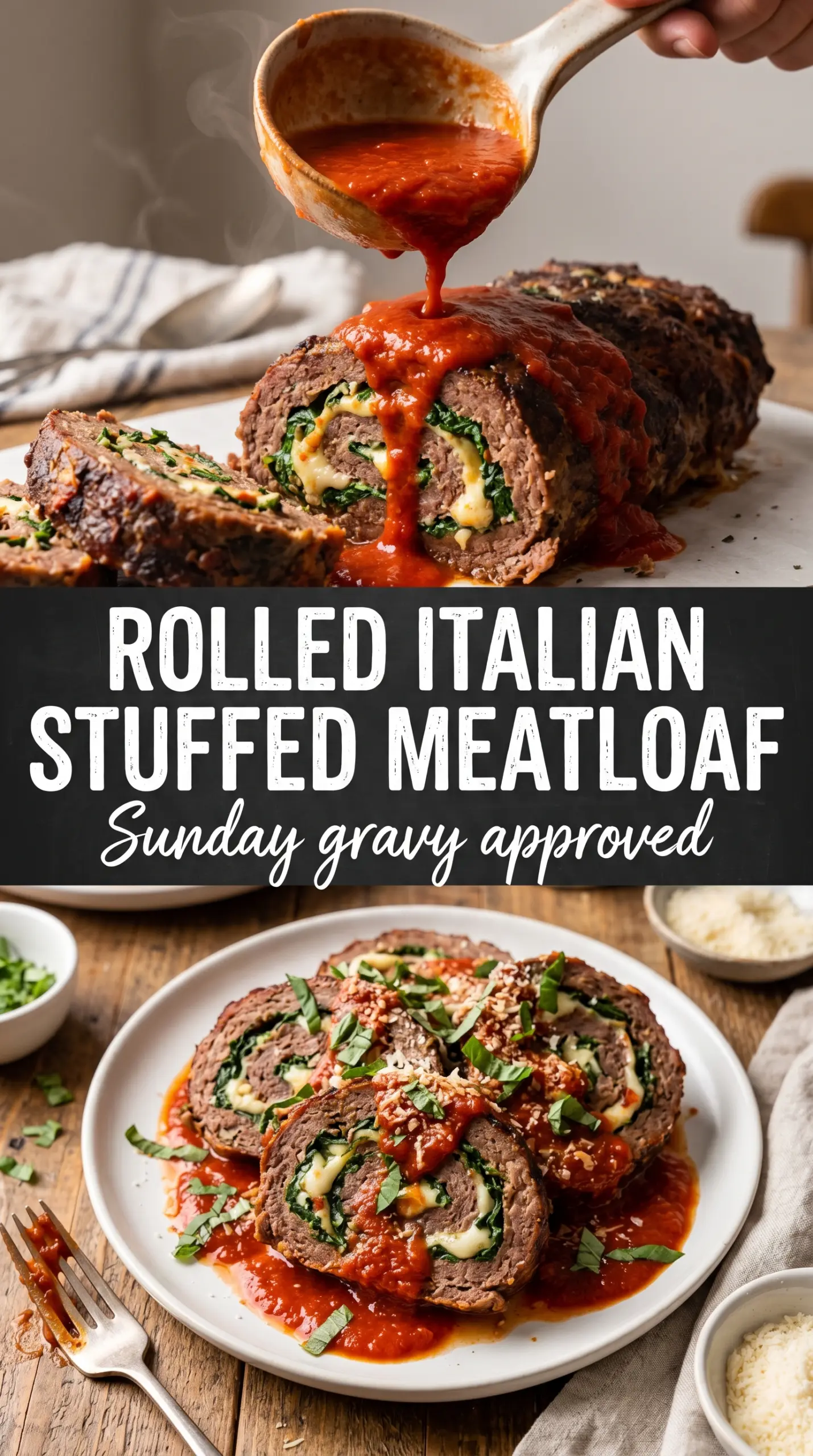
- Ground beef (the protein foundation) — Use 80/20 so the meatloaf stays moist. Leaner beef dries out easily during baking.
- Breadcrumbs (the binder and structure) — These hold everything together and keep the meatloaf from being dense. Soak them in milk first for better moisture.
- Egg (the binding agent) — This holds the meatloaf together during baking. Beat it lightly before mixing so it distributes evenly.
- Onion and garlic (the aromatics) — Mince finely so they distribute throughout. Raw onion softens as it bakes and becomes part of the texture.
- Seasonings (salt, pepper, Worcestershire, mustard) — Don’t underseason. The meatloaf itself carries all the flavor, so season boldly at the beginning.
- Milk (the moisture keeper) — This keeps the meatloaf tender instead of dense and dry. Soak the breadcrumbs in it first for best results.
- Glaze or sauce (ketchup-based or gravy) — This adds sweetness, moisture, and flavor to the outside. Apply halfway through baking for best adhesion.
- Resting after baking (5-10 minutes) — This lets the meatloaf set so it slices cleanly. Cutting too soon makes it fall apart on the serving plate.
How to Braise the Roll Without Breaking the Slices
Mixing the Meat Base
Work the beef, breadcrumbs, eggs, parmesan, garlic, parsley, salt, and pepper together just until combined. If you mix it like sausage, the texture gets tight and springy instead of tender. The bowl should hold together when you press a handful, and that’s your cue to stop. Overmixing is the fastest way to get a firm, rubbery slice after the braise.
Shaping and Filling the Log
Press the mixture into a rectangle on parchment so the thickness is even from end to end. Lay the prosciutto across the surface, then the shaved parmesan and parsley, and keep the eggs in a straight line rather than scattered around. That line of eggs helps the roll stay centered and slice neatly later. Roll from the long side with steady pressure, then pinch the seam closed and tie it snugly with twine.
Searing for a Deep Brown Crust
Brown the roll on all sides in a Dutch oven over medium-high heat. Don’t rush this part; you want a real crust, not a pale gray exterior. If the pan is too crowded or the heat is too low, the roll steams and won’t give the sauce enough fond to build on. Turn it gently with tongs so the seam stays intact and the shape stays round.
Finishing in the Sauce
Pour in the marinara, wine, and garlic, then cover and braise at 325°F until the meat is very tender. The sauce should simmer lazily around the sides, not boil hard enough to jostle the roll apart. After 75 to 80 minutes, the center should feel firm but not stiff when pressed, and the sauce will look darker and a little glossy from the meat drippings. Let it rest before slicing or the filling will slide out.
What to Change When You Want a Different Version
Make It a Little Lighter With Leaner Meat
You can use leaner ground beef, but don’t go too far or the roll can dry out in the braise. If your beef is especially lean, use the beef-pork mix or add a spoonful of olive oil to the meat mixture so the slices stay tender.
Gluten-Free Version
Swap in gluten-free breadcrumbs in the same amount. The roll will still hold together, but the texture may be a touch softer, so handle it gently when turning it in the pot.
Skip the Wine If You Need To
Replace the red wine with beef broth or water plus a splash of vinegar. You’ll lose a little depth, but the braise still works because the sauce needs moisture and acidity more than it needs alcohol.
Change the Filling Without Changing the Method
If you don’t want eggs in the center, use roasted peppers or spinach squeezed dry. You’ll still get the rolled brasciole look, but the slices will be softer and a little less classic.
Storage and Reheating
- Refrigerator: Store sliced meatloaf brasciole in its sauce for up to 4 days. The flavor deepens overnight, and the slices hold together better after chilling.
- Freezer: It freezes well. Wrap portions tightly with sauce in an airtight container for up to 2 months, then thaw in the fridge before reheating.
- Reheating: Warm it gently on the stove over low heat or in a covered dish in the oven at 325°F until hot through. High heat dries out the edges and can make the filling slide apart.
Answers to the Questions Worth Asking
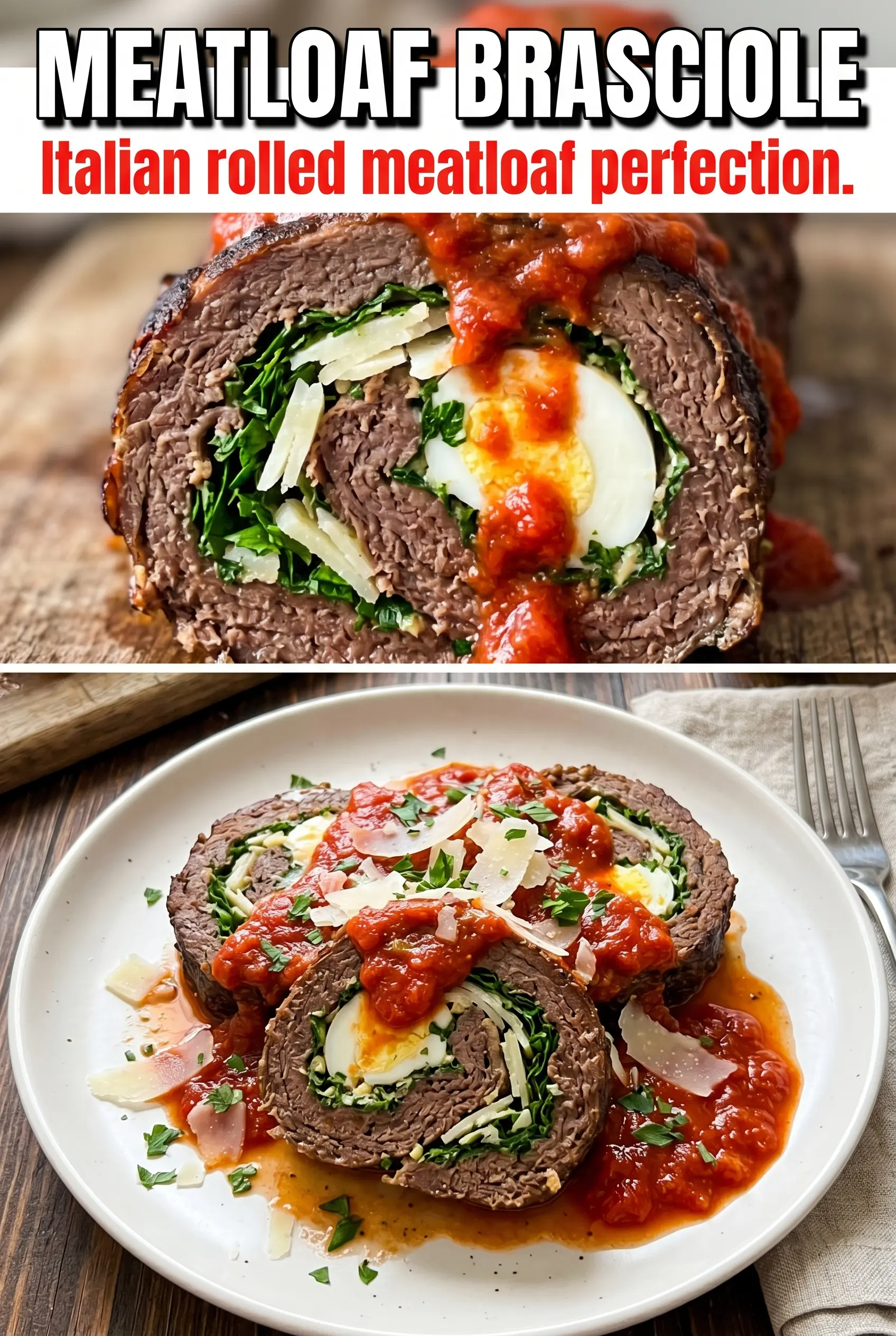
Meatloaf Brasciole
Ingredients
Equipment
Method
- In a large bowl, mix the ground beef with breadcrumbs, eggs, grated parmesan, minced garlic, chopped parsley, salt, and pepper until evenly combined.
- Press the meat mixture into a 10x14 inch rectangle on parchment, keeping the thickness even so it rolls without gaps.
- Layer the prosciutto, shaved parmesan, and chopped parsley over the surface, then place the hard-boiled eggs in a row.
- Roll the meat tightly into a log, then tie with kitchen twine so the filling stays centered.
- Heat a Dutch oven over medium-high heat, then sear the roll on all sides until browned, about 8–12 minutes total, so the outside sets.
- Mix the marinara sauce, red wine, and minced garlic, then pour it over the roll.
- Cover and braise at 325°F for 75–80 minutes until deeply tender, turning the roll once if needed for even cooking.
- Rest the meatloaf brasciole for 15 minutes to let the juices redistribute, keeping the spiral slice intact.
- Remove the twine, slice, and serve with the braising sauce.