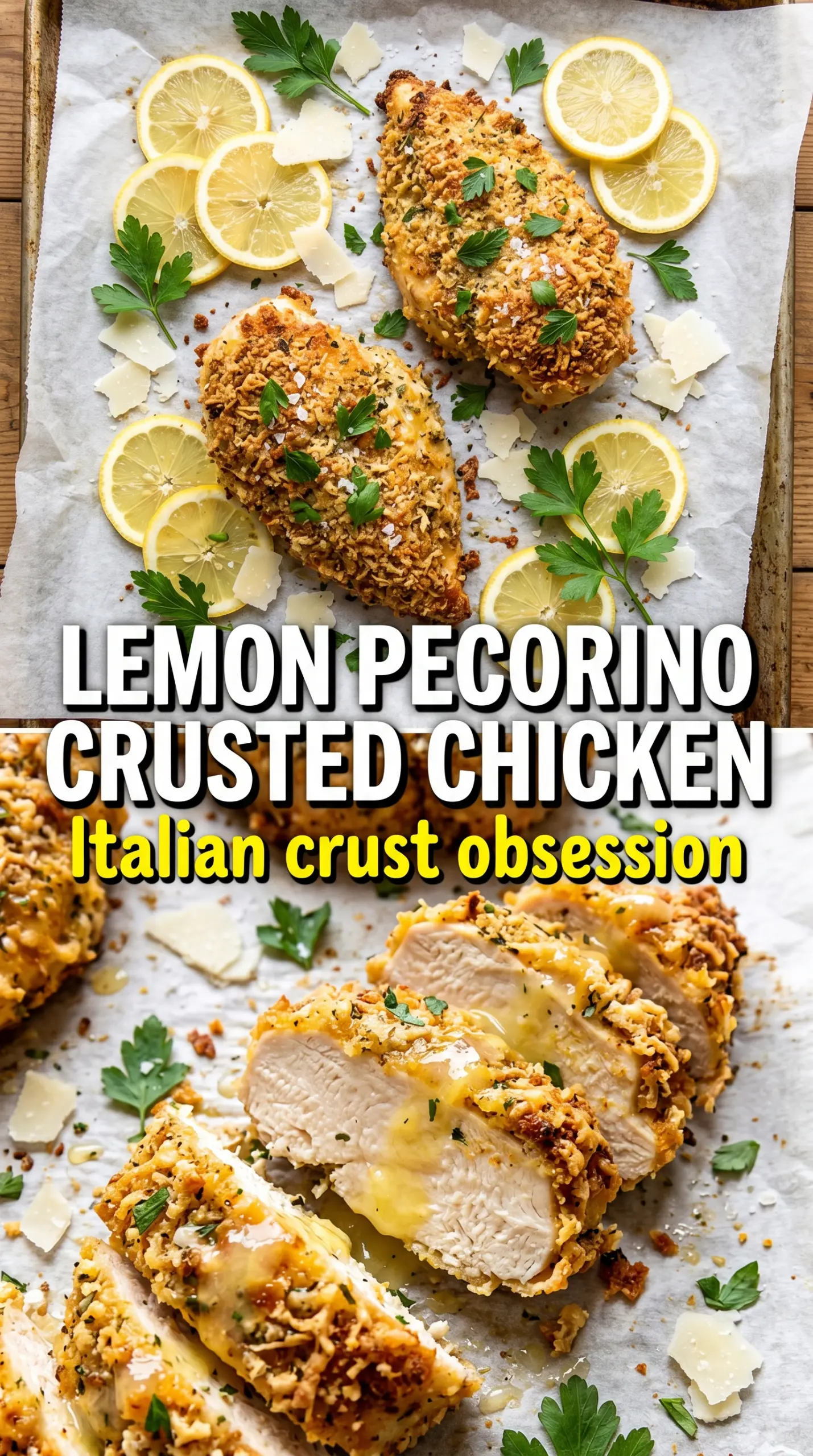
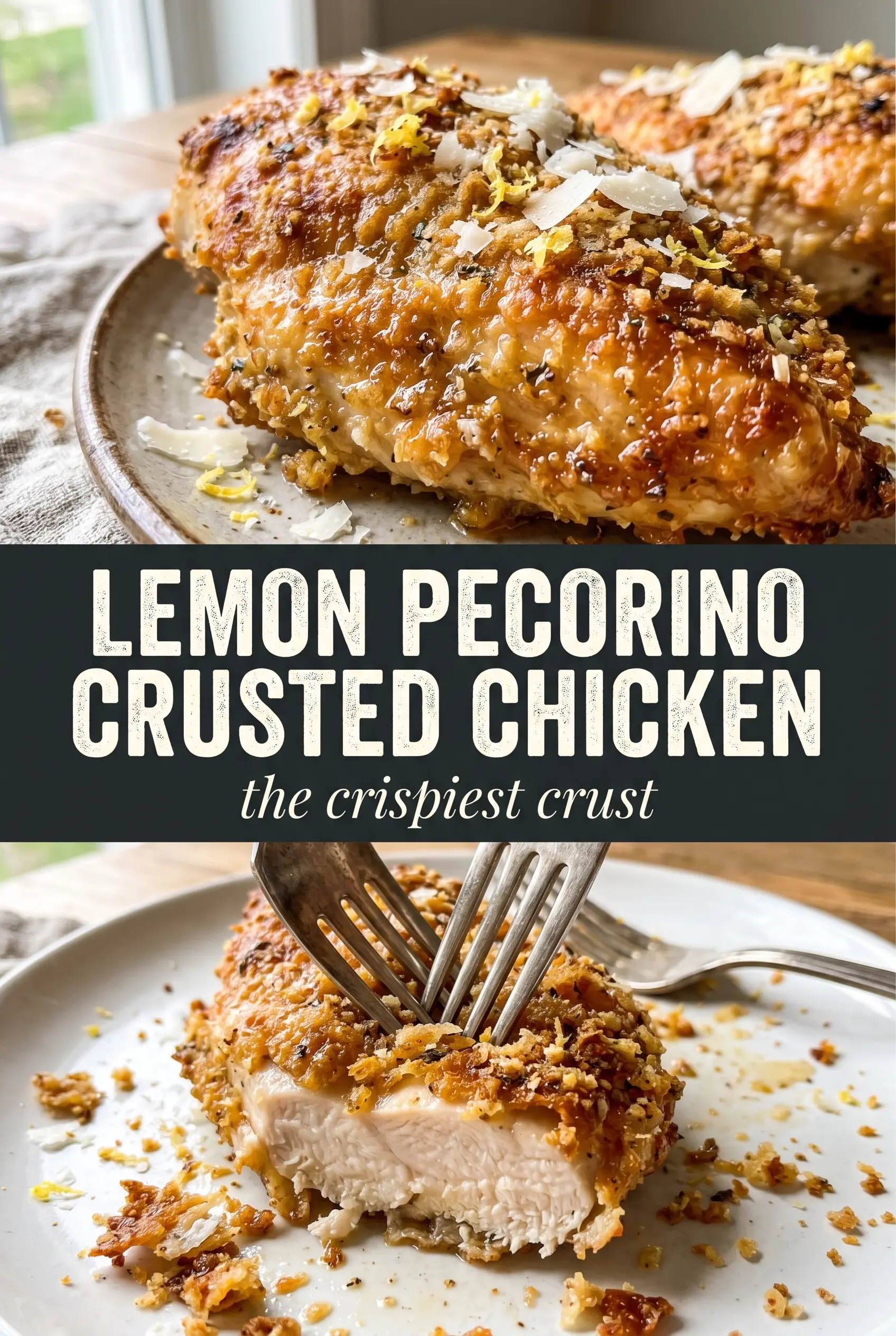
Golden, crackly chicken with a sharp Pecorino crust is the kind of dinner that looks far more complicated than it is. The cheese browns into a thin, fragrant shell that shatters at the first cut, while the lemon zest keeps the crust bright instead of heavy. It’s the sort of baked chicken that gets eaten fast, with everyone reaching for the corner pieces where the cheese caramelizes the most.
What makes this version work is the mustard brush and the rack-lined baking sheet. Dijon gives the coating something to cling to without turning the chicken wet, and the wire rack lets hot air circulate underneath so the bottom stays crisp instead of steaming. Pecorino Romano brings salt and intensity, so you don’t need a thick coating or a heavy sauce to make it taste finished.
Below, I’ve included the small details that keep the crust attached, the oven heat that gives you color without drying out the chicken, and a few smart swaps if you need to adjust for what’s in your kitchen.
The crust turned out shatter-crisp and stayed on the chicken instead of sliding off, and the lemon zest kept the Pecorino from tasting too salty. I baked it on a rack like you said and the bottoms were just as good as the tops.
Save this Lemon Pecorino Crusted Chicken for the nights when you want a crisp baked crust, bright lemon, and almost no cleanup.
The Rack Is What Keeps the Crust Crisp
The biggest mistake with crusted chicken is putting it straight onto a pan. The bottom steams against the hot metal, and all that careful coating turns soft before dinner hits the table. A wire rack fixes that by letting heat reach every side of the chicken at once, which is how you get a crust that stays crisp instead of going leathery on the underside.
Temperature matters here too. At 425°F, the coating has enough heat to brown before the chicken dries out. If the oven runs cool, the crust can bake pale and chalky; if it runs too hot, the cheese can darken before the chicken reaches 165°F. Pounded chicken breasts help keep the timing even, so the coating finishes at the same time the meat does.
What the Pecorino, Dijon, and Lemon Zest Are Each Doing
- Pecorino Romano — This is the backbone of the crust. It’s saltier and sharper than Parmesan, which is why the topping tastes bold even in a thin layer. Finely grate it so it melts and browns evenly; coarse shreds tend to fall off before they crisp.
- Panko breadcrumbs — Panko gives the crust lift and crunch. Regular fine breadcrumbs make the coating denser and more likely to bake into a tight layer, while panko keeps things lighter and more crackly. If you need gluten-free, use a gluten-free panko-style crumb so the texture stays close.
- Dijon mustard — This is the glue. It adds tang, but its main job is helping the cheese mixture stick to the chicken without needing egg wash or flour. Yellow mustard will work in a pinch, but it tastes harsher and less layered.
- Lemon zest — Fresh zest changes the whole dish. It cuts through the saltiness of the cheese and keeps the crust from tasting flat or heavy. Don’t use bottled lemon juice here; juice adds moisture, while zest gives you aroma and brightness without softening the coating.
- Pounded chicken breasts — Even thickness is what keeps this recipe from having dry edges and undercooked centers. If the breasts are thick on one end and thin on the other, the crust overbakes before the thick part is done. Pound them to a steady thickness and the timing becomes much more predictable.
Press the Crust On, Then Leave It Alone
Seasoning and the Dijon Base
Start by seasoning the chicken with salt, pepper, and garlic powder, then brush on the Dijon mixed with olive oil. The surface should look lightly glossy, not drenched. That thin layer is enough to anchor the crust; if it’s too thick, the coating can slide during baking and leave bare patches. Brush both sides so the flavor reaches more than just the top.
Building the Pecorino Coating
Mix the Pecorino, panko, lemon zest, parsley, garlic powder, and black pepper in a bowl, then press it on firmly with your fingertips. Don’t pat it gently like you’re dusting on crumbs. You want the topping to compact a little so it adheres, especially around the edges where chicken tends to shed coating first. The mixture should look sandy and clumpy, not wet.
Baking Until the Cheese Turns Deep Gold
Set the chicken on the rack and bake until the crust is golden and the thickest part reaches 165°F. The cheese should smell nutty before it goes fully brown, and the edges may look a little darker than the center. That’s fine. Pulling it at the right internal temperature matters more than waiting for every speck of cheese to brown, because chicken breasts dry out fast once they go past done.
The Short Rest That Keeps It Juicy
Give the chicken three minutes before serving. That brief rest lets the juices settle and helps the crust stay intact when you cut into it. If you slice immediately, some steam escapes under the coating and softens the bottom. Finish with basil and lemon wedges so each plate gets one fresh, sharp note at the end.
How to Adapt the Crust Without Losing the Crunch
Gluten-Free Crunch With the Same Shape
Swap the panko for a gluten-free panko-style breadcrumb. The crust still bakes up light and crisp, but some brands brown faster, so watch the color near the end of baking. Avoid almond flour here; it can taste heavy and won’t give the same shattery finish.
No Pork-Free Issue, Just Dairy-Free Isn’t a Great Match
This recipe depends on Pecorino for its sharp, salty crust, so a true dairy-free swap changes the dish more than most people expect. If you need to avoid dairy, use a well-seasoned breadcrumb coating with extra lemon zest and a little nutritional yeast for savoriness, but know the crust will be lighter and less deeply browned.
Chicken Thighs for a Juicier, Richer Result
Boneless, skinless thighs work if you prefer darker meat. They stay juicy longer and handle a little extra browning, though they won’t slice as neatly as breasts. Keep the pieces even in size and expect the bake time to run a few minutes longer depending on thickness.
Make-Ahead for Faster Weeknight Baking
You can season the chicken and mix the dry crust topping a few hours ahead, but wait to press the coating on until just before baking. If the crust sits on the mustard too long, the panko softens and you lose the crisp edge. That last-minute press gives the best texture.
Storage and Reheating
- Refrigerator: Store leftovers in an airtight container for up to 3 days. The crust softens a bit in the fridge, which is normal.
- Freezer: Freeze cooked chicken wrapped well for up to 2 months. The coating won’t stay as crisp after thawing, but it still reheats well for a quick dinner.
- Reheating: Reheat on a rack in a 375°F oven until hot, about 10 to 12 minutes. The oven brings the coating back to life much better than the microwave, which turns the crust soggy and can toughen the chicken.
Questions I Get Asked About This Recipe
Lemon Pecorino Crusted Chicken
Ingredients
Equipment
Method
- Preheat the oven to 425°F and line a baking sheet with a wire rack so air can circulate under the chicken.
- Season the chicken breasts with salt, pepper, and garlic powder, then mix the Dijon mustard with the olive oil and brush it over both sides of each breast.
- In a bowl, combine the Pecorino Romano, panko, lemon zest, parsley, garlic powder, and black pepper, then press the mixture firmly onto the mustard-coated chicken so it adheres.
- Place the crusted chicken on the prepared rack and bake for 20-22 minutes at 425°F until the crust is golden and the chicken reaches 165°F in the thickest part.
- Rest the baked chicken for 3 minutes to help the juices set, then garnish with fresh basil and serve with lemon wedges.