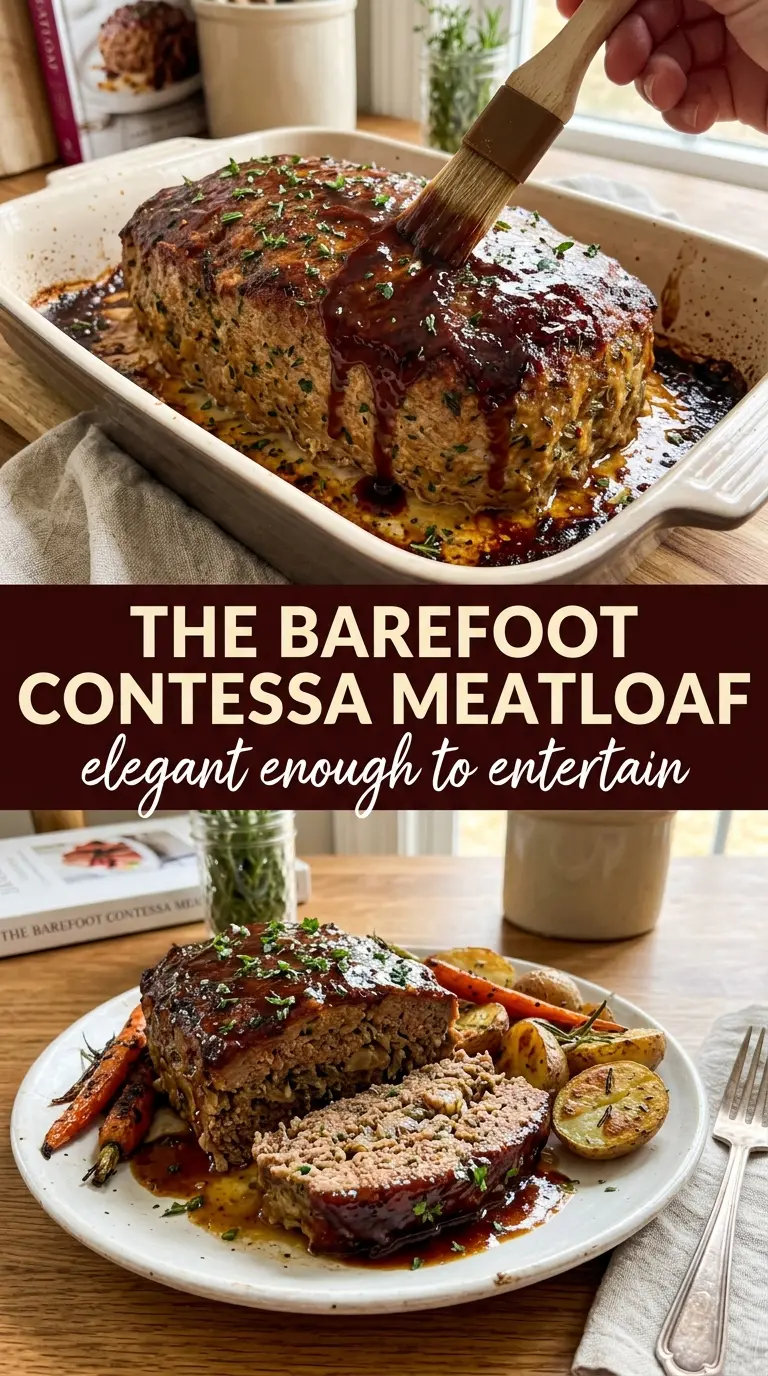
Ina Garten’s meatloaf lands with the kind of old-school comfort that earns a permanent spot in the dinner rotation: a caramelized ketchup glaze on top, a tender, herb-scented middle, and slices that hold together instead of crumbling when you serve them. The free-form shape matters here. It gives you more of that glossy exterior and cooks the center evenly, so you get a meatloaf that tastes as good as it looks on the board.
The other thing that makes this version work is restraint. The onions are cooked down first, which keeps the finished loaf sweet instead of sharp, and the mixture is folded just until combined so the texture stays dense in the best way, not tough. The breadcrumbs and stock also do quiet but important work, keeping the loaf moist without turning it soft or greasy.
Below, I’ll walk through the small choices that matter here: why the loaf is shaped flat, how to tell when the glaze is ready, and what to do if you want to swap the veal or pork without losing the rich, classic finish.
The onions made the loaf taste rich instead of heavy, and the glaze set up into that sticky top I was hoping for. It sliced cleanly after resting, which never happens with my meatloaves.
Save this Ina Garten meatloaf for the nights when you want that caramelized glaze, tender herb-rich crumb, and clean slices without fuss.
The Step Most Meatloaves Skip: Cooking the Onions Until Sweet
The onions are not a background detail here. They bring moisture, sweetness, and a softer texture to the loaf, but only if they’re cooked first. Raw diced onions can stay a little crunchy and release water into the meat as it bakes, which throws off the texture and can make the center feel loose instead of sliceable.
Free-form shaping matters for the same reason. A loaf baked in a pan steams more at the edges and takes longer in the middle, while a flat loaf on a sheet pan develops better browning and cooks evenly from end to end. That means less overcooked perimeter and a better slice all around.
- Caramelized onions — These give the meatloaf its savory-sweet backbone. Cook them until they’re soft, golden, and reduced; pale sautéed onions won’t deliver the same depth.
- Ground veal or pork — Either one adds richness that lean beef alone can’t match. Pork is easier to find and works beautifully; veal gives a slightly finer, more delicate texture.
- Breadcrumbs and stock — Together they hold moisture without making the loaf pasty. Plain dry breadcrumbs are best here because they disappear into the mixture instead of adding seasoning you can’t control.
- Dijon and Worcestershire — These don’t make the loaf taste like mustard or sauce. They sharpen the beef flavor and keep the finished dish from tasting flat.
What Each Ingredient Is Doing Inside the Loaf
- Ground beef — This is the main body of the loaf, and 80/20-style beef gives the best balance of flavor and juiciness. If your beef is much leaner, the loaf can bake up dry unless you add a little extra stock.
- Ground veal or pork — Pork is the most practical swap and keeps the loaf rich. Veal is a little more delicate, while pork adds a slightly fuller, fattier taste.
- Eggs — They bind everything without making the texture rubbery. Two extra-large eggs are enough for structure without turning the loaf heavy.
- Thyme — Fresh thyme gives the meatloaf its herbal note and keeps the flavor from leaning too sweet. Dried thyme works in a pinch, but use less and expect a flatter finish.
- Glaze — Ketchup, brown sugar, and cider vinegar create that sticky, tangy top that browns as it bakes. If you want a sharper glaze, increase the vinegar slightly; if you like it sweeter, keep the ratio as written.
Building the Meatloaf So It Stays Tender and Slices Cleanly
Mix the Base Without Overworking It
Combine the beef, veal or pork, breadcrumbs, eggs, mustard, Worcestershire, stock, thyme, salt, and pepper in a large bowl first. Add the cooled caramelized onions last and fold them in gently with your hands or a fork until the mixture just comes together. If you pack it or knead it like bread dough, the proteins tighten up and the loaf turns dense and bouncy instead of tender.
Shape It Flat on the Sheet Pan
Form the mixture into a broad loaf about 2 to 3 inches high on a parchment-lined baking sheet. A flatter shape gives you more surface area for the glaze and keeps the center from lagging behind the edges. If the loaf is too tall, the outside will overcook before the middle reaches temperature.
Brush on the Glaze Before Baking
Mix the ketchup, brown sugar, and cider vinegar until smooth, then brush it generously over the top and sides. You want a thick, even coating that looks glossy going into the oven. If the glaze is too thin, it can slide off and pool around the loaf instead of forming that lacquered finish on top.
Bake to Temperature, Not Just Time
Roast at 325°F until the center reaches 160°F, which usually takes 60 to 75 minutes depending on the exact shape of your loaf. Start checking early if your loaf is especially flat, because meatloaf can go from perfectly juicy to dry in a narrow window. Let it rest for 15 minutes before slicing so the juices settle and the slices hold together.
How to Change This Meatloaf Without Losing the Classic Feel
Use pork instead of veal
Pork is the easiest swap and keeps the loaf rich and moist. It gives the meatloaf a slightly fuller, fattier flavor than veal, but the texture stays close to the original and the loaf still slices beautifully.
Make it gluten-free
Swap the dry breadcrumbs for a gluten-free plain breadcrumb blend or crushed gluten-free crackers. The goal is the same: a dry binder that holds onto moisture without turning the loaf soft or gummy.
Make it dairy-free without changing the texture
This recipe is already dairy-free as written, so no special adjustment is needed. That’s one reason it’s such a reliable comfort-food dinner: you get richness from the meat, onions, and glaze instead of relying on cream or cheese.
Storage and Reheating
- Refrigerator: Keep leftovers covered for up to 4 days. The loaf firms up as it chills, which actually makes slicing easier the next day.
- Freezer: It freezes well. Wrap slices or the whole cooled loaf tightly and freeze for up to 2 months; thaw in the refrigerator before reheating so the outside doesn’t dry out before the center warms through.
- Reheating: Warm slices covered in a 300°F oven with a spoonful of water or stock in the pan, or heat gently in a skillet over low. High heat dries out the edges fast, especially once the loaf has already been cooked and sliced.
Answers to the Questions Worth Asking
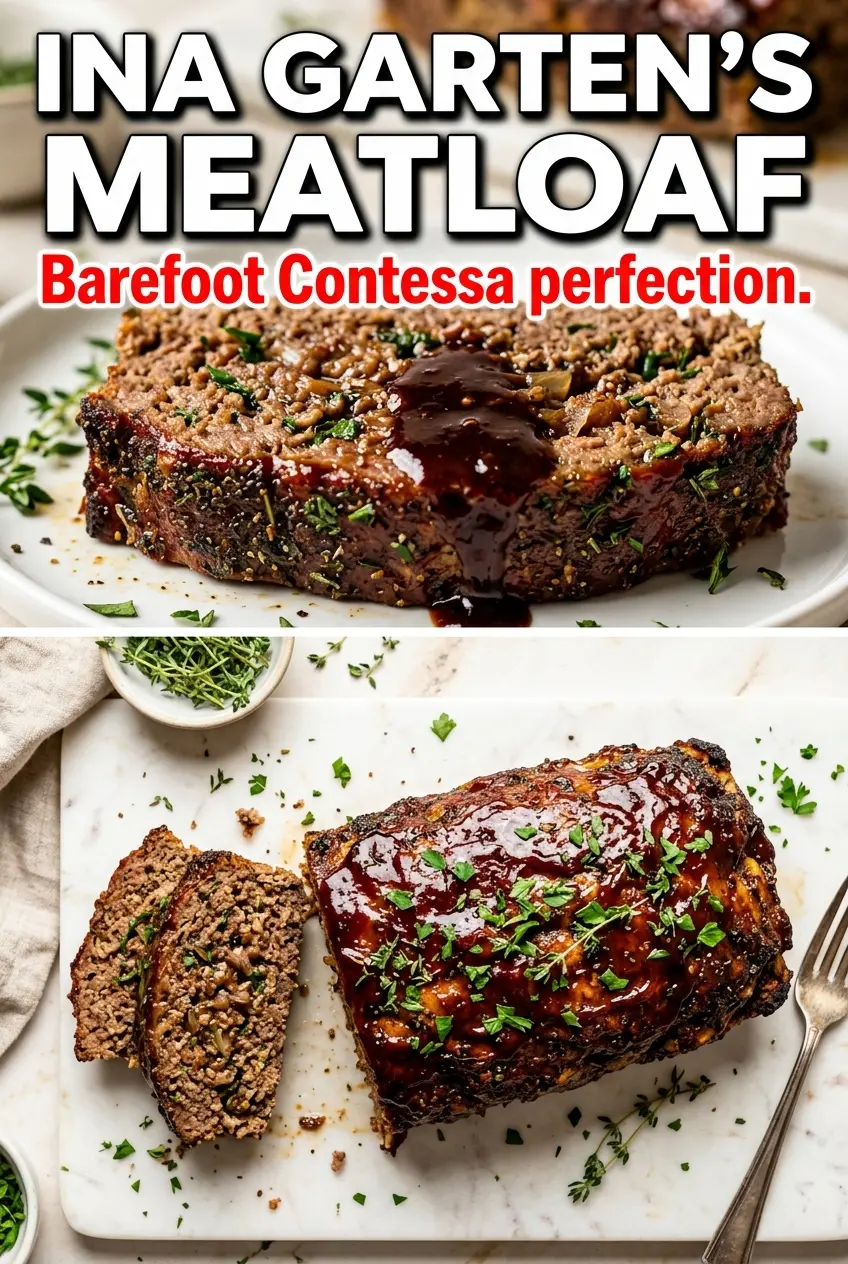
Ina Garten Meatloaf with Caramelized Onion Ketchup Glaze
Ingredients
Equipment
Method
- Preheat the oven to 325°F.
- In a large bowl, combine ground beef, ground veal or pork, breadcrumbs, eggs, Dijon mustard, Worcestershire sauce, chicken stock, thyme, salt, and black pepper.
- Add the caramelized onions and fold together until just mixed.
- Shape the mixture into a flat, free-form loaf on a parchment-lined baking sheet so it cooks more evenly.
- Stir the glaze ingredients together, then brush generously over the top and sides.
- Bake for 60–75 minutes, until the internal temperature reaches 160°F, watching the top turn deep amber and lacquered.
- Rest the meatloaf for 15 minutes before slicing so the juices set and each slice holds together.