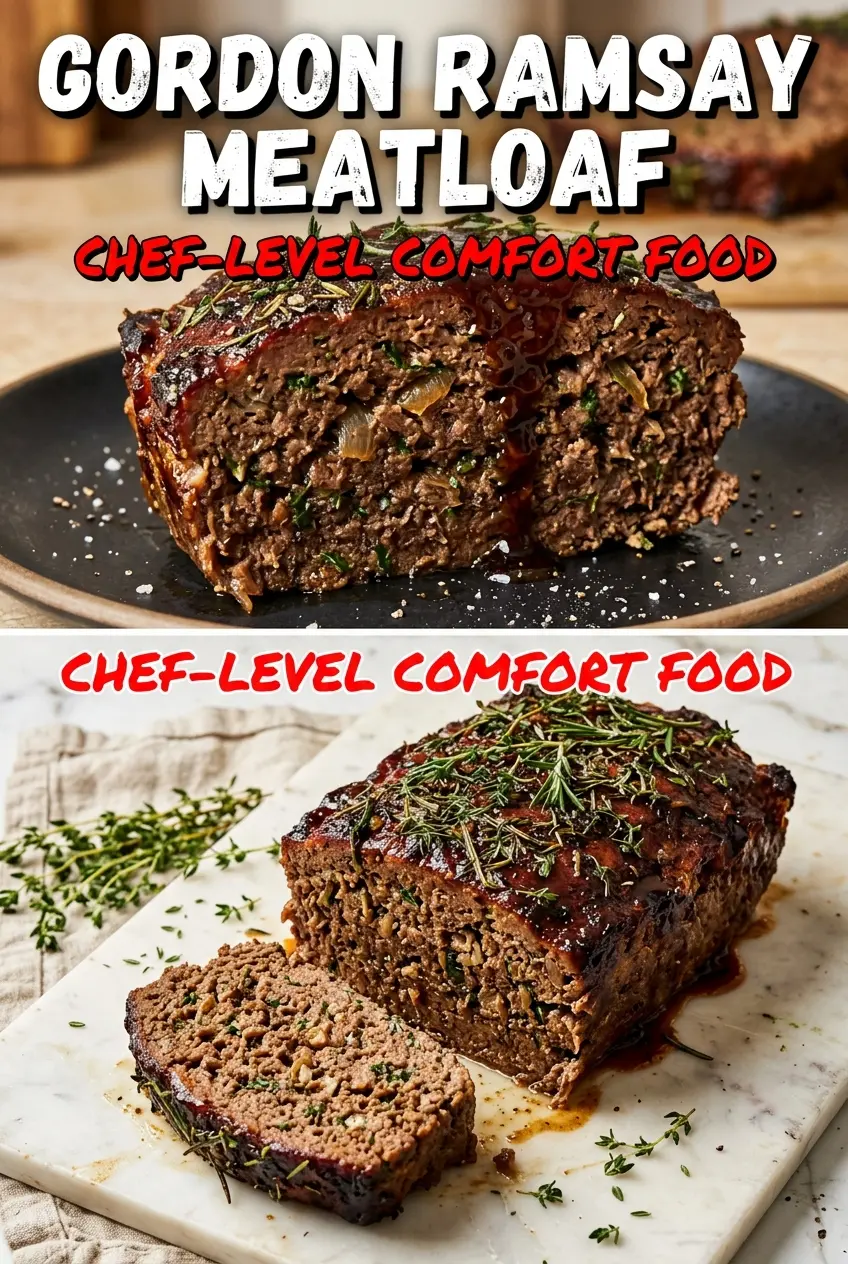
Deep browned edges, a juicy center, and a glossy glaze that sets up into something sticky and savory are what make this meatloaf worth putting on repeat. The free-form shape gives you more caramelized crust than a loaf pan ever will, and searing it before it goes into the oven builds a restaurant-style exterior without drying out the middle.
What makes this version stand out is the balance in the mix. Beef brings the flavor, pork keeps the texture tender, and the sautéed onion goes in soft instead of raw, so the finished loaf slices cleanly without crunch or sharp onion bite. The glaze is simple, but it matters: ketchup for body, balsamic for tang, brown sugar for shine.
Below, I’ve laid out the part that matters most — how to shape, sear, and roast it without cracking the loaf or ending up with a dense slice. There’s also a few practical swaps and storage notes, because meatloaf should be just as good the next day.
The sear gave the outside this deep crust I never get with a loaf pan, and the center stayed moist all the way through. The glaze thickened up beautifully in the oven.
Save this Gordon Ramsay meatloaf for the nights when you want a lacquered glaze, a juicy center, and a proper seared crust.
The Sear Is What Keeps This Meatloaf From Eating Like a Brick
The mistake most people make with meatloaf is treating it like a loaf pan recipe that just happens to be free-form. That leads to a pale exterior and a dense center, because the meat steams before it ever gets a chance to brown. Here, the skillet sear changes the whole dish. It gives you a crust before the oven takes over, which means the outside tastes seasoned and rich instead of flat.
The other detail that matters is the tight shape. A loose, craggy loaf breaks apart during searing; one packed too hard turns heavy. You want it compact enough to hold together, with just enough give that the meat stays tender after the rest. If the loaf looks smooth and a little tacky on the surface, you’re in the right place.
What Each Ingredient Is Actually Doing in This Meatloaf
- Ground beef — This brings the deep, beefy flavor and the structure. An 80/20 blend is ideal if you’re choosing by fat content, because too lean and the loaf dries out before the center finishes.
- Ground pork — Pork softens the texture and adds richness that plain beef can’t match. If you need a substitute, use more beef, but expect a firmer, less delicate slice.
- Fresh breadcrumbs and milk — This panade is what keeps the meatloaf moist without making it mushy. Fresh crumbs soak up the milk more evenly than dry crumbs, so the texture stays plush instead of tight.
- Sautéed onion and garlic — Cooking them first removes the raw bite and keeps the loaf from releasing extra moisture in the oven. That small extra step pays off in a cleaner slice and a smoother flavor.
- Worcestershire, Dijon, thyme, and parsley — These are the backbone of the seasoning. Worcestershire adds savory depth, Dijon sharpens it, and the herbs keep the whole thing from tasting heavy.
- The glaze — Ketchup gives body, balsamic adds acidity, and brown sugar helps it caramelize. Don’t skip the balsamic; it keeps the glaze from tasting one-note sweet.
How to Keep the Loaf Tender, Browned, and Sliceable
Build the Mixture Without Overworking It
Combine everything until it just comes together. If you keep mixing after the breadcrumbs are hydrated, the proteins tighten and the loaf turns compact and springy instead of tender. Use your hands and stop as soon as the mixture holds its shape. It should feel cohesive, not paste-like.
Shape It for the Pan, Not for Perfect Looks
Form the mixture into a tight, free-form oval with a flat bottom so it sits steadily in the skillet. A loaf that’s too tall will brown unevenly and can crack down the center before the middle cooks through. Keep the shape even from end to end so the heat moves through at the same rate. If the surface has a few small seams, press them closed lightly with damp hands.
Sear Until the Outside Turns Deep Brown
Heat the oil in an oven-safe skillet until it shimmers, then sear all sides until the surface is dark and crusted, about 2 minutes per side. If the loaf sticks when you try to turn it, it’s not ready yet. Let the meat release on its own, then flip it. That browned layer is what gives the finished meatloaf its rich, savory edge.
Glaze Before It Goes Into the Oven
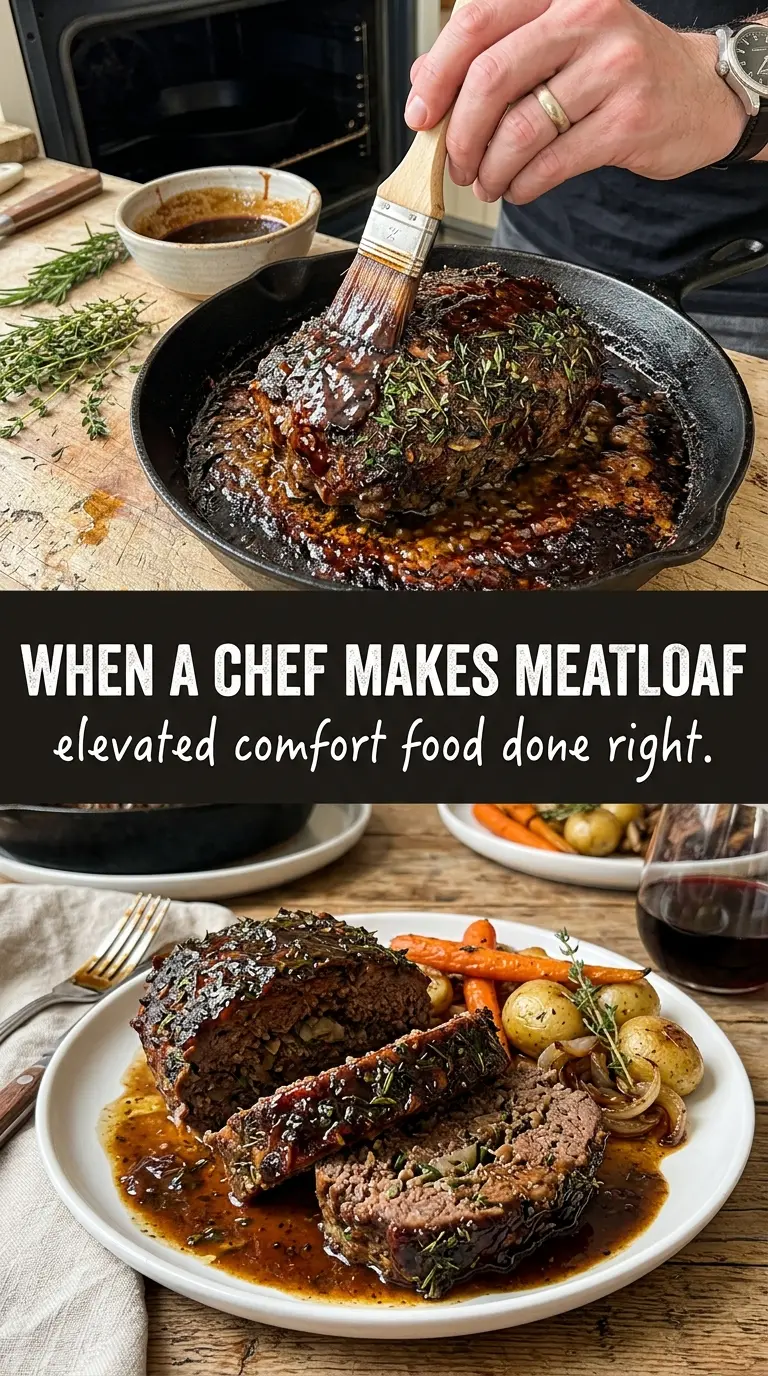
Brush the glaze over the top after searing, not before. Sugar burns fast on direct heat, so the oven is where it should caramelize. You want the glaze to look glossy and thin at first, then tack up and darken as it roasts. If it starts to look too dark near the end, loosely tent the top with foil.
Rest Before You Slice
Pull the meatloaf at 160°F and give it the full 15-minute rest. That pause lets the juices settle back into the meat instead of spilling out onto the board. Slice too soon and the center will look wetter than it really is, with a loose texture that’s easy to mistake for undercooked. Rested properly, it cuts into clean, thick slices.
How to Adapt This Meatloaf Without Losing the Restaurant-Style Finish
Make It Gluten-Free
Swap the fresh breadcrumbs for gluten-free breadcrumbs in the same amount. The loaf will still bind and stay tender, but choose a fine crumb so the texture doesn’t turn gritty. If your crumbs seem very dry, add the milk a tablespoon at a time until the mixture holds together.
Go All-Beef
Use 2 pounds of ground beef if you don’t want pork. The flavor will be a little firmer and less rich, so don’t skip the Worcestershire and herbs. An 80/20 grind matters here more than ever, because extra lean beef will dry out faster in the oven.
Dairy-Free Version
Replace the milk with unsweetened plain oat milk or beef stock. Oat milk keeps the mixture soft without adding much flavor, while stock gives you a slightly deeper savory note. Don’t use a sweetened non-dairy milk or the glaze and seasoning will taste off.
Storage and Reheating
- Refrigerator: Store leftovers in an airtight container for up to 4 days. The glaze will soften a little, but the slices stay moist.
- Freezer: This freezes well. Wrap slices tightly and freeze for up to 3 months, or freeze the whole cooked loaf if you want a make-ahead dinner.
- Reheating: Reheat covered in a 325°F oven with a splash of broth or water until warmed through. The common mistake is blasting it in the microwave, which dries out the edges before the center heats.
Questions I Get Asked About This Recipe
Gordon Ramsay Meatloaf (Restaurant-Quality Free-Form Loaf)
Ingredients
Equipment
Method
- Preheat the oven to 350°F, so it’s fully ready when the loaf is formed (visual cue: oven preheat indicator reaches temperature).
- In a large bowl, combine ground beef, ground pork, fresh breadcrumbs, eggs, whole milk, sautéed onion, minced garlic, Worcestershire sauce, Dijon mustard, chopped thyme, chopped parsley, salt, and coarse black pepper (visual cue: mixture looks evenly speckled and cohesive).
- Shape the mixture into a tight, free-form loaf on a flat surface so it holds its shape (visual cue: smooth, compact exterior).
- Heat olive oil in an oven-safe skillet over medium-high heat, then sear the meatloaf on all sides until deeply browned, about 2 minutes per side (visual cue: dark caramelized crust forms).
- Mix ketchup, balsamic vinegar, and brown sugar, then brush the glaze over the top (visual cue: glossy red-brown lacquer coats the surface).
- Transfer the skillet to the oven and roast for 60–70 minutes until the internal temperature reaches 160°F (visual cue: glaze looks set and the center is hot, not pink).
- Rest the meatloaf for 15 minutes before slicing to let juices redistribute (visual cue: it firms up slightly and slices cleanly).