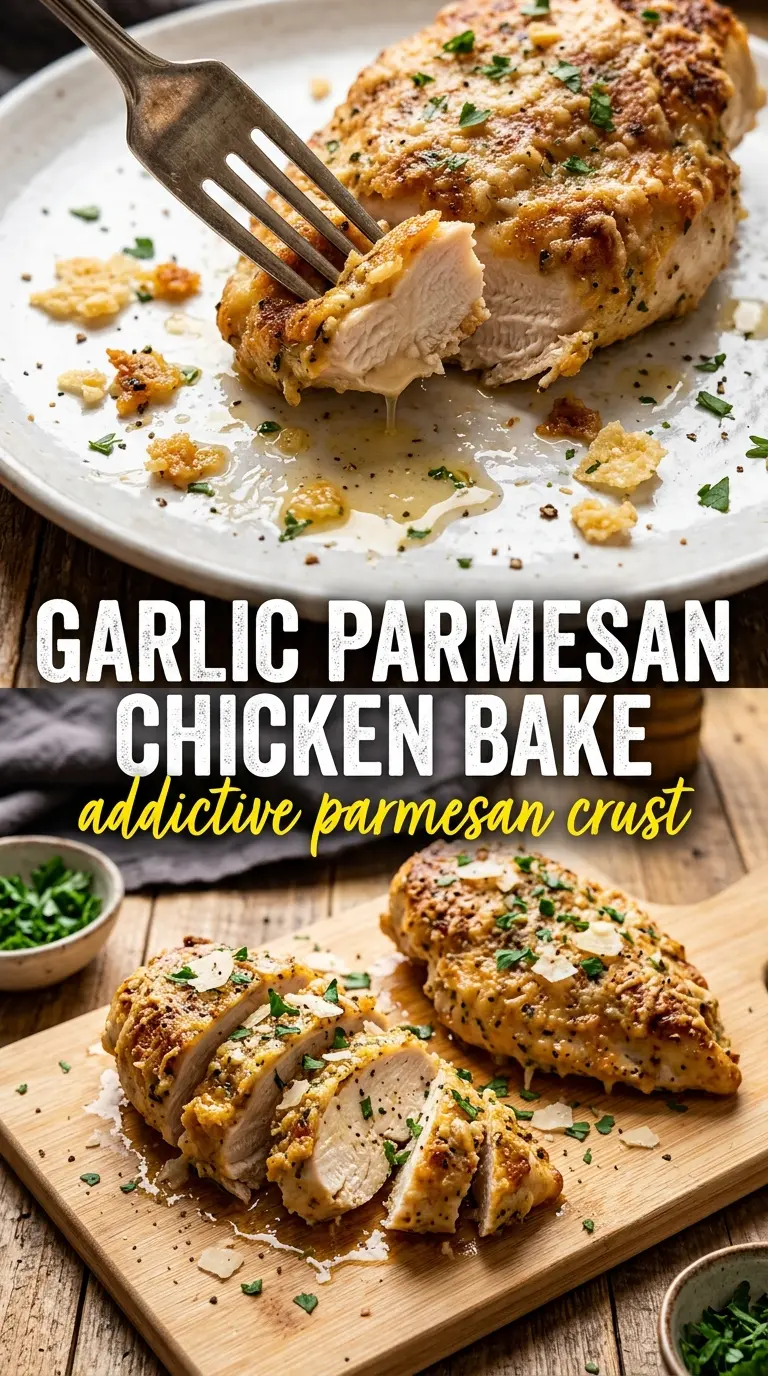
Garlic Parmesan chicken bake comes out with a crust that’s the whole reason to make it: deeply golden, crisp at the edges, and packed with enough garlic butter to soak into the chicken without turning the topping soggy. The chicken stays juicy underneath because the coating acts like a protective layer while the oven does the work. Every bite gives you crunchy, salty Parmesan on top and tender chicken below.
The trick is in the order. Butter and garlic go on first so the chicken has something sticky to hold the topping, then the Parmesan and panko mixture gets pressed on firmly so it bakes into a real crust instead of sliding off in the pan. Freshly grated Parmesan matters here because the pre-shredded kind doesn’t melt and brown the same way; it tends to stay sandy. A hot oven helps the topping set fast before the chicken overcooks.
Below, I’m breaking down the small details that keep the coating crisp, plus a few easy swaps if you need to work with what’s already in the kitchen.
The topping turned into this crunchy, browned crust and the chicken stayed juicy. I added the lemon at the end like you suggested and it made the whole dish pop.
Like this Garlic Parmesan Chicken Bake? Save it to Pinterest for a golden, crispy chicken dinner with almost no cleanup.
The Crust Only Works If You Press It In
The biggest mistake with a Parmesan chicken bake is treating the topping like a sprinkle. If the cheese mixture just sits loosely on top, the butter steams it and the breadcrumbs drift around the pan. Pressing the coating onto the chicken gives it contact, and contact is what turns this into a crust instead of a loose layer of toppings.
Heat matters too. Four hundred degrees is hot enough to brown the Parmesan and crisp the panko before the chicken dries out. If your chicken breasts are especially thick, pound them to an even thickness first so the thinner end doesn’t finish early while the thicker end is still undercooked in the center.
What Each Ingredient Is Actually Doing in the Pan
- Chicken breasts — Boneless, skinless breasts give you a lean base that lets the topping shine. If yours are very large, split them horizontally or pound them thinner so they cook in the same window as the crust.
- Butter — Melted butter is the glue and the flavor. It carries the garlic and helps the Parmesan brown; oil won’t give you the same rich finish here.
- Fresh garlic — Minced garlic gives the topping its sharp, roasted edge. Jarred garlic can work in a pinch, but the flavor is flatter and it can taste muddy once baked.
- Freshly grated Parmesan — This is the ingredient that makes the crust taste salty, nutty, and browned instead of dusty. Pre-shredded Parmesan often contains anti-caking agents, which keep it from melting into the same tight crust.
- Panko breadcrumbs — Panko keeps the topping crisp. Regular breadcrumbs work, but the crust comes out denser and less crunchy.
- Italian seasoning, parsley, and smoked paprika — These season the crust from the inside out and give it a little color. The paprika doesn’t make it smoky in a big way; it just adds warmth and helps the topping look more appetizing out of the oven.
Getting the Chicken Cooked Through Without Burning the Topping
Seasoning the Chicken First
Lay the chicken breasts in a greased 9×13 dish and season them directly with salt, pepper, and garlic powder. This first layer matters because the topping gives you texture, not all the seasoning the meat needs. If the chicken is wet, pat it dry first or the butter won’t cling as well and the crust can slip.
Building the Garlic Butter Layer
Mix the melted butter with the minced garlic and brush it over each breast generously. Don’t pour it all into the pan at once or it pools underneath instead of coating the meat. You want a thin, even sheen so the topping has something rich to grab onto.
Pressing on the Parmesan Crust
Combine the Parmesan, panko, Italian seasoning, parsley, and smoked paprika, then press the mixture firmly over the buttered chicken. Use your fingers to pack it down instead of scattering it loosely; that’s what keeps the crust intact as it bakes. If some coating falls into the pan, scoop it back on top before baking.
Baking Until the Center Is Done
Bake at 400°F for 25 to 30 minutes, until the crust is deeply golden and the chicken reaches 165°F in the thickest part. If the topping browns before the chicken is done, loosely cover the dish with foil for the last few minutes. Let it rest for a few minutes before serving so the juices settle and the crust stays put when you slice in.
How to Adjust This Bake Without Losing the Crunch
Make It Gluten-Free
Swap the panko for gluten-free breadcrumbs or finely crushed gluten-free crackers. You’ll still get a crisp top, though cracker crumbs brown a little faster, so keep an eye on the last few minutes in the oven.
Use Chicken Thighs Instead
Boneless, skinless thighs work well if you want more richness and a little more forgiveness on the cook time. They may need a few extra minutes, but they’re less likely to dry out than breasts.
Go Dairy-Free
Use a plant-based butter and a dairy-free Parmesan-style topping that melts well. The crust won’t have the same sharp, salty bite as real Parmesan, but pressing it firmly onto the chicken still gives you a satisfying baked coating.
Make It Ahead
You can assemble the dish a few hours ahead and keep it covered in the refrigerator until baking time. For the best crust, wait to bake it until you’re ready to eat so the panko doesn’t soften in the butter.
Storage and Reheating
- Refrigerator: Store leftovers in an airtight container for up to 3 days. The crust softens a bit, but the flavor holds.
- Freezer: It freezes fairly well after baking, though the topping won’t stay as crisp. Wrap portions tightly and freeze for up to 2 months.
- Reheating: Reheat in a 350°F oven until warmed through. The microwave will make the crust soggy, which is the fastest way to lose what makes this dish good.
Answers to the Questions Worth Asking
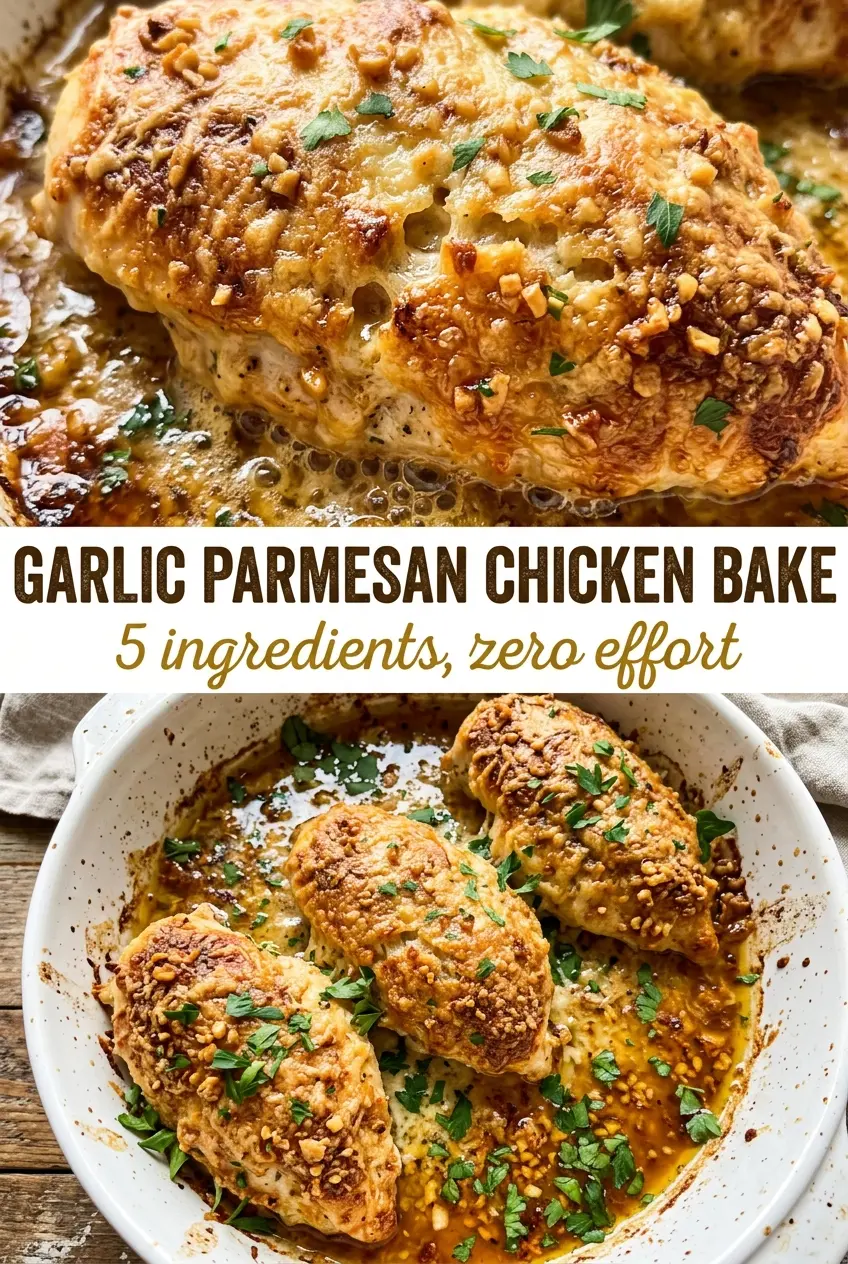
Garlic Parmesan Chicken Bake
Ingredients
Equipment
Method
- Preheat the oven to 400°F and grease a 9x13 baking dish.
- Season the chicken breasts with salt, pepper, and garlic powder to taste, then place them in the prepared dish.
- Mix the melted butter with the minced garlic, then brush generously over each chicken breast so the surface looks glossy.
- Combine the Parmesan, panko, Italian seasoning, dried parsley, and smoked paprika, then press the mixture firmly over the buttered chicken to fully coat.
- Bake for 25-30 minutes at 400°F until the Parmesan crust is deeply golden and crackled, with the cheese browned and fragrant.
- Check doneness: cook until the internal temperature reaches 165°F in the thickest part, then garnish with fresh parsley and serve with lemon wedges.