Warm potatoes soaking up a sharp white wine vinaigrette is what makes French potato salad worth keeping in the regular rotation. The potatoes stay tender but hold their shape, the dressing clings instead of pooling, and the whole bowl tastes brighter and lighter than the mayonnaise-based version most people expect. It still eats like a real side dish, just one that leaves room on the plate for everything else.
The trick is slicing the potatoes while they’re still warm, then dressing them before they cool. Warm potatoes absorb the vinaigrette at the edges, which gives you flavor inside the salad instead of just on the surface. Dijon, shallots, and a little broth round out the vinegar so the dressing tastes balanced rather than harsh, and the fresh herbs go in at the end so they stay lively.
Below, I’ll walk through the part that matters most: how to keep the potatoes intact while they marinate and how to get the vinaigrette to taste polished, not puffy with acid. I’ve also added a few easy swaps and the storage notes you’ll actually use if you’re making this ahead.
The potatoes held their shape and the dressing soaked in beautifully after the hour rest. I used the tarragon like you suggested and it gave the salad that classic French restaurant taste.
Save this French potato salad for the kind of meal that needs a bright, herb-filled side with a clean Dijon vinaigrette.
The Part Most Potato Salads Get Wrong: Dressing Them Cold
Cold potatoes don’t take on vinaigrette well. The outside stays slick, the inside stays plain, and the salad tastes like the dressing was just poured over the top at the last minute. Warm potatoes change that completely. They absorb the seasoned liquid as they sit, which is why this salad tastes integrated instead of dressed.
The other thing that matters is keeping the potatoes whole until they’re tender. If you cut them before boiling, they shed starch into the water and turn mealy at the edges. Fingerlings or baby potatoes give you a better texture here because they hold their shape and slice into neat pieces that stay intact after tossing.
- Warm potatoes — They’re the key to flavor absorption. Let them drain well, then slice while they’re still steaming.
- White wine vinegar — This gives the salad its clean edge. It tastes sharper than lemon in this dish and keeps the dressing French rather than creamy.
- Dijon mustard — It does more than add flavor; it helps the dressing emulsify so the oil and vinegar don’t separate immediately.
- Fresh tarragon — Use it if you can. It gives the salad that classic French note you can’t fake with dried herbs.
What Each Ingredient Is Actually Doing in the Bowl

- Fingerling or baby potatoes — These hold their shape better than russets and give you a waxy, creamy bite. If all you have are Yukon Golds, they work too, but cut them into larger chunks so they don’t fall apart.
- White wine and chicken broth — This combination softens the vinegar and adds depth. The broth doesn’t make the salad taste like soup; it just gives the dressing a rounder base. Use a good-tasting broth, because a thin one will leave the salad flat.
- Olive oil — Choose one you like the taste of, since it shows up plainly here. A harsh oil can dominate the salad, while a mild one keeps the vinaigrette balanced.
- Shallots — Minced shallot gives you a gentle onion note without the bite of raw onion. If you need to swap, use a little very finely grated red onion and rinse it briefly under cold water first.
- Parsley and tarragon — Parsley brings freshness, while tarragon gives the salad its unmistakable French character. Don’t add them early; the herbs wilt and lose their lift if they sit in the warm dressing for the whole hour.
Building the Vinaigrette So It Soaks In, Not Sits On Top
Cooking the Potatoes Evenly
Start the potatoes in cold salted water and bring them up together. That gives the centers time to cook before the outsides split. When they’re done, a paring knife should slide in without resistance, but the skins and flesh should still look intact. If you overboil them, the slices break down when you toss them later, and the salad turns rough instead of clean and glossy.
Mixing the Dressing While the Potatoes Are Hot
Whisk the wine, broth, vinegar, Dijon, shallots, oil, salt, and pepper until the dressing looks unified and slightly thickened. Pour it over the potatoes right after slicing. You want the steam from the potatoes to help the dressing move into the flesh. If the potatoes are already cool, warm them briefly in the drained pot over low heat for a minute or two before dressing them.
Letting the Salad Marinate Without Breaking It
Toss gently, then leave the bowl at room temperature for the full hour. This is when the potatoes take on the vinaigrette and the shallot mellows. Stir once halfway through if the top layer looks dry. Don’t refrigerate during this stage or the potatoes will tighten up and stop absorbing the dressing the way they should.
Finishing With Herbs Right Before Serving
Add the parsley and tarragon just before serving so they stay bright and fragrant. Taste again at the end and adjust salt and pepper once the flavors have settled. Serve it at room temperature, not cold from the fridge, because the olive oil and vinaigrette taste flatter when chilled.
How to Adapt This for a Different Table
Make It Vegetarian
Swap the chicken broth for vegetable broth. Choose one with enough body to taste savory, not watery, because the broth is part of what softens the vinegar. The finished salad stays just as balanced and works well for guests who don’t eat meat.
Make It Dairy-Free Without Changing a Thing
This recipe is already dairy-free, which is part of why it’s such a good make-ahead side. You don’t need any special substitutions, and that clean vinaigrette style is what keeps it light on the plate.
Swap the Tarragon if It’s Hard to Find
Use extra parsley with a little chopped dill or chives. You’ll lose the classic anise-like note from tarragon, but the salad will still taste fresh and herby. Add the substitute at the end the same way so it stays bright.
Storage and Reheating
- Refrigerator: Keep leftovers in an airtight container for up to 3 days. The potatoes will firm up a little, and the herbs will lose some brightness.
- Freezer: This doesn’t freeze well. Potatoes turn mealy after thawing, and the vinaigrette separates in a way you can’t really fix.
- Reheating: Don’t microwave it hard. Let it come back to room temperature on the counter, then stir in a small splash of olive oil or vinegar if it tastes tight. If you want it warm, heat it gently in a skillet over low heat just until the chill comes off.
Answers to the Questions Worth Asking
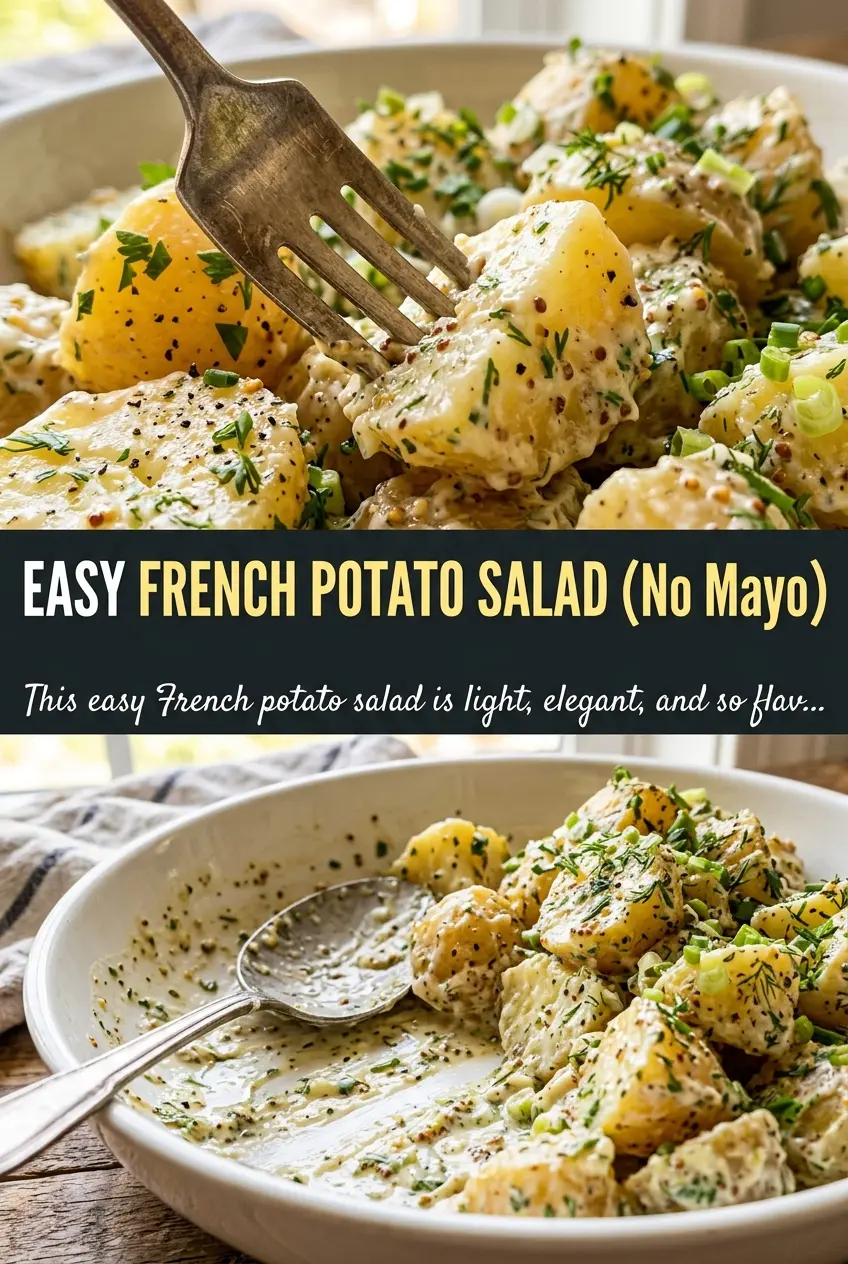
Easy French Potato Salad
Ingredients
Equipment
Method
- Bring a large pot of salted water to a boil, then add the fingerling or baby potatoes and boil until tender, about 20 minutes, until a knife meets little resistance.
- Drain the potatoes and slice while still warm so they absorb the vinaigrette more readily, keeping the pieces intact for a neat French presentation.
- In a bowl, whisk together the white wine, chicken broth, white wine vinegar, olive oil, Dijon mustard, minced shallots, salt, and pepper until the dressing looks glossy and emulsified.
- Pour the vinaigrette over the warm potatoes and toss gently until every slice is lightly coated and shiny.
- Let the salad marinate at room temperature for 1 hour so the flavor permeates the potatoes and the dressing mellows.
- Just before serving, add the chopped fresh parsley and fresh tarragon and toss again so the herbs stay bright and fragrant.
- Serve the French potato salad at room temperature for the best texture and flavor balance.