Cold, creamy potato salad doesn’t have to feel heavy or flat. When the potatoes are tender, the dressing is tangy, and the dill gets to stay fresh instead of muddled, you end up with a side dish that tastes clean, bright, and worth going back for. This version has enough richness to feel satisfying, but the buttermilk keeps it light on the palate.
The trick is in the balance. Red potatoes hold their shape better than starchy varieties, so the salad stays spoonable instead of turning mashed at the edges. The dressing mixes buttermilk, mayonnaise, sour cream, and Dijon, which gives you creaminess plus enough acid to wake everything up. Fresh dill and chives go in at the end so their flavor stays sharp, and a good chill gives the dressing time to settle into the potatoes.
Below you’ll find the easiest way to keep the potatoes intact, the one swap that matters most if you’re out of buttermilk, and a few useful variations for making this salad work at a picnic, a cookout, or a weeknight dinner.
The dressing soaked in after an hour and the potatoes stayed in perfect chunks. I added a little extra dill and it tasted even better the next day.
Save this dill potato salad with mustard buttermilk dressing for the next cookout when you want a bright, creamy side that doesn’t weigh everything down.
Why the Dressing Stays Creamy Instead of Turning Thin and Watery
The most common mistake in potato salad is dressing that looks fine at first and then turns loose after it sits. That happens when the potatoes are still holding a lot of steam or when the dressing doesn’t have enough structure to cling to the surface. Here, the mayonnaise and sour cream give the buttermilk some body, and the Dijon helps the whole thing emulsify so it coats the potatoes instead of pooling at the bottom.
Let the potatoes cool before you mix them with the dressing. Warm potatoes drink in flavor, but steaming-hot potatoes can break the dressing and make the herbs wilt before the salad ever gets to the table. A full chill is part of the recipe, not an afterthought. That resting time lets the dressing settle in and gives the onion a gentler, cleaner bite.
What Each Ingredient Is Actually Doing in This Potato Salad

- Red potatoes — These hold their shape better than russets, which matters here because you want chunks, not a soft mash. Cube them evenly so they cook at the same rate and cool quickly.
- Buttermilk — This gives the dressing its tang and lighter feel. If you swap in regular milk, you lose the sharpness that keeps the salad from tasting bland.
- Mayonnaise and sour cream — Together they create the creamy base that clings to the potatoes. Mayo brings body; sour cream adds a clean, slightly tart finish that keeps the dressing from feeling heavy.
- Dijon mustard — Dijon adds depth and a little heat, but more importantly it helps the dressing hold together. Yellow mustard works in a pinch, though it tastes sharper and less rounded.
- Fresh dill and chives — Fresh herbs make this salad taste alive. Dried dill won’t give the same bright finish, so use fresh if at all possible.
- Red onion — A small amount gives crunch and bite. Finely dice it so it blends into the salad instead of taking over each forkful.
Building the Salad So the Potatoes Stay Intact
Cooking the Potatoes to the Right Point
Start the potatoes in well-salted water and cook them until a knife slides in without resistance, but the pieces still hold their edges. If you boil them until they’re falling apart, the salad turns dense and gluey when you toss it. Drain them well, then spread them out so the steam escapes instead of trapping moisture under the dressing.
Mixing the Dressing Before the Potatoes Go In
Whisk the buttermilk, mayonnaise, sour cream, Dijon, salt, and pepper together before adding anything else. That gives you a smooth base and keeps you from overmixing once the potatoes are in the bowl. If the dressing tastes a little too sharp at this stage, it usually settles down after chilling, so don’t panic and overload it with extra mayo.
Folding, Chilling, and Letting the Flavor Settle
Add the dill, chives, and onion, then toss in the potatoes gently with a spatula or big spoon. You want the dressing to coat the pieces, not break them down. After the salad chills for two hours, the flavor rounds out and the texture tightens up; that’s when this dish tastes finished instead of just assembled.
Three Ways to Adjust This Salad Without Losing What Makes It Good
Dairy-Free Version
Use a thick dairy-free yogurt or mayo in place of the sour cream and mayonnaise, then add a splash of lemon juice if the dressing needs more tang. You’ll lose a little of the classic buttermilk character, but the salad will still be creamy and bright.
Lighter Herb-Forward Version
Cut the mayonnaise back and replace it with extra sour cream for a sharper, fresher salad. The texture gets a little looser, but the dill and chives come through more clearly.
Extra Crunch for Picnics
Add finely chopped celery or a handful of diced dill pickles if you want more texture and a little extra bite. Both work best when the potatoes are fully cooled, or they can soften and fade into the dressing.
Storage and Reheating
- Refrigerator: Store covered for up to 3 days. The herbs soften a bit, but the flavor gets even better by day two.
- Freezer: Don’t freeze this salad. The dairy dressing separates and the potatoes turn mealy after thawing.
- Reheating: This salad is meant to be served cold. If it’s too chilled straight from the fridge, let it sit at room temperature for 15 to 20 minutes so the dressing loosens and the flavors open up.
Answers to the Questions Worth Asking
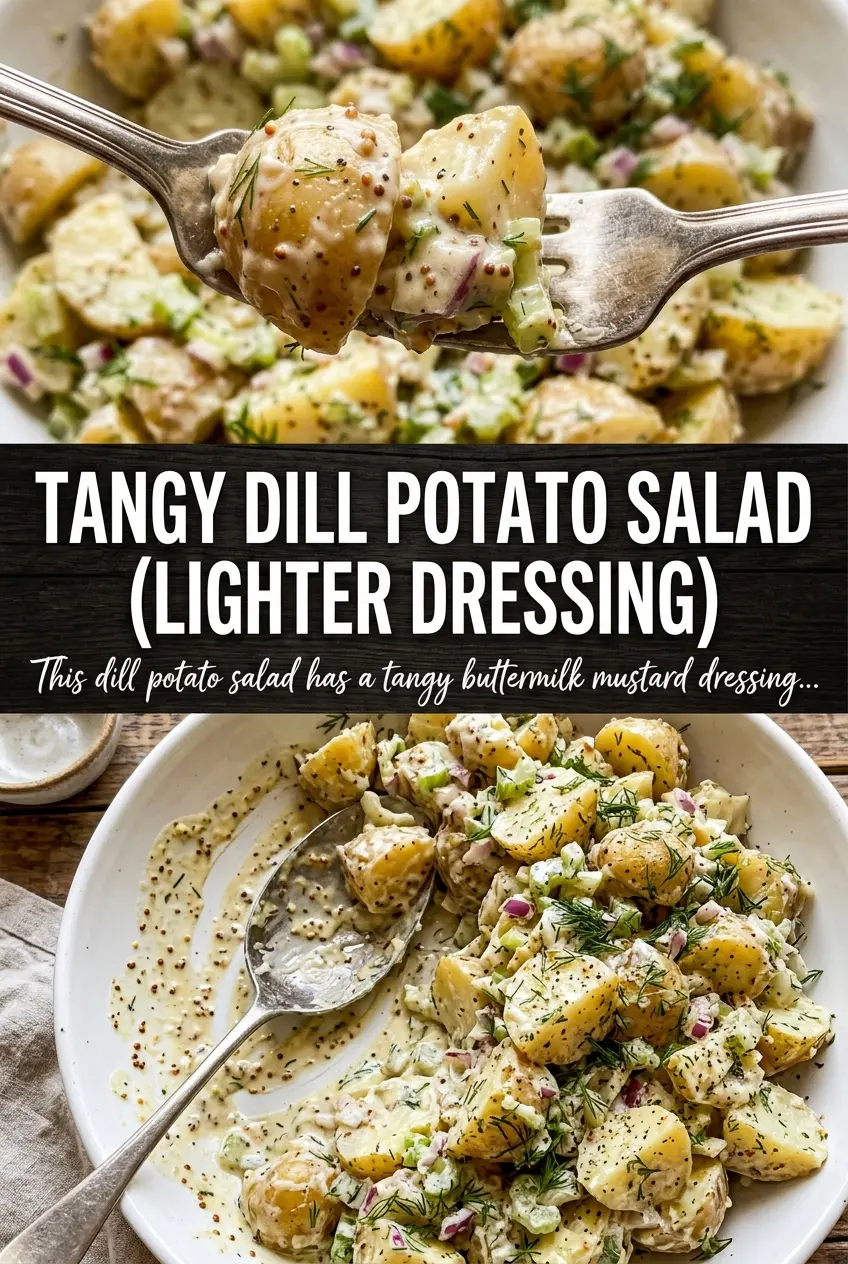
Dill Potato Salad with Mustard Buttermilk Dressing
Ingredients
Equipment
Method
- Bring a Dutch oven of salted water to a boil, then add the cubed red potatoes and cook until tender, 10-15 minutes.
- Drain the potatoes and spread them on a sheet pan to cool to room temperature, 10-15 minutes (they should no longer steam).
- Whisk buttermilk, mayonnaise, sour cream, Dijon mustard, salt, and pepper in a bowl until smooth and uniform, about 1-2 minutes.
- In a large bowl, combine the cooled potatoes with the fresh dill, fresh chives, and red onion.
- Pour the dressing over the potato mixture and toss gently until evenly coated, 1-2 minutes.
- Cover and refrigerate for 2 hours before serving so the flavors meld and the dressing thickens slightly.