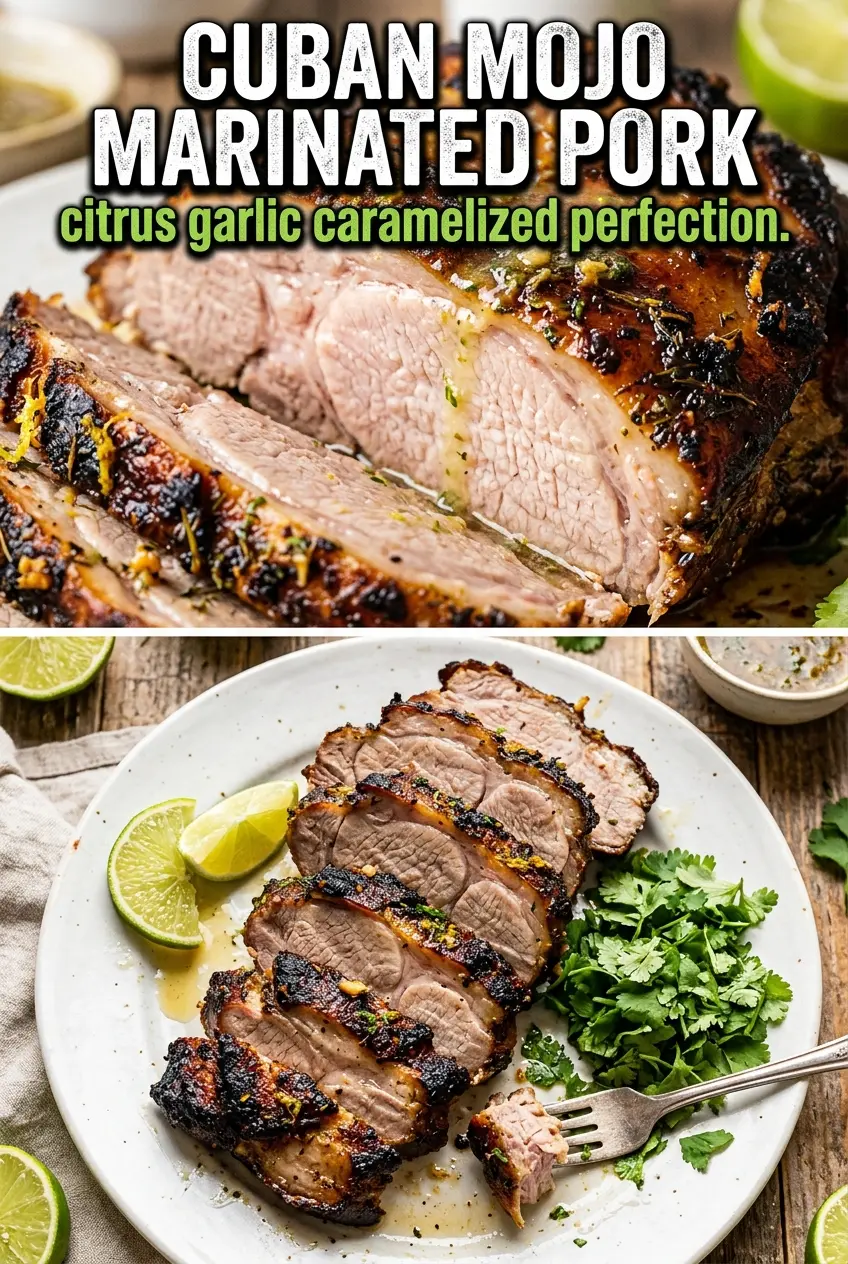
Caramelized edges, citrus-kissed drippings, and a pull-apart center are what make Cuban mojo marinated pork worth putting on repeat. The garlic and cumin sink deep into the meat while the orange and lime keep it bright enough to cut through the richness of the shoulder, so every bite lands with a little sweetness, a little tang, and a lot of savory depth.
What makes this version work is the balance in the marinade and the way the pork cooks covered before it gets that final blast of heat. The foil traps moisture for the long roast, which keeps the shoulder from drying out before the connective tissue has time to soften. Then the last uncovered stretch concentrates the juices and gives you those browned, sticky bits that people fight over.
Below, I’ve included the one temperature cue that matters most for shreddable pork, plus a few smart swaps for when you want to stretch the meal or adapt it for a different setup. Once you’ve made it once, the method starts to feel less like a recipe and more like a dependable Sunday move.
The marinade went all the way through the pork, and after the last 30 minutes uncovered, the outside turned beautifully sticky without drying out the center. I served it with rice and black beans, and my husband kept picking at the crispy bits straight from the pan.
Love the deeply caramelized crust and citrus-garlic marinade? Save this Cuban mojo pork for your next slow-roasted dinner.
The Part People Miss: Pork Needs Time to Relax Before It Shreds Cleanly
The biggest mistake with mojo pork is pulling it the second the internal temperature hits the target and then tearing into it. Shoulder is full of collagen, and even when it’s tender enough to shred, the juices still need a few minutes to settle back into the meat. If you skip the rest, that first cut can look dry even when the pork itself is perfectly cooked.
The other thing that trips people up is roasting too hot at the beginning because they want faster browning. This cut needs time, not aggression. Covered roasting at 325°F gives the connective tissue a chance to loosen without scorching the citrus and garlic in the pan. The final uncovered roast is where the crust develops, and that’s the part you protect by keeping the first stage gentle.
What the Marinade Is Really Doing Here
The garlic, citrus, and cumin are not all pulling the same weight. Garlic brings the backbone, orange and lime brighten the fat in the shoulder, and cumin gives the pork that unmistakable Cuban profile. Olive oil carries the marinade across the surface and helps the outside brown instead of drying out.

- Pork shoulder or butt — This cut has enough fat and connective tissue to turn silky during a long roast. Lean pork won’t give you the same shred or the same forgiving texture.
- Fresh orange juice — Use fresh if you can. Bottled juice can taste flat, and the brightness matters here because it balances the richness of the pork.
- Fresh lime juice — Lime sharpens the marinade and keeps the pork from reading heavy. If you need to swap, use a little more orange juice plus a splash of apple cider vinegar, but the flavor won’t be as clean.
- Garlic — Mince it fine or blend it smooth so it clings to the meat. Big pieces tend to scorch during the last uncovered roast.
- Cumin and oregano — These are the quiet anchors. Don’t skip them, because they’re what keep the pork tasting like mojo instead of just citrusy roast pork.
- Cilantro — Add it after blending so it stays fresh and green in the marinade. It also makes the finished pork taste brighter right at the end.
Building the Crust Without Drying Out the Pork
Blending the Mojo
Blend the garlic, orange juice, lime juice, olive oil, cumin, oregano, paprika, salt, pepper, and cilantro until the mixture looks almost emulsified and lightly green. You want a pourable marinade that can slip into the scored cuts and coat the whole shoulder. If the garlic stays in chunky bits, it tends to toast too fast in the oven and can taste bitter.
Scoring and Marinating
Score the pork all over with a sharp knife so the marinade has places to sink in. Don’t cut so deep that the meat falls apart before it cooks; shallow, even slashes do the job. Seal the pork in a bag or cover it well in a dish, then refrigerate for at least 4 hours. Overnight is even better because the seasoning has time to work past the surface.
Slow Roasting Under Foil
Put the pork in a roasting pan, pour the marinade over it, and cover it tightly with foil. That tight seal is what holds in steam and keeps the shoulder from drying while the inside turns tender. If the foil is loose, the juices evaporate and you end up with browned edges before the center is ready.
Uncovering for the Finish
Remove the foil for the last 30 to 45 minutes and let the top caramelize. Watch for a deep golden color and sticky edges, not just a pale dry surface. The internal temperature should reach about 190°F for shreddable pork, because shoulder needs to go past the usual “done” mark before it turns tender enough to pull apart easily.
Resting and Shredding
Let the pork rest for 15 minutes before shredding or slicing. This keeps the juices in the meat instead of running all over the board when you cut it. If the pork seems to fall apart too aggressively, that’s usually a sign it needed a little more time covered before the finish stage, not less rest at the end.
How to Adjust This Mojo Pork for Different Plans
Make-ahead for a stronger marinade
Marinate the pork overnight instead of just 4 hours if you want the citrus and garlic to reach deeper into the meat. The flavor gets more pronounced, and the roast needs the same cook time, so this is the easiest way to build ahead without changing the method.
Dairy-free and naturally gluten-free
This recipe already fits both diets as written, which is part of why it’s such a reliable main dish. Just check your spices if they’re from a blended seasoning jar, since some mixes sneak in fillers or anti-caking agents.
For a sharper, tangier finish
Add an extra squeeze of lime over the shredded pork right before serving. That last hit of acid wakes up the drippings and makes leftovers taste freshly cooked instead of reheated.
Storage and Reheating
- Refrigerator: Store the shredded pork in its juices for up to 4 days. The flavor deepens a bit, and the texture stays much better when the meat isn’t left dry.
- Freezer: It freezes well for up to 3 months. Pack it with some of the cooking juices in a sealed container or freezer bag so it thaws moist instead of stringy.
- Reheating: Warm it covered in a skillet or baking dish with a splash of the juices or a little water. Low heat is the key; high heat drives off the moisture and leaves the edges tough.
Questions I Get Asked About This Recipe
Cuban Mojo Marinated Pork (Slow-Roasted)
Ingredients
Equipment
Method
- Blend garlic, orange juice, lime juice, olive oil, cumin, dried oregano, smoked paprika, salt, black pepper, and chopped cilantro until smooth, with no garlic chunks visible.
- Score the pork shoulder all over with a sharp knife, then place it in a zip-lock bag and pour in the mojo marinade so the surface is evenly coated.
- Refrigerate 4–8 hours or overnight so the pork absorbs the citrus-garlic mojo.
- Preheat the oven to 325°F.
- Place the pork in a roasting pan, pour any remaining marinade over it, cover tightly with foil, and roast for 2.5 hours.
- Uncover the pork and roast 30–45 more minutes at 325°F until the outside is golden and caramelized and the internal temperature reaches 190°F, using a thermometer for accuracy.
- Rest the roasted pork 15 minutes before shredding or slicing so the juices settle.
- Serve with lime wedges and fresh cilantro.