Fork-tender pork roast and a deep, savory gravy are what keep this one in the regular dinner rotation. The pork cooks until it pulls apart with almost no effort, and the gravy picks up enough body from the slow cooker to feel like a proper pan sauce, not a thin afterthought.
The trick is starting with a good sear and building the gravy before the pork goes in. That first browning step gives the finished dish a richer base, and the mix of cream of mushroom soup, broth, Worcestershire, and onion soup mix creates a gravy that tastes slow-cooked from the start. If you skip the sear, the roast will still cook, but the gravy loses some of the depth that makes this version worth repeating.
Below, I’ve included the small details that matter most: which cut gives you the most forgiving texture, when to thicken the gravy, and how to keep the pork juicy even after hours in the crock pot.
The gravy thickened up beautifully at the end, and the pork was still juicy enough to shred with a spoon after 8 hours on low. My husband went back for seconds before I even finished plating.
Save this crock pot pork roast and gravy for a low-effort dinner with fork-tender pork and rich, savory gravy.
The Sear That Gives the Gravy Its Depth
The slow cooker does the long, gentle cooking here, but the skillet is what gives the dish its backbone. Browning the pork before it goes into the crock pot creates those dark, flavorful bits that keep the gravy from tasting flat. If the roast goes in pale, the finished gravy usually tastes one-note, even with onion soup mix and Worcestershire doing their part.
Don’t rush the sear. You want a deep golden crust on several sides, not a pale tan film. If the pan looks crowded, brown the roast in batches or use a wider skillet, because steaming is the fastest way to miss out on that savory base.
- Pork loin roast or shoulder — Both work, but shoulder is more forgiving if you want meat that shreds easily. Loin stays a little leaner and slices nicely, though it can dry out if it’s pushed too long past tender.
- Cream of mushroom soup — This gives the gravy body and a silky texture that stands up to long cooking. A plain cream soup can substitute in a pinch, but mushroom adds an earthy note that makes the sauce taste fuller.
- Worcestershire sauce — This is the quiet ingredient that adds depth and a little tang. Don’t skip it unless you have to; that tiny amount makes the gravy taste cooked, not canned.
- Onion soup mix — This is the salt-and-savory shortcut that seasons the whole pot. If you don’t have it, use extra onion powder, a pinch of bouillon, and taste carefully at the end because it’s easy to over-salt the gravy when you improvise.
What Each Ingredient Is Actually Doing in This Slow Cooker Pork
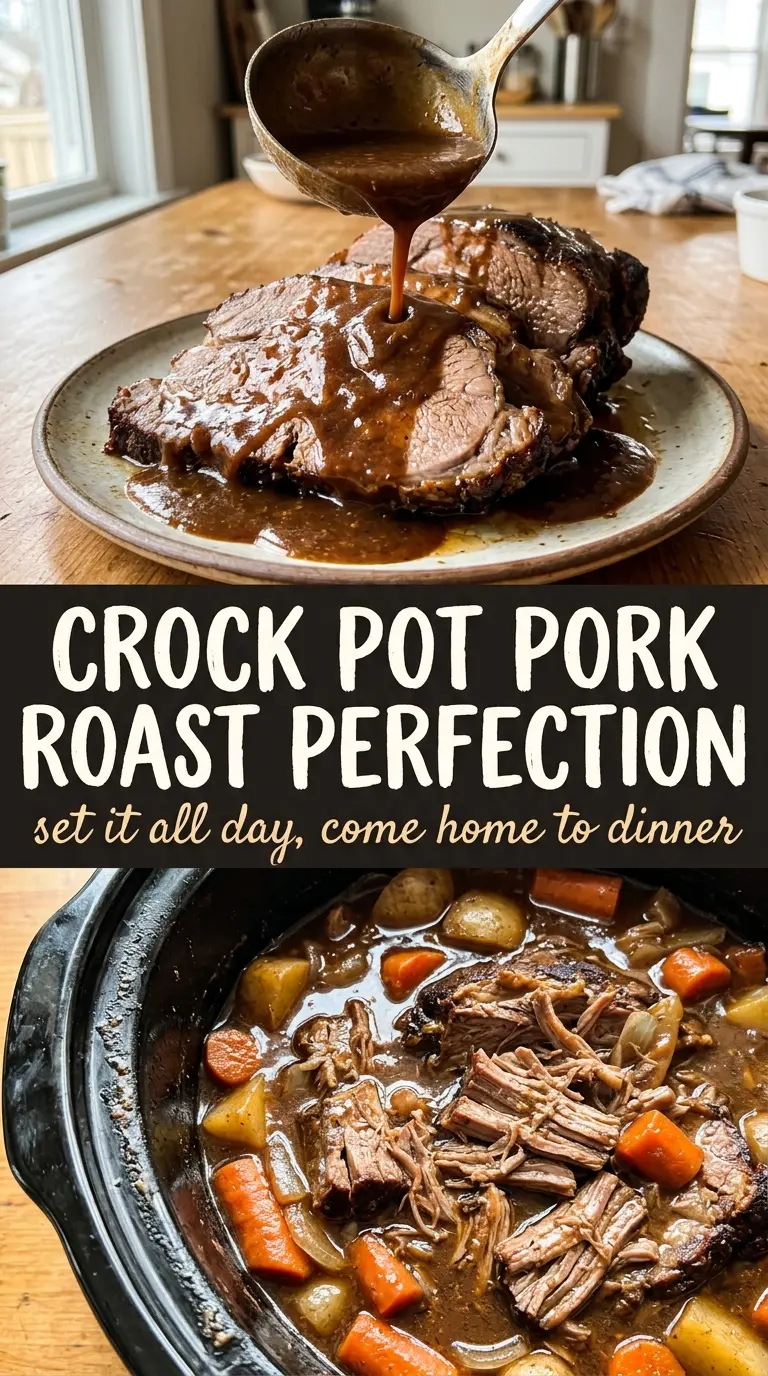
- Pork shoulder or roast (the protein) — This cut breaks down beautifully in slow cooking. The fat renders and keeps the meat moist.
- Liquid (broth, gravy base, or sauce) — This becomes both the cooking medium and the finished gravy. Don’t add too much or the braise is watery.
- Onions (the aromatic base) — Slice thick so they stay distinct while melting into the gravy. They become sweet and mellow during cooking.
- Garlic (the depth flavor) — Minced garlic cooks into the gravy; sliced stays more distinct. Use generously for deep savory flavor.
- Vegetables (carrots, potatoes, parsnips) — Layer by cooking time so everything finishes together. Hard vegetables first, softer ones later.
- Seasonings (salt, pepper, herbs, spices) — Build flavor as you layer. Taste midway and adjust because flavors concentrate during cooking.
- Peppercorn or herb finish (optional personality) — These add sophistication. Crush or grind fresh for best flavor impact.
- Low heat for 8 hours (the transformation) — Gentle cooking turns tough cuts into fork-tender meat. This is what makes cheap cuts taste expensive.
Building the Slow Cooker Gravy Without Losing the Pork
Season and Brown First
Season the roast generously with salt, pepper, garlic powder, and onion powder, then sear it in hot oil until each side has real color. You’re looking for a crust that releases from the pan instead of sticking stubbornly; that usually means the surface has browned enough. If the roast is damp, pat it dry first or the seasoning will slip off and the browning will take longer than it should.
Set Up the Flavor Base
Scatter the onion and garlic in the bottom of the slow cooker so they soften underneath the roast and perfume the gravy as everything cooks. Whisk the soup, broth, Worcestershire, and onion soup mix until smooth before pouring it over the meat. If you leave the soup mix clumpy, those dry pockets can sit on top of the roast and never fully melt into the sauce.
Cook Until It Pulls Apart Easily
Cook on Low for 8 to 9 hours or High for 4 to 5 hours, but use tenderness, not the clock, as the real test. The pork is ready when a fork slides in with almost no resistance and a chunk pulls away cleanly. If you stop too soon, the center can still be tight and chewy; if you use a lean loin and overcook it, the slices can dry out, so check early if your slow cooker runs hot.
Finish the Gravy Right in the Pot
Lift the pork out before thickening the gravy, then stir in the cornstarch slurry on High if you want a thicker finish. Let it bubble for a few minutes until the sauce turns glossy and coats the back of a spoon. Add the slurry gradually, because dumping it all at once can make the gravy too pasty instead of smooth and spoonable.
How to Adapt This Roast for Different Tables and Schedules
Use Pork Shoulder for Shredding
If you want the meat to fall apart into strands for sandwiches or bowls, choose pork shoulder instead of loin. Shoulder has more connective tissue, so it stays tender through the long cook and shreds more easily, while loin gives you neater slices and a leaner bite.
Make It Gluten-Free
Use a gluten-free cream soup, a certified gluten-free onion soup mix, and a broth you trust. The texture stays the same, but the flavor can vary a little by brand, so taste the gravy at the end and add a small pinch of salt only if it needs it.
Skip the Sear When You’re Short on Time
You can put the roast straight into the slow cooker and still get tender pork and decent gravy. What you lose is some depth and color in the final sauce, so if you skip the skillet, add an extra splash of Worcestershire and a little black pepper at the end to wake it back up.
Storage and Reheating
- Refrigerator: Store the pork and gravy together in an airtight container for up to 4 days. The gravy will thicken as it chills, which is normal.
- Freezer: This freezes well for up to 3 months. Cool it completely first, then portion it with some gravy so the meat doesn’t dry out when reheated.
- Reheating: Warm gently on the stovetop or in the microwave with a splash of broth. Don’t blast it on high heat, or the pork can turn stringy and the gravy can break.
The Questions That Come Up With Slow Cooker Pork Roast
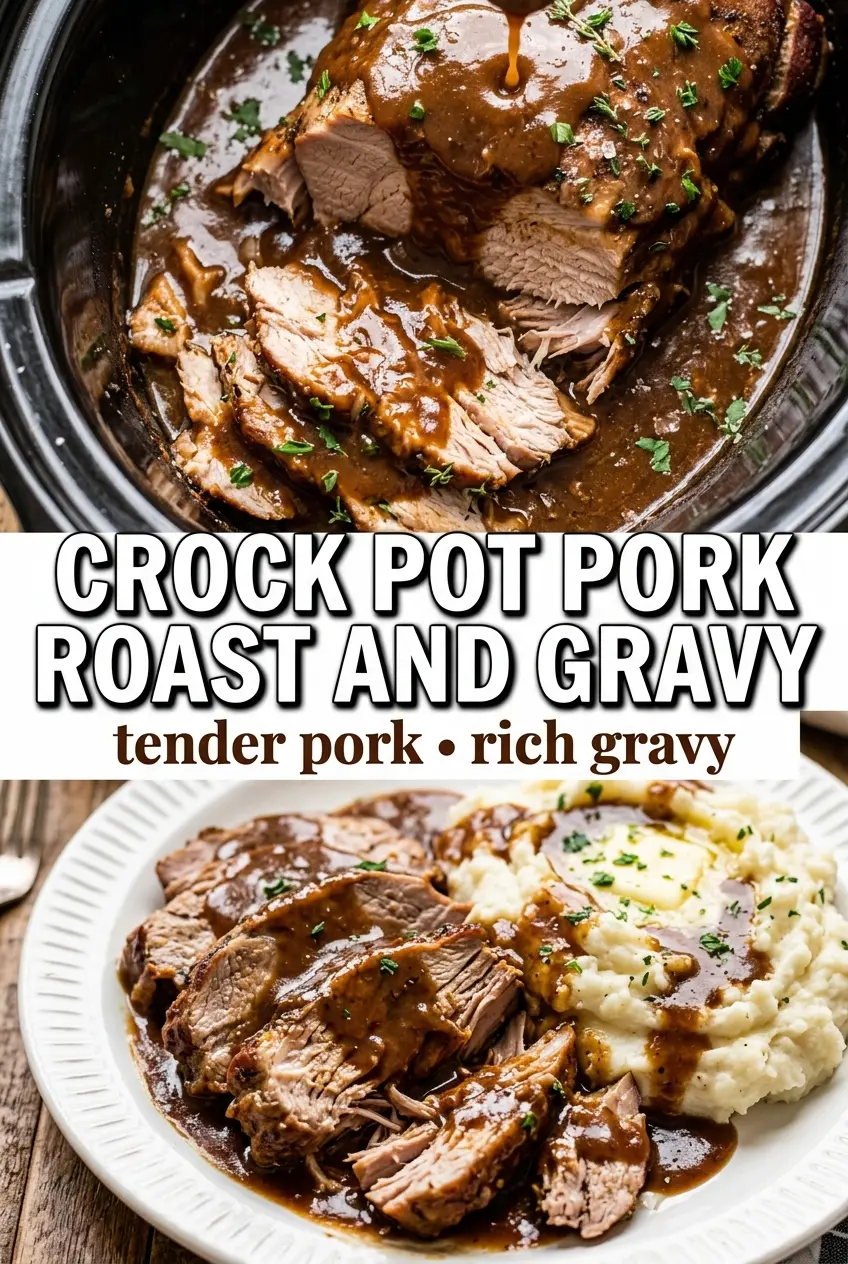
Crock Pot Pork Roast and Gravy
Ingredients
Equipment
Method
- Season the pork roast generously with salt, pepper, garlic powder, and onion powder. Heat oil in a skillet over medium-high heat and sear the pork on all sides until golden, 3-5 minutes per side as needed.
- Add the diced onion and minced garlic to the bottom of the slow cooker. In a bowl, mix cream of mushroom soup, beef broth, Worcestershire sauce, and onion soup mix until smooth, then pour the mixture over the pork.
- Cook on Low for 8-9 hours, or High for 4-5 hours, until the pork is tender and pulls apart easily. Keep the lid on during cooking to maintain temperature and steam.
- Remove the pork from the slow cooker. If you want thicker gravy, turn the slow cooker to High, stir in the cornstarch slurry (cornstarch mixed with water), and cook 10-20 minutes until smooth and thickened with a glossy look.
- Slice or shred the pork and serve it smothered in the rich gravy. Spoon gravy over the meat so every bite is coated and the sauce looks dark and pooled slightly on the plate.