Crispy gochujang potato salad hits that sweet spot between warm, crunchy roasted potatoes and a bold, creamy dressing that clings to every cut edge. The potatoes stay firm enough to hold their shape, but the outside takes on those deep golden ridges that catch the sauce instead of turning soggy. It eats like a potato salad, but it lands with the kind of punchy heat and sesame richness that keeps people going back for another spoonful.
What makes this version work is the cooling step. Roasted potatoes need time to shed steam before they meet the dressing, or the mayonnaise loosens up and the crispy edges soften fast. The gochujang is balanced with rice vinegar and honey so the dressing tastes sharp, savory, and just sweet enough to round out the chili paste. Sesame oil and scallions finish it with the kind of aroma that makes the bowl smell as good as it tastes.
Below, I’ve included the small details that matter most: how to get the potatoes genuinely crisp, when to dress them, and what to change if you want to make it dairy-free or a little milder.
The potatoes kept their edges after tossing, and the dressing thickened just enough to coat everything without pooling at the bottom. I served it at room temp like suggested and it disappeared fast.
Save this crispy gochujang potato salad for the side dish that brings crunch, heat, and sesame-coated potatoes to the table.
The Trick Is Cooling the Potatoes Before the Dressing Goes On
The biggest mistake with roasted potato salad is dressing the potatoes while they’re still steaming hot. That trapped moisture softens the crust you worked to build in the oven, and it also thins the gochujang dressing until it turns slick instead of clinging. Let the potatoes cool until they’re warm, not hot; they should still have enough heat to absorb flavor, but not enough to melt the mayonnaise into a loose coating.
Roasting on a hot sheet pan matters here too. If the potatoes go onto a crowded pan or a pan that hasn’t had time to heat up, they steam before they brown. Give them space, and don’t stir too early. You want one side to sit against the pan long enough to turn deeply golden before you flip or toss them.
What Each Ingredient Is Doing in This Bowl
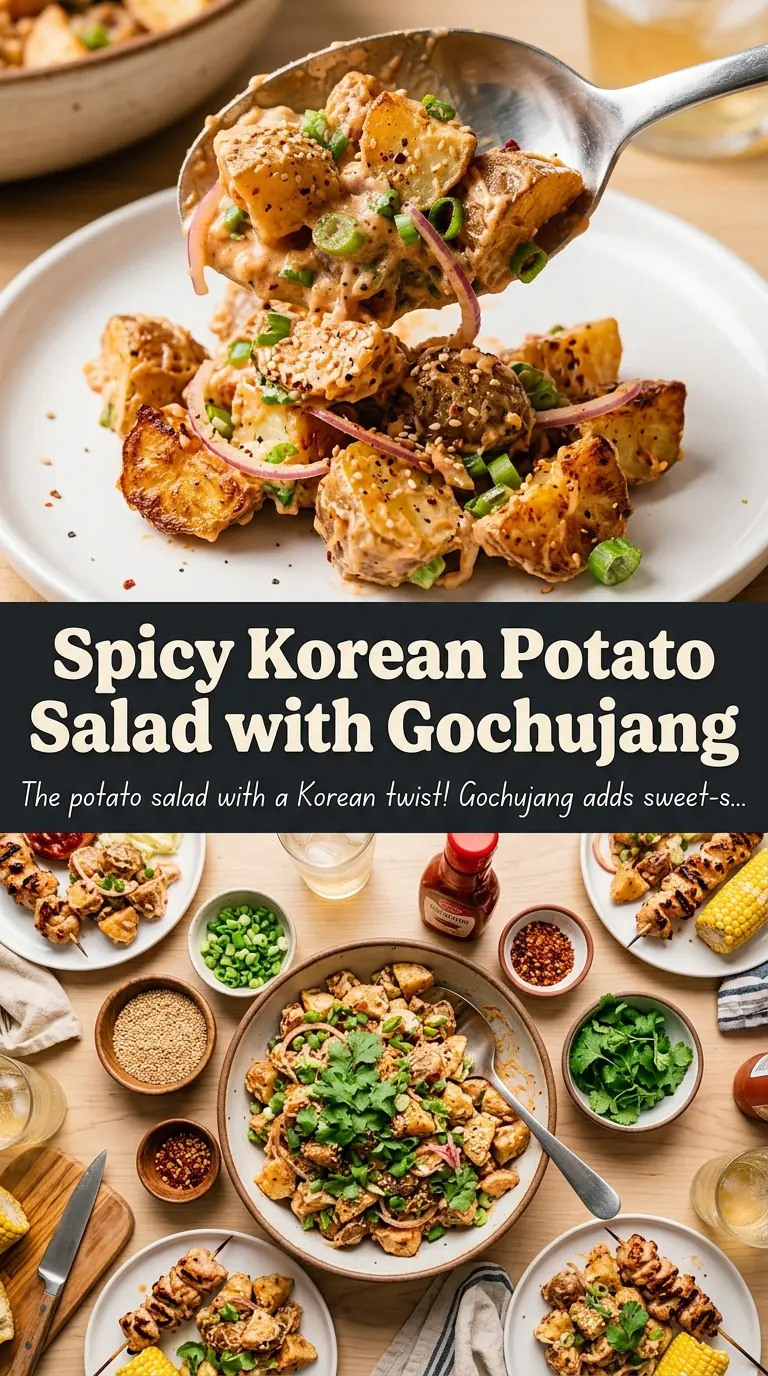
- Baby potatoes — Their thin skins crisp nicely and their smaller size gives you more browned surface area per bite. Halved potatoes are the sweet spot here; if they’re too small, they can dry out, and if they’re too large, the centers can lag behind the edges.
- Gochujang — This is the backbone of the dressing. It brings chili heat, fermented depth, and a little sweetness all at once, which is hard to replicate with straight hot sauce or red pepper flakes. If you’re shopping for it, use a paste with a thick, brick-red texture rather than a thin sauce.
- Mayonnaise — It softens the heat and gives the dressing a creamy body that sticks to the potatoes. Greek yogurt can work in a pinch, but it tastes tangier and loosens more as it sits, so the salad won’t feel as plush.
- Rice vinegar and honey — These keep the dressing from tasting flat. The vinegar sharpens the chili paste, while the honey smooths the edges so the heat doesn’t come on too harshly.
- Sesame oil, sesame seeds, and green onions — Sesame oil adds the nutty aroma that makes the whole bowl taste finished, and the seeds plus scallions bring crunch and freshness right at the end. Don’t skip the garnish; it’s what turns this from dressed potatoes into a proper salad.
Roast, Cool, Toss, and Keep the Crunch
Getting the Potatoes Truly Crisp
Heat the oven fully before the potatoes go in, then spread them out in one layer with the cut sides down where possible. That direct contact with the pan is what builds the browned crust. If the pan is crowded, the potatoes will steam and you’ll lose the texture this salad depends on. Roast until the edges look blistered and deeply golden, not just pale and tender.
Mixing the Dressing Without Losing Balance
Stir the gochujang, mayonnaise, rice vinegar, honey, and sesame oil until the dressing looks smooth and glossy. It should taste bold on its own: savory first, then sweet, then a slow heat. If it tastes too sharp, a touch more honey smooths it out. If it tastes heavy, another splash of vinegar wakes it back up. The goal is a dressing that coats cleanly without turning pasty.
Bringing the Salad Together at the Right Moment
When the potatoes have cooled enough to stop steaming, toss them gently with the dressing. Use a broad bowl and a light hand so the crisp edges stay intact. Add the sesame seeds and sliced green onions at the end so they stay distinct and don’t disappear into the sauce. Serve the salad at room temperature for the best texture; straight from the fridge, the dressing tightens and the potatoes lose some of their snap.
How to Adapt This Bowl for Different Tables
Dairy-Free Without Losing the Creamy Coating
This recipe is already dairy-free as written, which is part of why it works so well. The mayonnaise gives the dressing body without any milk products, so you still get that creamy coating over the potatoes. If you swap the mayo for a thinner condiment, the sauce will stop clinging and pool at the bottom of the bowl.
Milder Heat for a Broader Crowd
Cut the gochujang down to 1 tablespoon and add an extra tablespoon of mayonnaise if you want the flavor without much burn. You’ll keep the fermented depth and the red color, but the finish will be gentler. That’s the version I’d bring to a mixed table where some people like heat and some don’t.
Making It Ahead for a Party
Roast the potatoes earlier in the day and mix the dressing separately. Hold both at room temperature, then toss them together shortly before serving so the edges stay crisp. If the potatoes sit dressed for hours, they’ll still taste good, but the texture shifts from crisp-edged to softer and more salad-like.
Storage and Reheating
- Refrigerator: Store leftovers in an airtight container for up to 3 days. The potatoes will soften, but the flavor deepens overnight.
- Freezer: I don’t recommend freezing this salad. The potatoes turn mealy after thawing, and the mayonnaise-based dressing separates.
- Reheating: This is best served at room temperature, not reheated. If you want to take the chill off leftovers, let them sit on the counter for 20 to 30 minutes rather than using the microwave, which softens the potatoes further.
Answers to the Questions Worth Asking
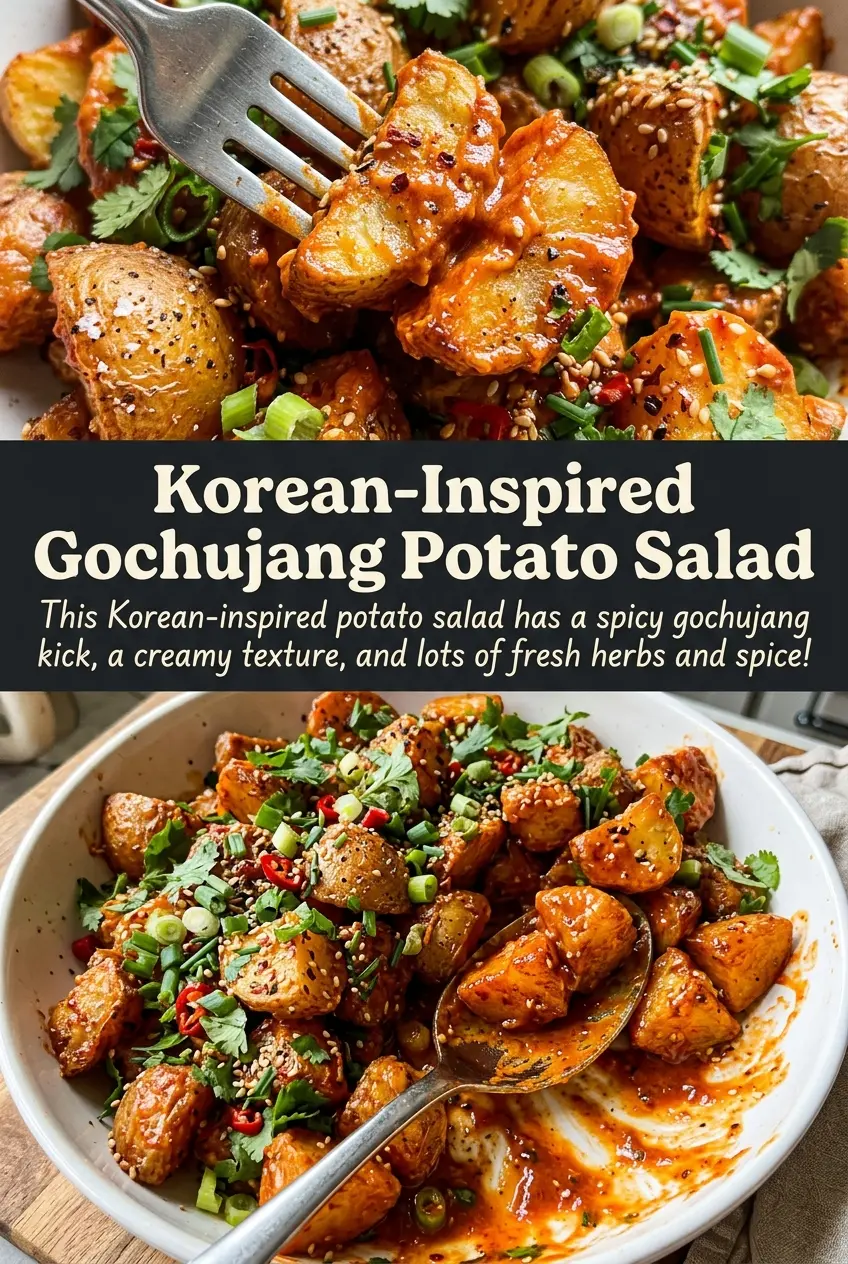
Crispy Gochujang Potato Salad
Ingredients
Equipment
Method
- Preheat the oven to 425°F and line a sheet pan for easy roasting.
- Toss the baby potatoes with olive oil, salt, and pepper until evenly coated and glossy.
- Roast for 30-35 minutes at 425°F, turning once halfway, until golden and crispy at the edges.
- Let the potatoes cool for 30 minutes so they stay crisp instead of steaming.
- Mix gochujang, mayonnaise, rice vinegar, honey, and sesame oil until smooth and thick.
- Toss the cooled potatoes with the gochujang dressing until every piece is lightly glazed.
- Top with sesame seeds and sliced green onions for crunch and color.
- Serve at room temperature for best crispy texture.