Golden seared chicken breasts in a silky mushroom cream sauce earn their place in the weeknight rotation fast. The chicken stays juicy because it’s seared first, then finished gently in the sauce instead of being cooked to death in it. The mushrooms bring the savory depth, the Parmesan thickens the cream, and the whole skillet lands with that kind of rich, spoon-coating sauce that makes plain rice or mashed potatoes feel like dinner with a little extra care.
The part that makes this version work is the order. You want real browning on the chicken and the mushrooms before the cream goes in, because those browned bits are what give the sauce its backbone. Heavy cream and Parmesan do the thickening here, but only if the sauce is kept at a steady simmer, not a hard boil. If the heat runs too high, the dairy can turn grainy or separate, and that’s the difference between a smooth skillet dinner and one that looks tired on the plate.
Below, I’ve included the exact moment the mushrooms should stop cooking, the best way to keep the sauce from breaking, and a few smart swaps for when you need to work with what’s already in the kitchen.
The sauce came together in the same pan and got thick and glossy without breaking. My husband said the mushrooms tasted restaurant-level, and the chicken stayed juicy even after I let it sit a few minutes before serving.
Save this creamy mushroom chicken skillet for the nights when you want a glossy sauce, tender chicken, and one pan to clean.
The Reason This Sauce Stays Silky Instead of Breaking
The biggest mistake with creamy skillet chicken is rushing the dairy. Once the mushrooms are browned and the broth has loosened the pan, the cream needs a gentle simmer, not a boil. That slower heat lets the sauce thicken evenly while the Parmesan melts in cleanly, instead of clumping or turning grainy.
Another thing that matters here is keeping the chicken out of the pan while the sauce finishes. If you leave it in the whole time, the chicken overcooks before the sauce has any chance to tighten up. Pulling it out after the sear gives you room to build the sauce properly, then return the chicken just long enough to warm through and soak up flavor.
- Brown the chicken first — that crust adds flavor to the sauce and keeps the meat from tasting flat.
- Cook the mushrooms until deeply golden — pale mushrooms water the sauce down instead of enriching it.
- Simmer, don’t boil, once the cream goes in — high heat is the fastest way to break a cream sauce.
- Return the chicken at the end — just long enough to finish heating through and stay juicy.
What Each Ingredient Is Actually Doing in the Skillet
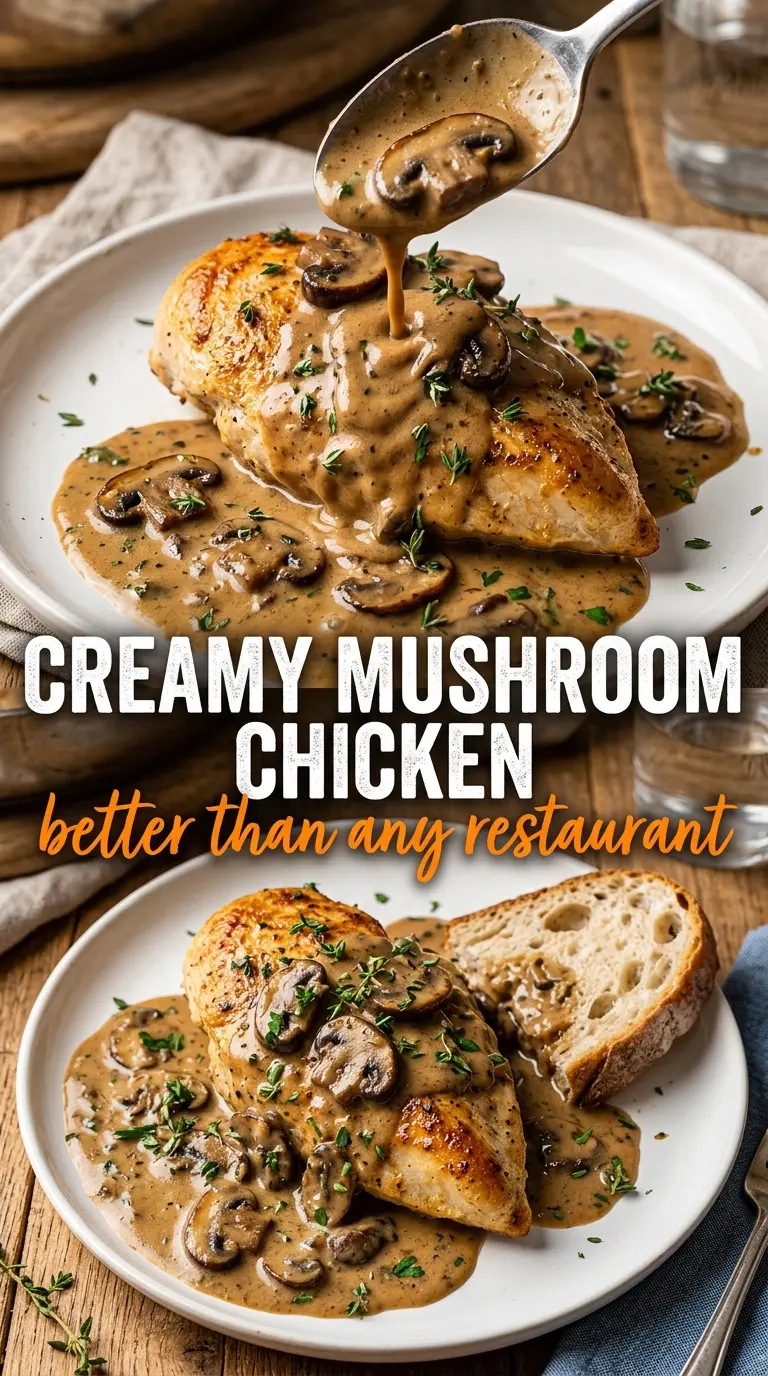
- Chicken breasts — boneless, skinless breasts keep the recipe fast and lean. If yours are thick, pound them to an even thickness so they sear at the same rate and stay juicy instead of drying on the outside before the center is done.
- Cremini mushrooms — these bring the best earthy flavor for the effort. White mushrooms work in a pinch, but they’re milder and usually release more moisture, so cook them until their liquid evaporates and the edges darken.
- Heavy cream — this is what gives the sauce its body and smooth finish. Half-and-half can work, but the sauce will be thinner and less stable, so keep the heat low and simmer a little longer if you swap.
- Parmesan cheese — it thickens the sauce and adds salt, nutty depth, and a little texture. Grate it finely so it melts cleanly; pre-shredded cheese can stay a little grainy because of anti-caking agents.
- Chicken broth — this loosens the browned bits from the pan and gives the sauce a savory base before the cream goes in. Use a broth you’d actually sip, because a thin or overly salty broth shows up in the finished sauce.
- Thyme and Italian seasoning — these keep the sauce from tasting heavy. Thyme especially works well with mushrooms, and dried herbs are fine here because they simmer long enough to bloom.
Building the Skillet in the Right Order
Searing the Chicken Until the Crust Sets
Season the chicken well on both sides, then sear it in hot oil until the surface is deep golden and the meat releases easily from the pan. If it sticks hard, it’s not ready to turn yet. You’re looking for color, not a dark burned crust, and the center should still be slightly underdone because it’ll finish later in the sauce.
Letting the Mushrooms Brown, Not Steam
After the chicken comes out, the butter goes in and the mushrooms need space to cook. If the skillet is crowded, they’ll turn soft and watery instead of picking up color, so let them sit undisturbed long enough to brown on at least one side before stirring. Once they’ve gone deep golden and their moisture has cooked off, add the garlic for just a minute so it smells fragrant without burning.
Turning the Pan Bits Into the Sauce
Pour in the broth and scrape the bottom of the skillet with a wooden spoon. Those browned bits dissolve into the liquid and give the sauce its backbone. Stir in the cream, Parmesan, thyme, and Italian seasoning, then keep the heat at a steady simmer until the sauce thickens enough to coat a spoon. If it looks thin at first, give it time; cream sauce usually needs a few minutes before it settles.
Finishing Without Overcooking the Chicken
Return the chicken to the skillet and spoon sauce over the top. Let it warm through for a couple of minutes, just until the center reaches 165°F and the sauce clings to the meat. If you leave it simmering too long, the chicken turns stringy and the sauce can reduce too far, so this last stage should be short and calm.
Ways to Adapt This When You Need to Work With What’s on Hand
Make it with chicken thighs
Boneless, skinless thighs give you a richer, more forgiving result and stay tender even if you take a minute too long at the stove. They do need a little longer to cook through, but the payoff is juicier meat and a deeper savory flavor.
Make it dairy-free
Use full-fat coconut cream and skip the Parmesan, then add a little extra salt and a squeeze of lemon at the end to sharpen the flavor. The sauce won’t taste exactly the same, but it will still be creamy and spoonable.
Use what mushrooms you have
Cremini are ideal, but button mushrooms, baby bellas, or a mix of mushrooms all work. The main thing is letting them cook long enough to lose their raw moisture; otherwise the sauce turns pale and thin.
Make it lighter
You can use half-and-half for a lighter sauce, but it won’t thicken as deeply and it’s easier to scorch. Keep the heat lower than you would with heavy cream and give the sauce a few extra minutes to reduce.
Storage and Reheating
- Refrigerator: Store leftovers in an airtight container for up to 3 days. The sauce will thicken as it chills.
- Freezer: It freezes, but the cream sauce may separate a little after thawing. Freeze in a sealed container for up to 2 months if you don’t mind a slightly less silky texture.
- Reheating: Warm gently in a covered skillet over low heat with a splash of broth or cream to loosen the sauce. High heat will tighten the chicken and can make the sauce split.
Questions I Get Asked About This Recipe

Creamy Mushroom Chicken
Ingredients
Equipment
Method
- Season the chicken breasts generously on both sides with salt, pepper, garlic powder, and onion powder. Aim for an even coating so the flavor holds through the sauce.
- Heat the olive oil in a large skillet over medium-high heat until shimmering, then add the chicken. Sear for 5-6 minutes per side until golden with an internal temperature of 165°F, then remove to a plate.
- Melt the butter in the same skillet, then add the sliced cremini mushrooms in an even layer. Cook for 4-5 minutes until deeply golden.
- Add the minced garlic to the browned mushrooms and stir to combine. Cook for 1 minute, just until fragrant.
- Pour in the chicken broth and scrape up the browned bits from the skillet (deglaze). Stir well to dissolve the flavorful fond.
- Stir in the heavy cream, Parmesan cheese, dried thyme, and Italian seasoning. Simmer for 4-5 minutes until the sauce thickens enough to coat a spoon.
- Return the chicken breasts to the skillet and spoon the mushroom cream sauce over each one. Let the sauce settle around the edges so it pools thickly.
- Garnish with fresh thyme and parsley. Add a final grind of pepper if desired for a brighter top note.