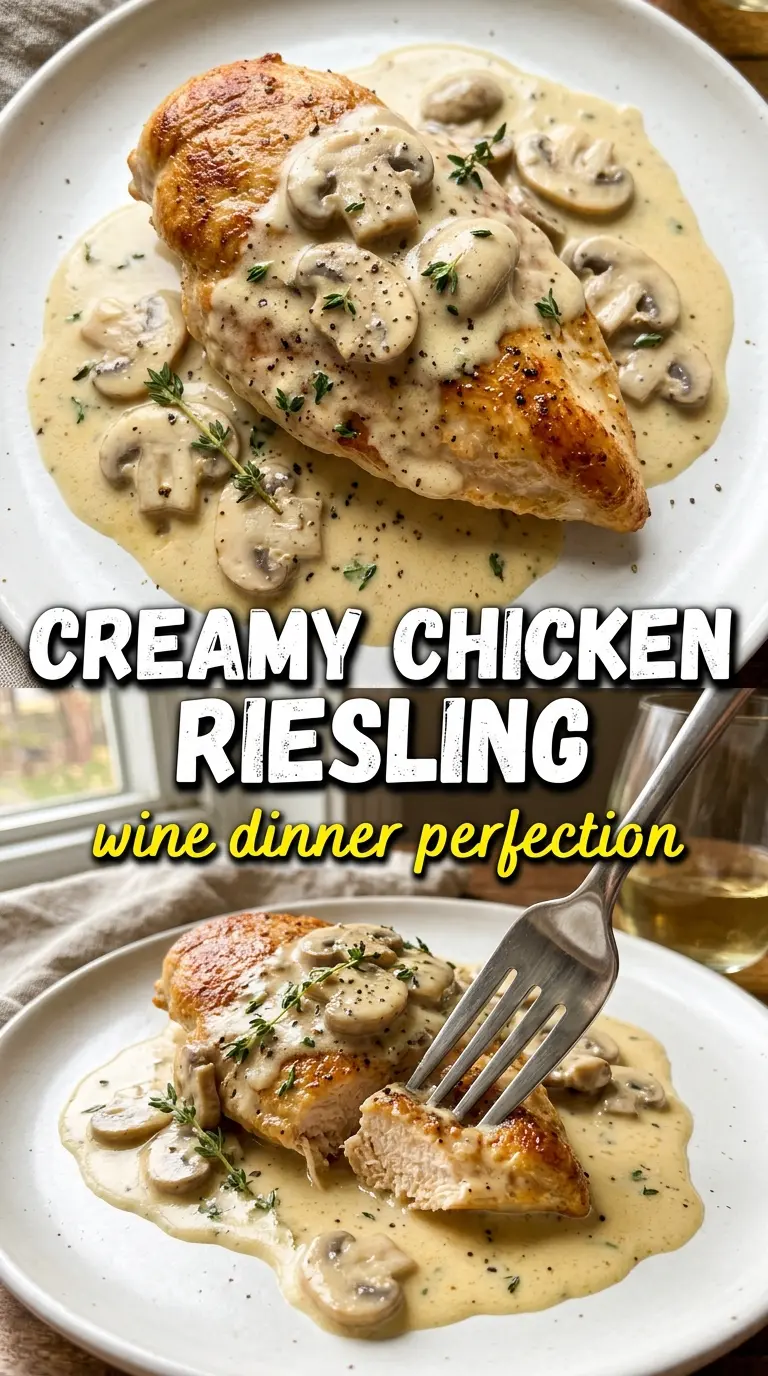
Golden chicken thighs in a Riesling cream sauce earn their place on the table fast. The skin stays bronzed and crisp on top while the sauce turns pale gold, silky, and just fragrant enough to make the whole skillet feel a little special without turning fussy. Mushrooms, shallots, and tarragon give it that deep, savory edge that keeps each bite from leaning heavy.
The key is building layers in the right order. The chicken gets a real sear first, which gives you flavor in the pan and keeps the skin from turning soggy later. Then the mushrooms cook until they give up their moisture and take on color before the wine goes in; that’s what keeps the sauce tasting rich instead of watered down. Riesling brings gentle sweetness and acidity, and the Dijon pulls the cream into something with a little backbone.
Below, I’ve laid out the exact cues I watch for in the skillet, plus a few practical swaps if you need them. If sauces sometimes turn thin or the chicken loses its crisp edges, the notes in this post will help you catch it before it happens.
The sauce reduced into this silky, pale gold color and the mushrooms picked up so much flavor from the wine. I served it with mashed potatoes and my husband went back for seconds without even waiting for the table to be cleared.
Save this Creamy Chicken Riesling for the night you want a wine-kissed skillet dinner with crisp chicken, mushrooms, and a sauce that finishes glossy.
The Sear That Keeps the Chicken Skin from Going Soft
The biggest mistake in a dish like this is rushing the chicken and then crowding the pan with sauce before the skin has time to do its job. You want a deep golden crust on the skin side before anything else goes into the skillet. That crust is flavor, but it also gives the thighs enough structure to stand up to the cream without turning limp.
Once the chicken comes out, the mushrooms need a real turn in the pan as well. If they go in and start steaming in their own moisture, the sauce loses depth. Let them cook until the pan looks mostly dry and the edges start to brown. That’s the point where the Riesling can hit the skillet and pick up every bit of flavor that’s stuck to the bottom.
What the Wine, Cream, and Dijon Each Do Here
- Riesling wine — This is the flavor the dish is built around, so use a wine you’d actually drink. A dry or off-dry Riesling works best because it keeps the sauce bright without making it sugary. If you need a substitute, a dry white wine with a little fruit, like Pinot Gris, gets close, but the sauce will lose that signature floral edge.
- Heavy cream — This gives the sauce body and a soft finish. Half-and-half can work in a pinch, but the sauce will be thinner and needs a gentler simmer so it doesn’t separate. If you use a lower-fat dairy, keep the heat low once it’s added.
- Dijon mustard — Don’t skip this. It doesn’t make the dish taste mustardy; it sharpens the cream and helps the sauce hold together. Grainy mustard changes the texture and adds more bite, which can be good if you want something a little rustic.
- Fresh tarragon — This is the herb that makes the whole skillet taste intentional. Its anise-like note works beautifully with cream and wine. Dried tarragon is fine, but use less because it can take over fast.
- Cremini mushrooms — They bring the savory base the sauce needs. Button mushrooms work too, but they’re milder. Slice them evenly so they brown at the same pace and don’t disappear into the sauce.
Building the Sauce in the Same Pan Without Breaking It
Getting Color on the Chicken First
Season the thighs well before they hit the pan, then set them skin-side down in hot olive oil and leave them alone until the skin releases easily. If you try to move them too soon, they’ll stick and tear. Seven to eight minutes usually gives you the deep golden color you want, and that color carries into the sauce.
Cooking the Mushrooms Until They Taste Toasty, Not Watery
After the chicken comes out, the shallots and mushrooms go into the same skillet. Cook them until the shallots soften and the mushrooms lose their raw look and start to brown at the edges. If the pan looks crowded or wet, keep going; that moisture has to cook off before the wine can reduce properly.
Reducing the Wine Before the Cream Goes In
Pour in the Riesling and let it bubble for a few minutes before you add the cream. That step softens the alcohol and concentrates the wine’s flavor, which is what keeps the sauce from tasting flat. Once the cream, broth, tarragon, and Dijon go in, lower the heat and let everything settle into a gentle simmer. High heat is how cream sauces turn grainy or split.
Finishing Glossy and Serving Right Away
Return the chicken skin-side up and simmer until the thighs reach 165°F. The sauce should coat a spoon instead of running straight off it. Pull the pan off the heat and swirl in the butter at the end for shine, then spoon the sauce around the chicken instead of over the skin so you keep that crisp top intact.
Make it dairy-free with coconut cream
Coconut cream will give you the richest dairy-free result, but it changes the flavor enough that the sauce leans less classic and more modern. Keep the Dijon and tarragon in place to pull it back toward the original profile. Use a gentle simmer and skip any hard boiling so the sauce stays smooth.
Use boneless chicken thighs for faster cooking
Boneless thighs cut the cook time down and make serving easier, but you lose some of the rich flavor that bones bring to the sauce. Sear them well, then simmer a few minutes less and check early so they stay juicy. This works best if you want a weeknight version without changing the skillet method.
Swap the wine when you don’t cook with alcohol
Use a mix of white grape juice and a splash of white wine vinegar or lemon juice to mimic the sweet-tart balance of Riesling. It won’t taste exactly the same, and the sauce will be a little less complex, but it still gives you a bright creamy pan sauce. Start with less acid than you think you need and taste at the end.
Storage and Reheating
- Refrigerator: Store leftovers in an airtight container for up to 3 days. The sauce thickens as it chills, and the chicken skin softens, which is normal.
- Freezer: It freezes, but the cream sauce can separate a little when thawed. If you plan to freeze it, cool it completely first and freeze the chicken and sauce together for up to 2 months.
- Reheating: Warm it gently in a covered skillet over low heat with a splash of broth or water. Don’t boil it, or the cream can split and the chicken will tighten up.
Questions I Get Asked About This Recipe

Creamy Chicken Riesling
Ingredients
Equipment
Method
- Season the chicken thighs with salt, pepper, and garlic powder to taste. Pat off excess moisture so the skin browns.
- Heat olive oil in a large skillet over medium-high heat and place chicken skin-side down. Sear 7-8 minutes until deeply golden, with a clear sizzling sound and browned edges.
- Flip the chicken and sear the second side for 4 minutes. Look for a consistent golden color before removing the chicken to a plate.
- Add minced shallots and sliced mushrooms to the skillet and cook 5-6 minutes, stirring occasionally. Cook until the mushrooms are golden and the shallots soften.
- Add minced garlic and cook for 1 minute. Stop as soon as it smells fragrant so it doesn’t brown.
- Pour in Riesling wine and let it simmer for 3 minutes. You should see the liquid reduce and the sharp alcohol smell fade.
- Stir in heavy cream, chicken broth, fresh tarragon, and Dijon mustard. Mix until the sauce looks smooth and lightly thickened.
- Return the chicken skin-side up to the sauce and cover. Simmer 15-18 minutes until the internal temperature reaches 165°F.
- Remove the chicken and swirl in butter to make the sauce glossy. The sauce should turn pale golden and look silky.
- Return the chicken to the skillet and garnish with fresh tarragon. Serve right away so the sauce stays poolable and fragrant.