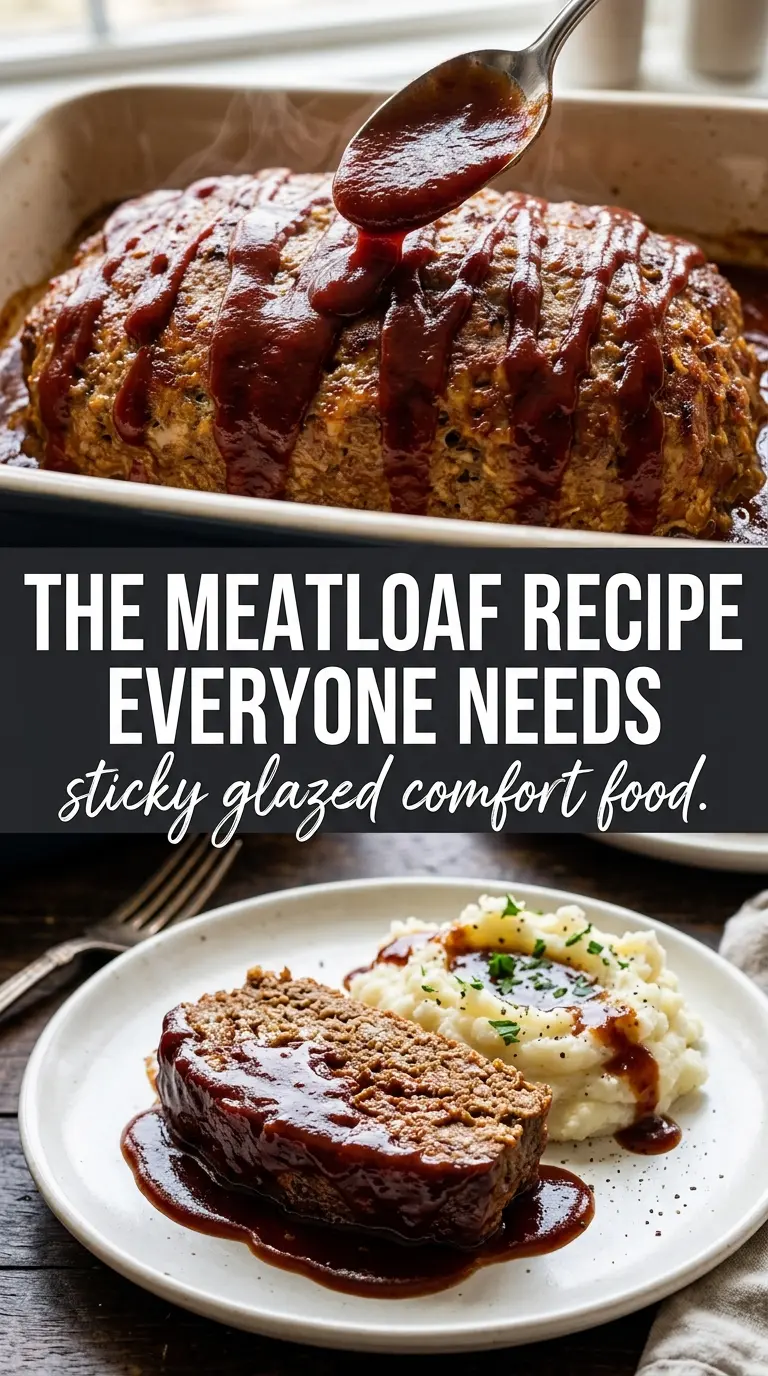
Classic glazed meatloaf earns its place on the dinner table when the slices hold together, stay moist in the center, and carry that sticky, tangy-sweet cap on top that caramelizes just enough at the edges. The best versions don’t taste like filler or mush. They slice cleanly, smell deeply savory, and leave you with enough glaze to want one more bite than you planned.
The trick is keeping the mixture tender without making it loose. Grated onion melts into the meat better than chopped onion, breadcrumbs give the loaf structure without turning it heavy, and the milk helps the whole thing stay juicy through the bake. The glaze also matters more than people think: a little vinegar keeps the ketchup from tasting flat, and the second layer goes on late enough to stay glossy instead of burning.
Below, I’ve broken down the parts that matter most, including the one mixing mistake that turns meatloaf dense, plus a few useful ways to adapt it without losing that old-school comfort-food feel.
The glaze set up beautifully and the loaf sliced without crumbling. I used the loaf pan and the texture stayed moist all the way through, even the leftovers the next day.
Save this classic glazed meatloaf for the night you want a tender loaf, a sticky ketchup-brown sugar finish, and zero guesswork at the table.
The Mix That Keeps Meatloaf Tender Instead of Dense
Meatloaf usually goes wrong before it ever reaches the oven. Overmixing is the big culprit. Once the beef, breadcrumbs, and egg get stirred too hard, the texture tightens up and bakes into a firm, bouncy loaf instead of a tender slice that still feels meaty. Stop mixing as soon as everything looks evenly distributed. A few streaks of seasoning are better than a paste-like mixture.
Grated onion does a lot of quiet work here. It disappears into the loaf, bringing moisture and flavor without leaving chunks that can fall apart when you slice. The 80/20 ground beef matters too. Leaner beef can work, but it won’t eat the same way because there’s less fat to baste the loaf from within as it bakes.
What Each Ingredient Is Actually Doing in This Loaf
- Ground beef (80/20) — This is the backbone of the recipe. The fat keeps the loaf juicy and gives the slices that classic meatloaf texture. If you use a leaner blend, the loaf can turn dry before the center finishes cooking.
- Breadcrumbs and milk — This is the panade, and it’s what keeps the meatloaf soft instead of tight. The breadcrumbs soak up the milk, then release that moisture back into the meat as it bakes. Crushed saltines or plain panko both work if that’s what you have.
- Grated onion and garlic — The onion should be grated, not chopped, so it melts into the loaf and seasons it from the inside out. Minced garlic works fine, but don’t use too much or it can overpower the glaze.
- Worcestershire sauce and thyme — Worcestershire brings deep savoriness and a little acid, which keeps the meatloaf tasting balanced. Thyme gives it that old-fashioned dinner flavor that reads classic instead of heavy.
- Glaze ingredients — Ketchup gives body, brown sugar helps it caramelize, and apple cider vinegar keeps it from tasting one-note sweet. The second spoonful of glaze goes on halfway through baking so it sets on top instead of disappearing into the loaf.
Building the Loaf and Glaze at the Right Time
Mixing Without Packing It Down
Combine everything in a large bowl and use your hands or a fork to bring it together just until the ingredients are evenly distributed. The mixture should look cohesive, but it shouldn’t feel mashed. If it gets compacted, the loaf turns tight and the slices lose that tender, old-school texture.
Shaping for the Best Finish
Form the meatloaf on a foil-lined baking sheet if you want more browned edges, or press it into a loaf pan if you prefer a taller, softer slice. A free-form loaf cooks a little faster and lets some fat drip away, while a pan keeps the shape neat and familiar. Either way, avoid packing it down with your hands. Gentle shaping is enough.
Glazing in Two Layers
Mix the glaze until the brown sugar dissolves and brush on half before baking. That first layer sets into the surface and starts caramelizing early. Add the rest near the end so it stays shiny and sticky. If you put all of it on at the start, the sugar can scorch before the center reaches temperature.
Knowing When It’s Done
Bake until the center hits 160°F and the top looks deeply glazed with edges that have darkened slightly. A meatloaf that comes out too soon can slump when sliced, but overbaking dries out the beef fast. Let it rest for 10 minutes before cutting so the juices settle back into the loaf instead of running across the board.
How to Adapt This Meatloaf Without Losing the Texture
Gluten-Free Meatloaf
Swap the breadcrumbs for gluten-free breadcrumbs or crushed gluten-free crackers in the same amount. You still want something dry enough to absorb the milk, so don’t replace them with extra beef. The structure stays the same, and the texture stays tender.
Dairy-Free Version
Use unsweetened oat milk or almond milk in place of the whole milk. The loaf won’t taste different in a noticeable way, but the panade still does its job. Stick with an unsweetened milk so the glaze and seasonings stay balanced.
Using Turkey Instead of Beef
Ground turkey works, but it needs a little help to stay moist. Use turkey that isn’t ultra-lean, and consider adding a tablespoon of olive oil to the mix. The flavor will be a little lighter and less rich than beef, but the glaze still carries the whole dish.
Making It Ahead
You can mix and shape the loaf a few hours ahead, then cover and refrigerate it until baking time. Bring it out while the oven preheats so it doesn’t go in icy cold. A cold center takes longer to cook and can dry out the outside before the middle finishes.
Storage and Reheating
- Refrigerator: Store leftovers in an airtight container for 3 to 4 days. The glaze softens a little, but the flavor gets even better by the next day.
- Freezer: Meatloaf freezes well. Wrap slices or the whole cooled loaf tightly and freeze for up to 2 months. Thaw overnight in the refrigerator before reheating.
- Reheating: Warm slices covered in the oven at 325°F with a splash of water or broth in the pan. The mistake to avoid is blasting it in the microwave, which dries the meat out fast and turns the glaze sticky in the wrong way.
Answers to the Questions Worth Asking
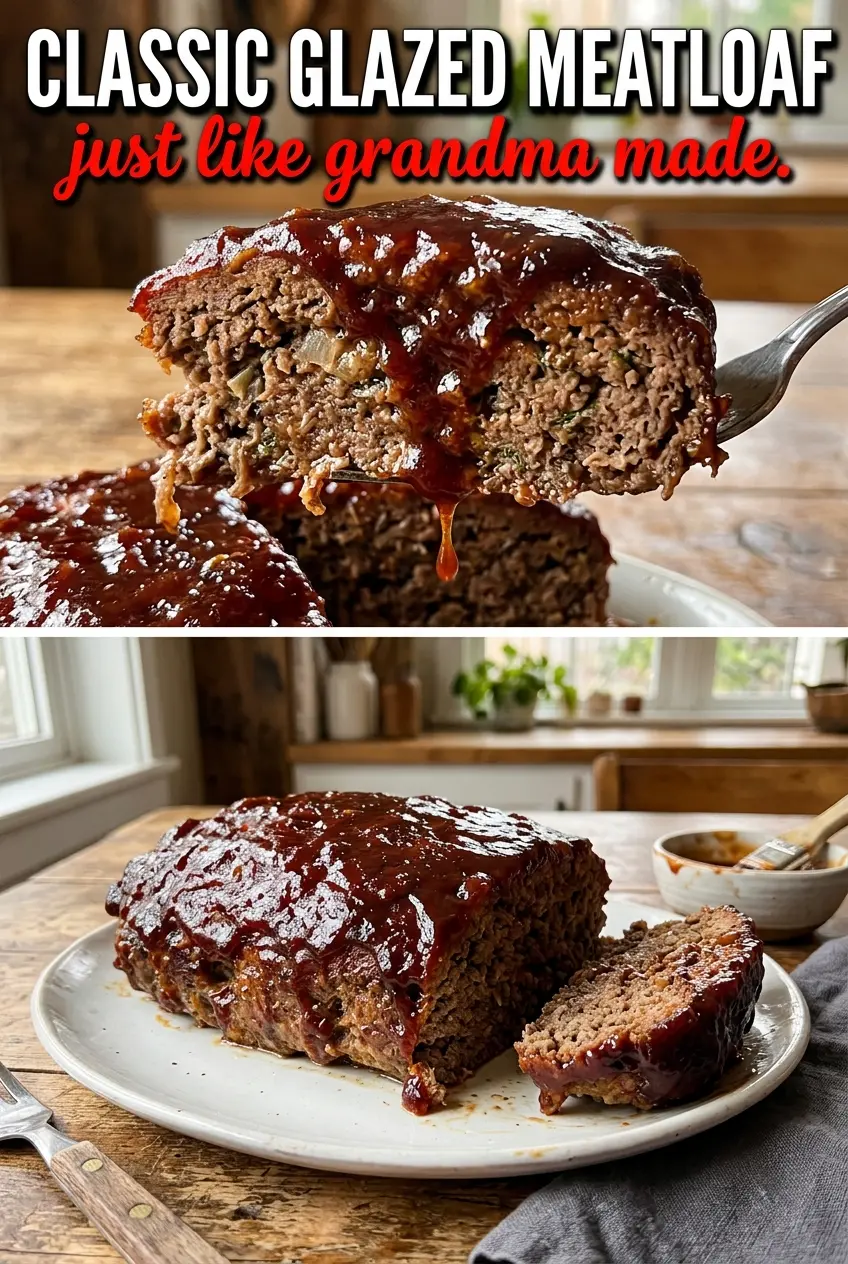
Classic Glazed Meatloaf
Ingredients
Equipment
Method
- Preheat the oven to 350°F and line a loaf pan or baking sheet with foil. Set up the pan so the meatloaf goes in as soon as it’s shaped.
- In a large mixing area, combine ground beef, breadcrumbs, beaten eggs, whole milk, grated onion, minced garlic, Worcestershire sauce, dried thyme, garlic powder, salt, and black pepper. Mix just until combined so the loaf stays tender, not overworked.
- Shape the mixture into a loaf on the lined baking sheet or press into the loaf pan. Aim for even thickness so it bakes uniformly.
- Mix the glaze ingredients (ketchup, brown sugar, apple cider vinegar, and Worcestershire sauce) in a small bowl until smooth. The glaze should look glossy and pourable.
- Spread half the glaze over the top of the meatloaf. You should see a thick, even layer that will start caramelizing as it bakes.
- Bake for 45 minutes at 350°F. The top should look set and slightly darker at the edges.
- Remove from the oven, spread the remaining glaze over the meatloaf, and return it to the oven. Make sure the glaze covers the top fully for a shiny finish.
- Bake 15–20 more minutes at 350°F until the internal temperature reaches 160°F. The glaze should appear caramelized and crackled across the top.
- Rest the meatloaf for 10 minutes before slicing and serving. Letting it rest helps the slices hold together and keeps the interior moist.