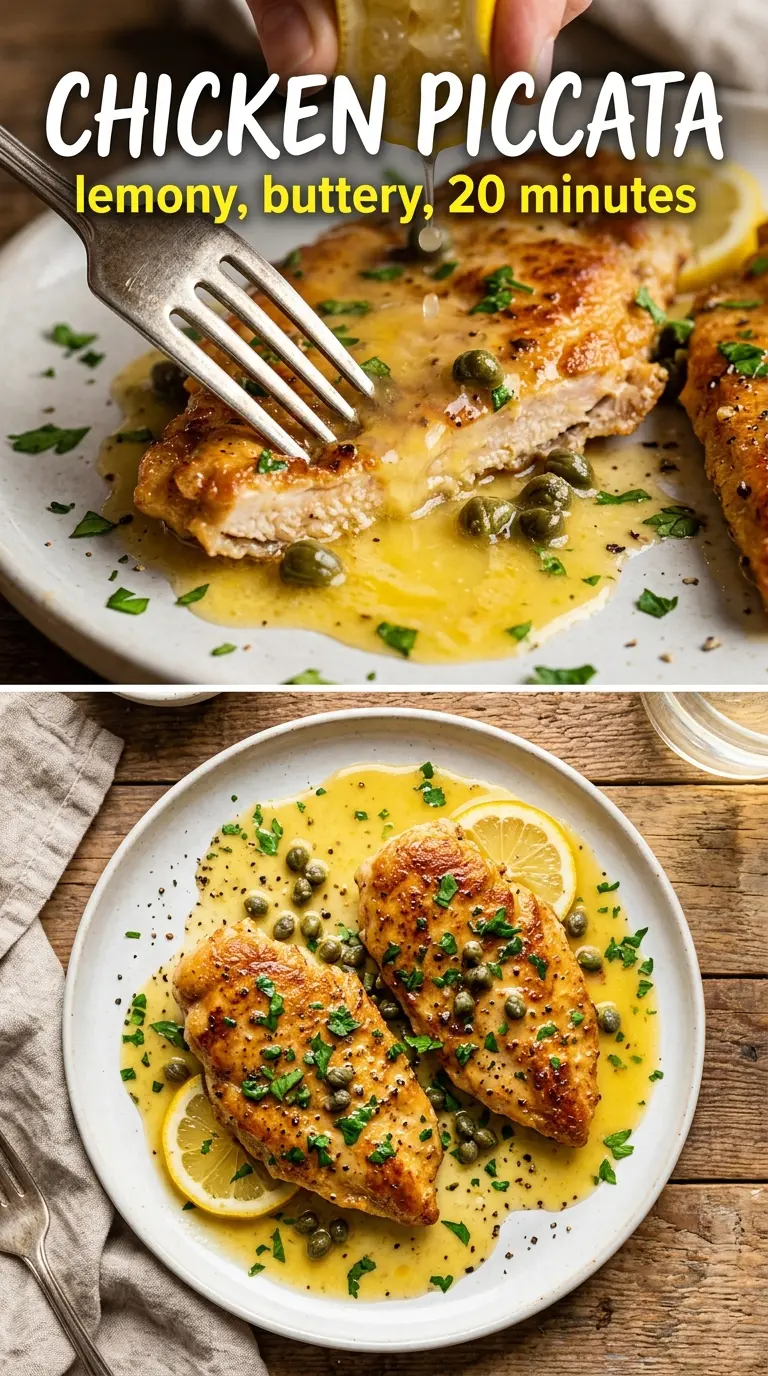
Chicken piccata lives or dies by the sauce, and this version gets it right: thin, crisp-edged cutlets tucked into a bright lemon-butter pan sauce that tastes sharp at first, then turns silky and rich on the plate. The chicken stays tender because it cooks fast, and the flour coating gives the sauce just enough body to cling without turning heavy.
The trick is keeping the cutlets thin and the heat high enough for color, then pulling the pan back before the final butter goes in. That last swirl is what gives the sauce its gloss instead of a greasy finish. Capers and lemon slices bring the briny, punchy bite that makes piccata taste like piccata, not just lemon chicken.
Below you’ll find the timing cues that keep the chicken juicy, plus the small change that makes the sauce stay smooth even after you add the wine and lemon juice.
The chicken stayed tender and the sauce thickened just enough to coat every cutlet. I added extra lemon slices on top and my husband kept spooning the sauce over the rice.
Love the bright lemon-butter sauce and crisp chicken cutlets? Save this Chicken Piccata for the nights when you want something fast, elegant, and full of pan sauce.
The Step That Keeps Chicken Piccata Light Instead of Heavy
The biggest mistake with piccata is overloading the flour. A thick coating turns pasty once the sauce hits it, and the chicken starts tasting breaded instead of delicate. A light dredge is enough to help the cutlets brown and give the pan sauce a little body.
Thin cutlets matter more than almost anything else here. They cook quickly, stay juicy, and give you a larger surface for browning, which means more flavor in the skillet. If the chicken is uneven after halving it, pound the thicker spots just enough to even them out so one side doesn’t dry out while the other finishes.
What Each Ingredient Is Doing in the Pan
- Chicken breasts — Halving them horizontally gives you thin cutlets that cook fast and stay tender. If the pieces are uneven, press them lightly with a mallet or the bottom of a heavy skillet so they brown at the same pace.
- Flour — This is what helps the cutlets turn golden and gives the sauce a little body. Don’t use a heavy coating; the goal is a dusting, not a crust.
- Dry white wine — Wine adds depth and helps lift the browned bits from the pan. If you don’t cook with wine, use extra chicken broth plus a small splash more lemon juice, but expect a slightly flatter sauce.
- Lemon juice and capers — This is the piccata character right here. Fresh lemon juice matters because bottled juice tastes dull, and capers bring the salty, briny bite that keeps the sauce from feeling one-note.
- Butter — Two tablespoons start the browning, and the last two finish the sauce. That final cold butter swirl is what gives you a glossy emulsion instead of a thin, sharp pan sauce.
Building the Sauce So It Stays Silky
Brown the Chicken First
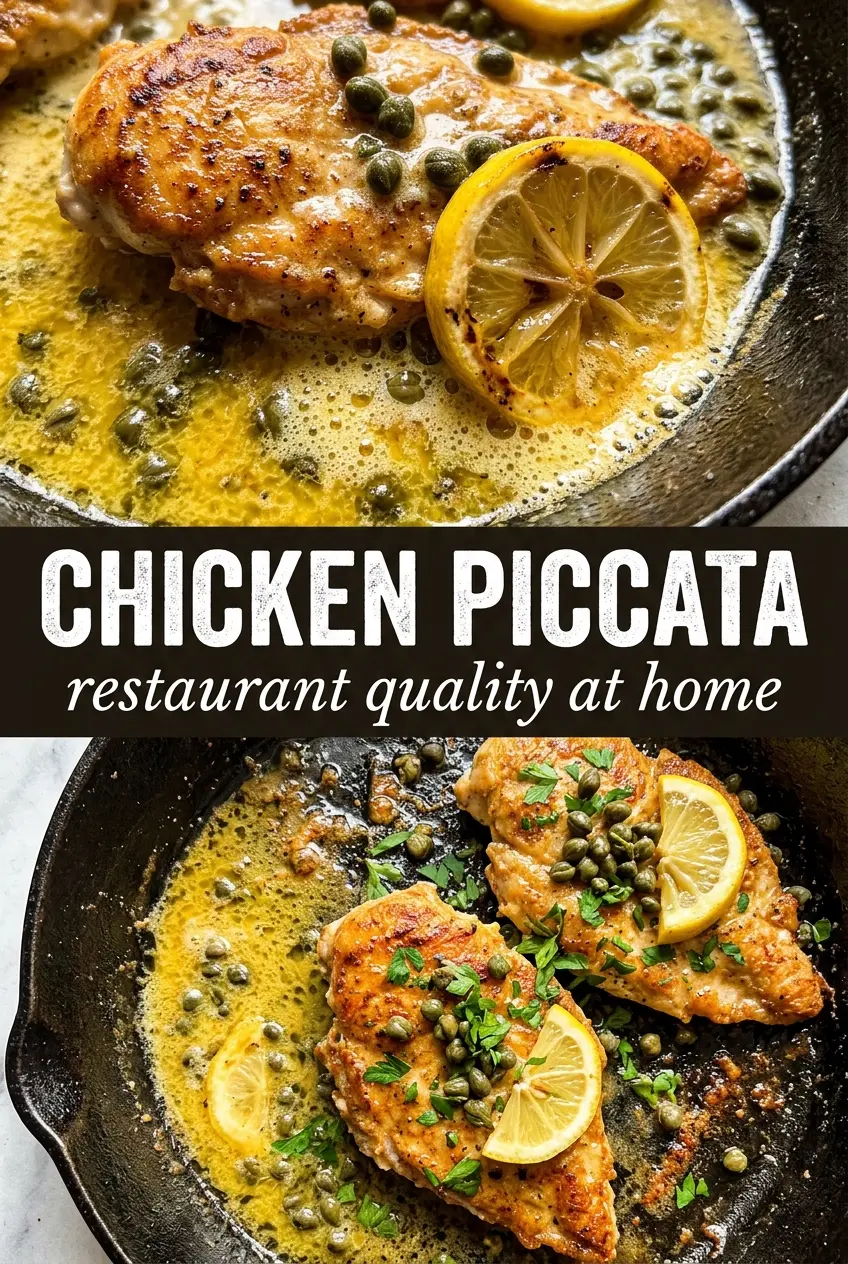
Heat the oil and the first two tablespoons of butter until the butter foams, then add the cutlets in a single layer. You want a deep golden edge and a skillet that smells nutty, not scorched. If the pan is crowded, the chicken steams and the flour softens before it can brown, so cook in batches and keep the finished pieces on a plate while you move through the rest.
Use the Pan Bits, Not Against Them
When the chicken comes out, garlic goes in for just 30 seconds, then the wine hits the pan and lifts all those browned bits. That scraping step carries the flavor of the chicken into the sauce. Let the wine simmer until it loses its sharp alcohol smell; if you rush it, the sauce tastes boozy instead of balanced.
Finish Off Heat
Add the broth, lemon juice, capers, and lemon slices, then let the sauce reduce until it lightly coats the back of a spoon. Pull the pan off the burner before stirring in the remaining cold butter. If the butter goes in over high heat, the sauce can split and look oily. Return the chicken only after the sauce is glossy, then spoon it over the top so the cutlets soak up the flavor without overcooking.
How to Adjust Chicken Piccata Without Losing the Point
Gluten-Free Piccata with the Same Crisp Edges
Use a cup-for-cup gluten-free flour blend for dredging. It won’t brown quite as deeply as all-purpose flour, but it still helps the chicken sear and gives the sauce enough structure to cling.
Dairy-Free Version That Still Feels Rich
Replace the butter with a good olive oil or a dairy-free butter substitute. You’ll lose a little of the classic silky finish, so reduce the sauce a bit longer and watch for a lightly glossy look before adding the chicken back in.
No-Wine Substitution That Still Tastes Bright
Swap the wine for extra chicken broth with an extra teaspoon of lemon juice. The sauce will be a little less complex, but the briny capers and fresh lemon still carry the dish.
Storage and Reheating
- Refrigerator: Store the chicken and sauce together for up to 3 days. The flour coating softens as it sits, but the flavor holds well.
- Freezer: It freezes, but the sauce can separate a bit when thawed. If you plan to freeze it, keep the chicken and sauce in a tightly sealed container for up to 2 months and expect to whisk it gently while reheating.
- Reheating: Rewarm slowly in a skillet over low heat with a splash of broth. High heat dries out the chicken and can break the sauce, so keep the pan gentle and stop as soon as everything is hot.
Questions I Get Asked About This Recipe
Chicken Piccata
Ingredients
Equipment
Method
- Season the chicken cutlets with salt and pepper and dredge lightly in flour, shaking off the excess.
- Heat the olive oil and 2 tablespoons butter in a large skillet over medium-high heat.
- Cook the chicken in batches for 3-4 minutes per side until golden and cooked through, then remove and set aside.
- Add the garlic and cook for 30 seconds, stirring until fragrant and lightly golden.
- Pour in the white wine and scrape up the browned bits from the bottom of the skillet.
- Simmer for 2 minutes so the wine reduces slightly, then add the chicken broth, lemon juice, capers, and lemon slices.
- Simmer for 4-5 minutes, stirring occasionally, until the sauce reduces by about a third and looks thicker.
- Remove the skillet from heat and swirl in the remaining 2 tablespoons cold butter until the sauce is glossy.
- Return the chicken to the skillet and spoon the sauce over each cutlet so it pools around the edges.
- Garnish with fresh parsley and serve right away.