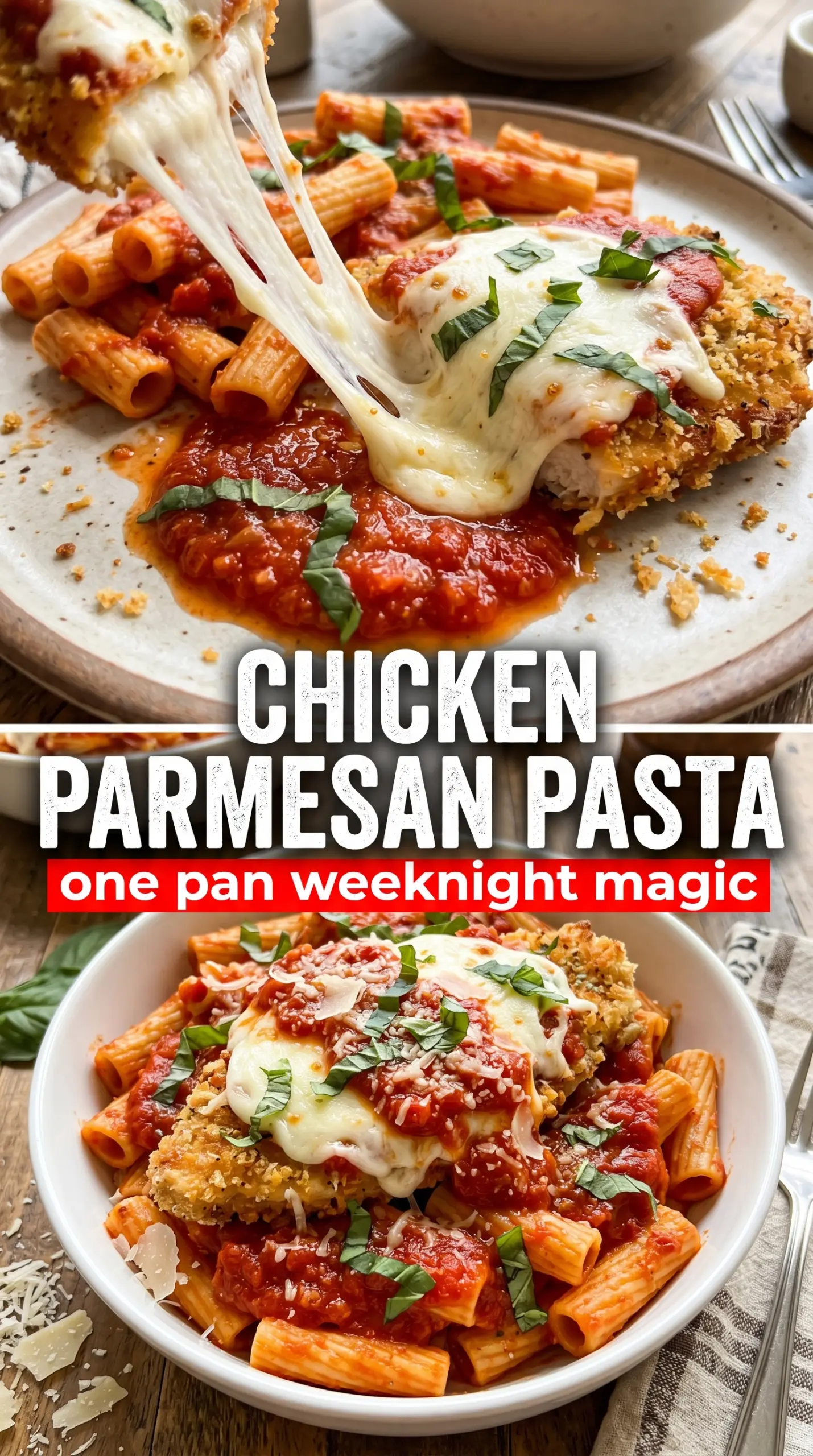
Golden breaded chicken over saucy penne is the kind of dinner that disappears fast because it hits every note people want in a comfort pasta: crisp edges, a rich tomato base, and a blanket of melted cheese that stretches when you scoop it. This version keeps the chicken coated and browned before it goes into the baking dish, so you get actual crunch instead of soft breading lost under the sauce.
The trick is treating the chicken and pasta like two jobs that need to be done well before they meet. The chicken gets a flour-egg-breadcrumb coating with Parmesan mixed into the crumbs, which gives the crust more flavor and a better seal. The pasta is tossed with marinara first so every piece is coated, then the chicken and cheese go on top and finish together in the oven. That keeps the sauce from drying out and lets the mozzarella melt into a proper top layer.
Below, I’ve included the little details that matter most here: how to keep the breading crisp, which pasta shapes work best, and what to do if you want to make it ahead without losing the best texture.
The chicken stayed crisp on top even after baking, and the penne soaked up the sauce without getting mushy. I made it on a Tuesday and my husband asked if there was enough for lunch tomorrow before he finished his first plate.
Love that crisp chicken and bubbling mozzarella? Save this Chicken Parmesan Pasta for a weeknight baked pasta that still tastes special.
The Crisp Chicken Needs Its Own Head Start
The most common mistake with chicken parm pasta is putting breaded chicken directly into sauce and expecting it to stay crisp. It won’t. Sauce steam softens the coating fast, which is why the chicken here gets browned in oil first and only then moves into the baking dish.
That first pan-fry does two things at once: it cooks the chicken through and sets the breading into a deep golden shell. You don’t need a hard crust that shatters; you need a dry, sealed surface that can survive a short bake under cheese. If the pan is crowded, the coating steams instead of browning, so work in batches and give each piece space.
What Each Layer Is Doing in This Chicken Parmesan Pasta
- Chicken breasts — Cut them into bite-sized pieces so they cook quickly and fit neatly over the pasta. If the pieces are much larger, the breading tends to separate before the center is done.
- Flour, egg, and breadcrumbs — This is the coating that gives you the classic chicken parm texture. The flour helps the egg cling, and the egg gives the breadcrumbs something to grab onto; skipping either one makes the crust patchy.
- Parmesan in the breading — A little Parmesan mixed into the crumbs adds salty, nutty depth and helps the crust brown. Use the real grated kind here if you can, not the shelf-stable canister style, which doesn’t melt or toast the same way.
- Marinara sauce — This carries the dish and keeps the pasta from tasting flat after baking. A thick sauce works best; if yours is thin, simmer it for a few minutes first so the pasta doesn’t turn soupy.
- Mozzarella — This is the melt and the pull. Shredded mozzarella from a block melts more evenly than pre-shredded, which is coated to keep it from clumping.
- Penne — The ridges catch sauce and the tube shape holds up under baking. Short pasta matters here because it mixes and serves more cleanly than long noodles under a heavy topping.
Building the Sauce and Cheese Layer So Nothing Turns Soggy
Coating and Browning the Chicken
Dredge the chicken in flour first, then egg, then the breadcrumb-Parmesan mix, pressing lightly so the coating sticks in an even layer. The pan should be hot enough that the chicken sizzles the second it hits the oil. If the breading looks pale and greasy, the oil wasn’t hot enough; if it darkens too fast while the center stays underdone, the heat is too high. Aim for a steady golden crust and cook just until the pieces are cooked through.
Marrying the Pasta and Marinara
Toss the cooked penne with marinara before it goes into the baking dish. That step matters because dry pasta under cheese can taste disconnected, while sauced pasta bakes into one cohesive layer. Use enough sauce to coat every piece, but don’t drown it; excess liquid collects at the bottom and weakens the topping.
Finishing in the Oven
Arrange the chicken over the pasta in a single layer, then cover it with mozzarella and the remaining Parmesan. The bake is short on purpose, just long enough to melt the cheese and let the flavors settle together. If you keep it in too long, the chicken can overcook and the top can turn oily instead of bubbly. Pull it when the cheese is melted, speckled with gold, and the sauce is bubbling at the edges.
Make It Spicier
Add red pepper flakes to the marinara or mix a little into the breadcrumb coating. That gives the dish a sharper finish without changing the structure of the recipe.
Gluten-Free Version
Use gluten-free flour, gluten-free breadcrumbs, and a gluten-free pasta shape that holds up to baking. The coating will still brown, but it may look a little less rugged than standard breadcrumbs, so don’t rely on color alone when checking doneness.
Dairy-Light Swap
Reduce the mozzarella and use a little more marinara for a lighter finish. You’ll lose some of the stretch and the heavy baked-top feel, but the dish still tastes like chicken parm pasta instead of a separate chicken-and-pasta combination.
Storage and Reheating
- Refrigerator: Store covered for up to 4 days. The breading softens a bit, but the flavor holds up well.
- Freezer: Freeze in portions for up to 2 months. The chicken and pasta freeze better than you might expect, though the mozzarella won’t stay quite as stretchy after thawing.
- Reheating: Reheat covered in a 350°F oven until hot, then uncover for the last few minutes to wake up the top. Microwaving works in a pinch, but it softens the coating and can make the cheese oily.
Questions I Get Asked About This Recipe
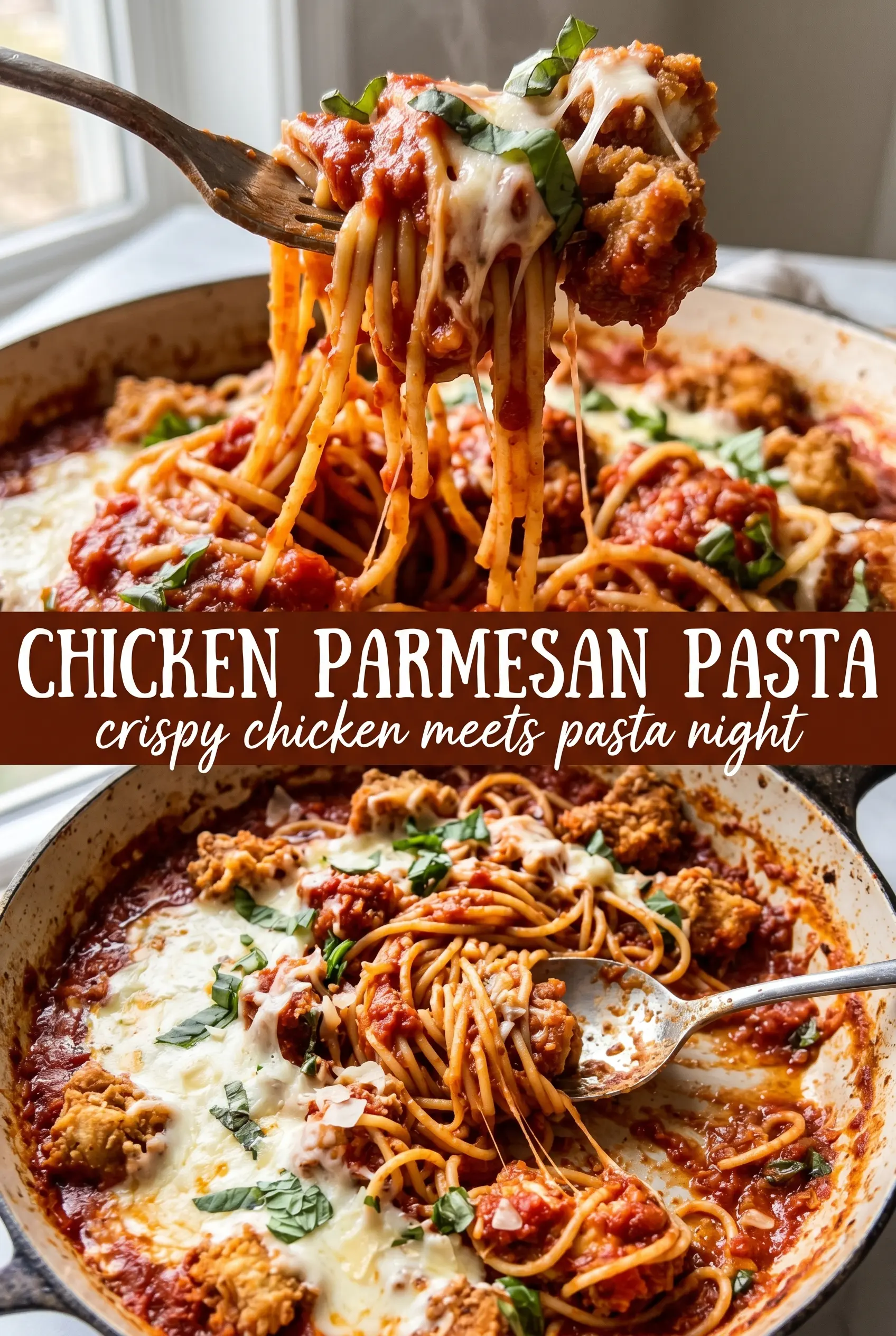
Chicken Parmesan Pasta
Ingredients
Equipment
Method
- Dredge the chicken pieces in flour, then dip them in the beaten eggs so they are evenly coated. Keep a clean surface as the coating becomes sticky from the egg.
- Coat the egged chicken in the breadcrumb mixture with 1/2 cup Parmesan until each piece is well covered. Press lightly so the crumbs cling.
- Pan-fry the breaded chicken in olive oil over medium-high heat for 3-4 minutes per side until golden and cooked through. Drain on paper towels so the crust stays crisp.
- Toss the cooked penne with the marinara sauce and pour into a greased 9x13 baking dish. Spread into an even layer so the bake cooks consistently.
- Arrange the crispy chicken pieces over the pasta so they sit in a single layer as much as possible. Let some penne show through for extra texture.
- Top with shredded mozzarella and Parmesan cheese so the surface is fully covered. This helps create bubbling, golden cheese across every inch.
- Bake at 375°F for 20-22 minutes until the cheese is melted and golden. Garnish with fresh basil right after baking.