Golden chicken strips, blistered peppers, and caramelized onions are what make this chicken and vegetables skillet worth putting on repeat. The vegetables stay crisp-tender with a little char on the edges, and the light garlic herb sauce ties everything together without turning the pan into a soupy mess. It eats like a full dinner, not a pile of separate things on a plate.
The trick is giving the chicken its own hard sear before the vegetables go in, then using the same pan for the broth and butter at the end. That keeps the chicken deeply browned and gives the vegetables a head start on flavor from the fond left behind. I also like cutting the chicken into strips so it cooks fast and stays juicy while the vegetables keep some bite.
Below, you’ll find the cue for when the vegetables are done enough to still taste fresh, plus the easiest swap if you want to use what’s already in your fridge.
The chicken stayed juicy, and the peppers and zucchini got those browned edges without turning mushy. I loved how the pan sauce picked up all the garlicky bits at the bottom.
Save this chicken and vegetables skillet for a fast one-pan dinner with golden chicken, blistered peppers, and lemony herb butter.
The Sear That Keeps the Chicken Juicy Instead of Watery
The biggest mistake with a skillet like this is crowding the pan and letting the chicken steam. Once the strips hit the hot oil, they need room to brown fast. If the pan looks packed, cook in batches. You’re aiming for a golden crust on the outside and just-cooked meat in the center, not pale chicken that gives off liquid and softens everything around it.
High heat matters here because the vegetables also need enough heat to blister instead of just soften. That quick, hard cooking is what gives the peppers and zucchini their edges and keeps the onion from disappearing into the sauce. When you get that balance right, the skillet tastes fresh and layered, not muddy.
What Each Ingredient Is Actually Doing in This Skillet

- Chicken breasts — Cutting them into strips is what helps them cook quickly and stay tender. Thighs work too if you want a little more richness, but they’ll need a minute or two longer.
- Bell peppers, zucchini, and red onion — This mix gives you sweetness, moisture, and a little bite all in one pan. The zucchini softens fastest, so cut it slightly thicker than the peppers to keep the textures even.
- Garlic, Italian seasoning, and smoked paprika — These are what make the skillet taste seasoned from the start instead of lightly salted chicken with vegetables on the side. Fresh garlic goes in late so it doesn’t burn, and smoked paprika adds depth without turning the dish heavy.
- Chicken broth and butter — The broth loosens the browned bits from the pan, and the butter gives the sauce a silky finish. Don’t swap in too much broth or you’ll wash away the sear you worked for.
- Lemon and parsley — These are the finish that wakes everything up. The lemon keeps the butter from tasting flat, and the parsley adds a fresh note right before serving.
Building the Sauce in the Same Pan
Seasoning the Chicken First
Toss the chicken with the spices before it ever touches the skillet so every strip gets seasoned evenly. The paprika should cling to the meat, not pool in the pan. If the chicken looks wet after seasoning, let it sit for a minute so the surface can dry a little; that helps it brown instead of sputter.
Blistering the Vegetables
Use the same pan after the chicken comes out. The remaining oil and browned bits add flavor, and the vegetables pick that up as they cook. Keep them moving, but not constantly — give them a chance to sit against the hot surface so you get those charred spots on the peppers and the onions begin to caramelize at the edges.
Finishing With Broth and Butter
Once the garlic smells fragrant, pour in the broth and scrape the pan right away. That’s where the flavor lives. Let it bubble for a moment, then add the butter off the hottest part of the burner so the sauce turns glossy instead of greasy. Return the chicken last, just long enough to coat it and warm it through without overcooking it.
How to Adapt This for the Pan You Have and the Diet You Need
Use chicken thighs instead of breasts
Boneless skinless thighs give you a richer, juicier skillet and forgive a little extra cooking time. They brown well, but they’ll need a few more minutes in the pan, so pull them only when they’re cooked through and the juices run clear.
Make it dairy-free
Skip the butter and finish with another teaspoon of olive oil plus a little extra lemon juice. You’ll lose a touch of richness, but the skillet still tastes bright and balanced.
Swap in different vegetables
Broccoli florets, asparagus, mushrooms, or green beans all work if you keep the pieces similar in size. Just match the cooking time to the vegetable: mushrooms need a little longer to lose their moisture, while asparagus should go in later so it stays crisp.
Turn it into a low-carb dinner bowl
Serve the skillet over cauliflower rice or shredded cabbage instead of grain-based sides. The vegetables and chicken carry the whole dish, so you don’t lose anything important by skipping the starch.
Storage and Reheating
- Refrigerator: Store in an airtight container for up to 4 days. The vegetables will soften a little, but the flavor holds up well.
- Freezer: It freezes, but the zucchini gets softer after thawing. Freeze for up to 2 months if you don’t mind a less crisp texture.
- Reheating: Warm it in a skillet over medium heat with a splash of broth or water until hot. The biggest mistake is blasting it in the microwave until the chicken dries out and the vegetables turn limp.
Answers to the Questions Worth Asking
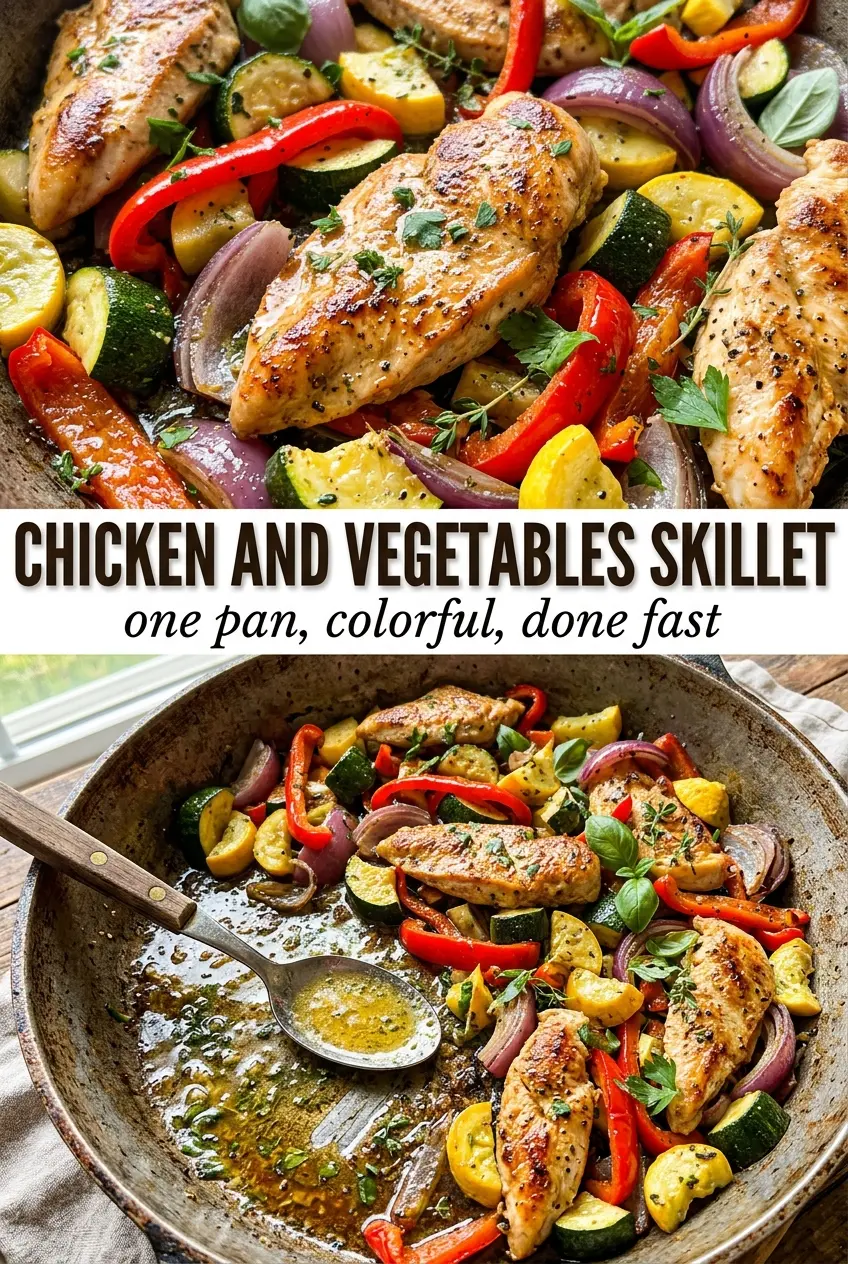
Chicken and Vegetables Skillet
Ingredients
Equipment
Method
- Season chicken strips with Italian seasoning, smoked paprika, salt, and pepper.
- Heat olive oil in a large cast iron skillet over high heat and sear chicken for 4-5 minutes until golden and cooked through to 165°F; remove to a plate.
- Add bell peppers, zucchini, and red onion to the skillet and cook over high heat for 5-6 minutes until blistered and slightly charred.
- Add garlic and cook for 1 minute, then pour in chicken broth and deglaze, scraping up the browned bits.
- Return chicken to the pan, add butter, and toss everything to coat until the sauce looks glossy.
- Garnish with fresh parsley and serve with lemon wedges.