Blackened Cajun chicken over creamy orzo hits that sweet spot between bold and comforting. The chicken brings a dark, seasoned crust with just enough heat to wake everything up, while the orzo turns silky and rich without feeling heavy. Bell peppers and onion stay a little sweet against the spice, and the whole skillet finishes with a glossy sauce that clings to every spoonful.
What makes this version work is the way the chicken and orzo share the same pan. The browned bits left behind after searing the thighs build the base of the sauce, so nothing gets wasted and the flavor goes deeper than a typical cream pasta. Toasting the orzo for a minute before adding broth keeps it from turning mushy, and a splash of lemon at the table pulls the whole dish into focus.
Below, I’m breaking down the one-pan timing, the ingredient swaps that still keep the dish balanced, and the small finish that keeps the cream sauce from tasting flat.
The orzo turned out creamy without getting gluey, and the chicken stayed crisp on the edges even after I sliced it and put it back on top. The lemon at the end made the Cajun seasoning taste brighter instead of just hot.
Save this creamy Cajun chicken orzo for the night you want a one-pan dinner with real heat, charred chicken, and a sauce that clings to every bite.
The Part That Keeps Cajun Chicken Orzo Creamy Instead of Heavy
The biggest mistake with a dish like this is rushing the creamy finish while the orzo is still thirsty. If you add the cream too early, the pasta keeps soaking it up and the skillet can turn pasty instead of silky. The better move is to let the broth cook down until the orzo is tender first, then stir in the cream and Parmesan at the end so the sauce settles around the pasta instead of disappearing into it.
There’s also a timing detail that matters with the chicken. Searing the thighs hard enough to get that blackened edge doesn’t just build flavor; it gives you fond in the pan, and that’s what makes the sauce taste like it’s been simmering longer than it has. Keep the heat steady and don’t crowd the skillet, or the chicken steams and you lose that dark crust that makes the dish worth coming back to.
What Each Ingredient Is Actually Doing in the Skillet

- Boneless skinless chicken thighs — Thighs stay juicier than breasts during the hard sear and the short simmering time. They hold up well against Cajun seasoning and give you a richer bite than leaner cuts. If you use chicken breasts, slice them in half horizontally so they cook through before the outside dries out.
- Cajun seasoning — This is the backbone of the dish, so use one you actually like the taste of on its own. Some blends run saltier or hotter than others, which is why the seasoning is split between the chicken and the vegetables. If yours is salt-free, add a little salt to the pan as you cook so the flavor doesn’t land flat.
- Orzo — Orzo is what gives the dish its creamy, risotto-like feel without needing constant stirring. Toasting it in the pan for a minute helps it stay separate and keeps the texture from going gummy. Regular pasta shapes won’t give you the same sauce-to-pasta ratio.
- Heavy cream and Parmesan — These are the finishing ingredients that turn broth into a sauce. Heavy cream is worth using here because it stays smooth over heat; half-and-half can work in a pinch, but the sauce will be thinner and a little less stable. Grate the Parmesan finely so it melts in without clumping.
- Bell peppers, onion, and garlic — These build sweetness and depth under the spice. The peppers soften just enough to fit the creamy texture without disappearing. Cut them small so they cook through in the short window before the orzo goes in.
- Lemon wedges — The acid matters more than it looks like it should. A squeeze over the finished skillet cuts through the cream and wakes up the Cajun seasoning, especially if your blend leans smoky or salty.
Building the One-Pan Base Without Overcooking the Orzo
Getting the Chicken Blackened
Rub the chicken thighs with Cajun seasoning before they hit the pan, then let them sear undisturbed in hot oil until the underside has a deep brown crust and releases without sticking. If you keep moving them too early, the seasoning smears and you lose that dark exterior. Four to five minutes per side is usually enough, but go by color and internal temperature, not the clock alone.
Softening the Vegetables in the Fond
After the chicken comes out, the pan should still have a thin layer of browned bits at the bottom. Add the peppers and onion and cook them in that flavor for about four minutes, stirring until the onion turns translucent and the peppers soften at the edges. If the pan looks dry, a small splash of broth or oil keeps the vegetables from scorching while they pick up the seasoning left behind.
Cooking the Orzo to the Right Texture
Stir in the orzo and toast it briefly before adding broth. That little step helps the pasta stay plumper and gives the finished dish a cleaner bite. Once the broth goes in, stir often and keep the heat at a lively simmer so the orzo cooks evenly; if you walk away, it sticks on the bottom fast and the sauce turns starchy instead of creamy.
Finishing the Sauce and Bringing It Together
When the orzo is tender and most of the broth is absorbed, lower the heat before adding the cream and Parmesan. This is the point where the skillet should look loose but not soupy, because the sauce will tighten as the cheese melts. Return the sliced chicken to the pan just long enough to warm through, then finish with green onions and lemon so the whole dish tastes bright instead of heavy.
How to Bend This Recipe Without Losing the Cajun Character
Make It Dairy-Free
Use full-fat coconut milk or an unsweetened oat-based cooking cream instead of heavy cream, and skip the Parmesan or replace it with a dairy-free hard cheese alternative. The sauce won’t be quite as sharp or rich, but it still turns silky if you keep the heat low when you stir it in. Add a little extra lemon at the end to keep the finish balanced.
Swap the Chicken for Shrimp
Shrimp cooks much faster, so sear it separately for just a minute or two per side and pull it before it turns rubbery. Add it back at the very end after the orzo is finished. You lose some of the deep pan fond from the chicken, but the dish turns lighter and still carries the same Cajun heat.
Make It Gluten-Free
Use a gluten-free orzo-style pasta if you can find one, then watch the simmer closely because some gluten-free versions soften faster than wheat orzo. Stir often and start checking a minute or two early so the pasta doesn’t break down. The texture will be a touch softer, but the skillet still works.
Storage and Reheating
- Refrigerator: Store leftovers in an airtight container for up to 4 days. The orzo will thicken as it sits, which is normal.
- Freezer: It freezes, but the cream sauce can separate a little when thawed. If you plan to freeze it, undercook the orzo slightly and reheat gently with a splash of broth or cream.
- Reheating: Warm it slowly on the stove over low heat with a few tablespoons of broth to loosen the sauce. The common mistake is blasting it in the microwave until the cream tightens and the chicken dries out.
Answers to the Questions Worth Asking
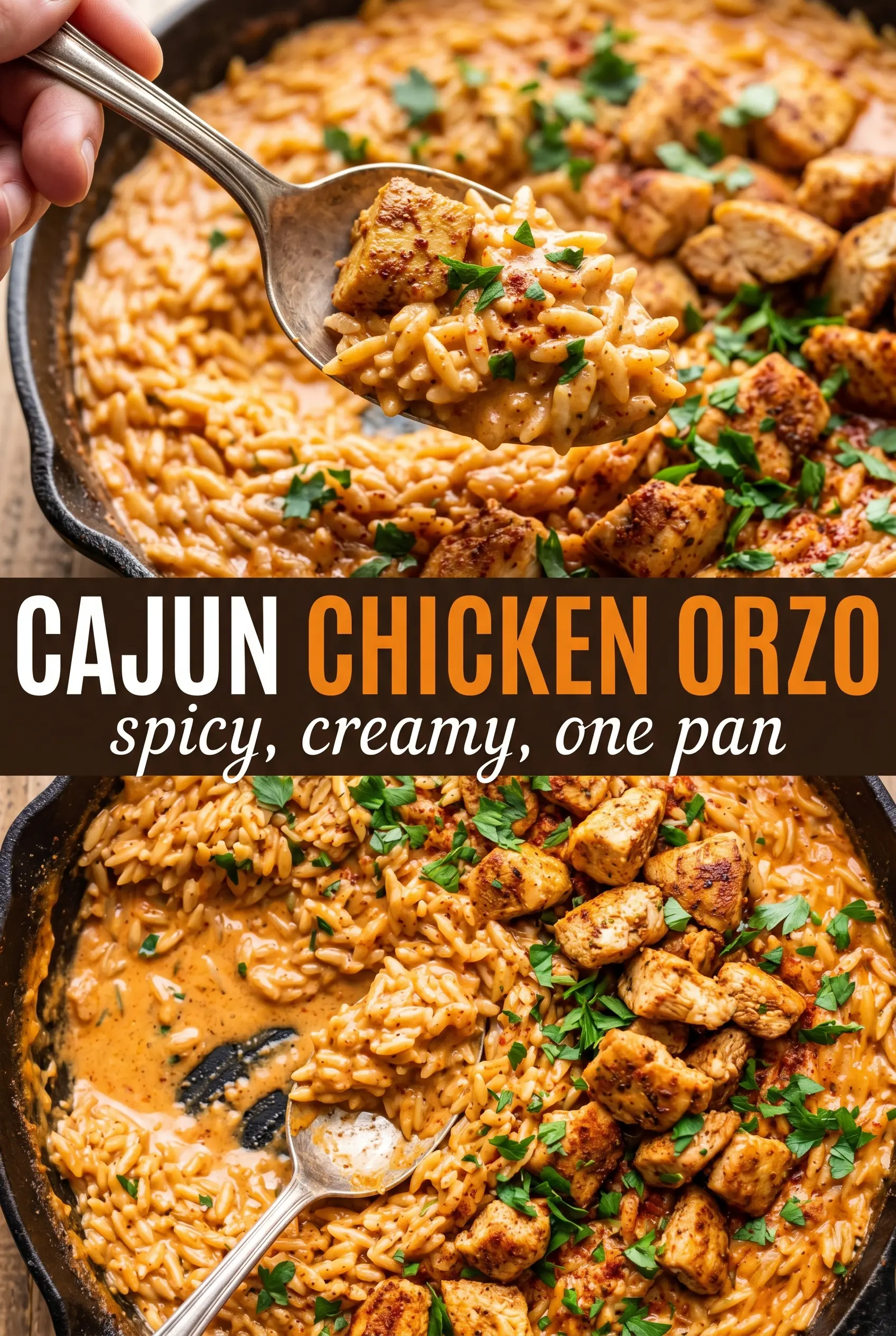
Cajun Chicken Orzo
Ingredients
Equipment
Method
- Rub the chicken thighs with 1 tablespoon Cajun seasoning. Heat olive oil in a large deep cast iron skillet over medium-high heat and sear until blackened and cooked through to 165°F, 4-5 minutes per side; remove and slice.
- In the same skillet, cook the red bell pepper and green bell pepper with the diced onion over medium heat until softened, 4 minutes. Add garlic and the remaining Cajun seasoning and smoked paprika and cook 1 minute.
- Add orzo to the skillet and toast for 1 minute, stirring so it lightly coats and warms. Pour in chicken broth, bring to a simmer, and cook uncovered for 10-12 minutes, stirring often, until orzo is tender.
- Stir in heavy cream and grated Parmesan, then simmer 2 minutes until creamy. Top with sliced Cajun chicken, garnish with sliced green onions, and serve with lemon wedges.