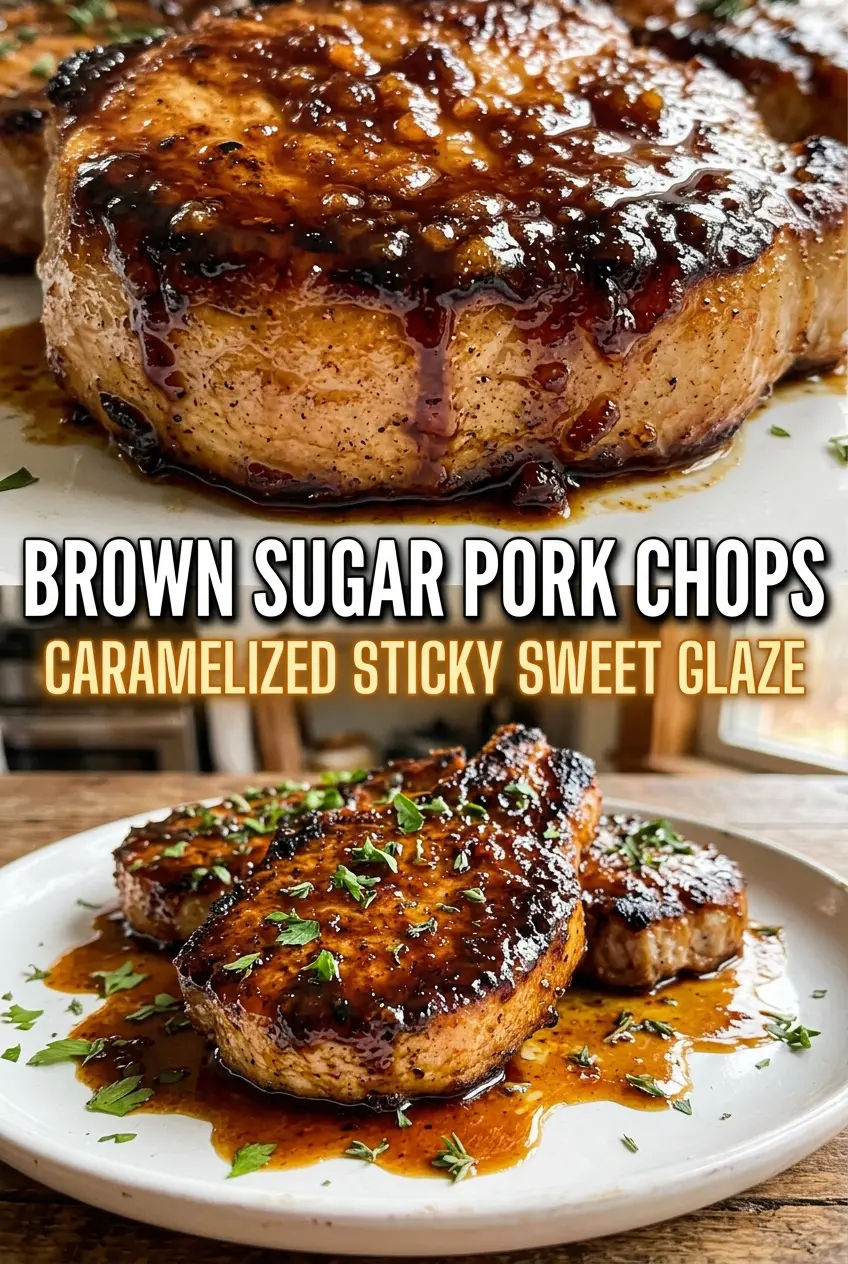
Brown sugar pork chops hit that sweet-savory middle ground that keeps people coming back for seconds. The outside turns into a crackly, caramelized crust, while the center stays juicy if you don’t overcook it. That contrast is the whole game here, and it’s what makes this version worth keeping in the rotation.
The trick is a dry rub that starts with brown sugar but doesn’t stop there. Garlic powder and smoked paprika keep the sweetness from tasting flat, cayenne adds just enough heat to wake everything up, and a good sear locks the coating onto the pork before the sugar has a chance to burn. I also like finishing with butter in the pan so the crust gets glossy and the sauce picks up all those browned bits from the skillet.
Below, I’ve included the timing that matters most, the small details that keep the crust from slipping off, and a few variations for different cuts and spice levels.
The brown sugar crust got beautifully caramelized in the skillet, and the pork stayed tender instead of drying out. I served it with rice and the pan juices were gone before I even sat down.
Like these brown sugar pork chops? Save them to Pinterest for the nights when you want a sticky caramelized crust and juicy pork with almost no cleanup.
The Heat Control That Keeps the Sugar From Burning
Brown sugar is forgiving in a rub, but it turns unforgiving fast once it hits a hot skillet. The line between caramelized and scorched is narrow, which is why these pork chops need a solid sear and a careful finish instead of a long blast of high heat. If the pan is ripping hot the whole time, the sugar will blacken before the pork has time to cook through.
Start with dry chops. Moisture on the surface steams the coating and stops that crust from setting up properly. Then leave the chops alone for the first few minutes in the pan. Moving them too early tears the crust and leaves you with patchy seasoning instead of an even glaze.
- Resting at room temperature for a few minutes helps the pork cook more evenly, but don’t leave it out long enough to warm through completely.
- A dry surface matters more than a marinade here. The sugar needs direct contact with the pan to caramelize.
- Medium-high heat gives you the best balance: hot enough for color, not so hot that the sugar goes bitter.
- Butter added near the end deepens the pan sauce and helps the crust take on a glossy finish.
What the Rub Is Doing Before the Pork Hits the Pan

- Brown sugar is the star because it melts into a sticky crust and helps the chops brown fast. Packed brown sugar gives the best coverage and the deepest glaze.
- Smoked paprika adds color and a little depth that keeps the sweetness from tasting one-note. Regular paprika works in a pinch, but you lose some of that subtle smoky edge.
- Garlic powder seasons the meat evenly without the risk of fresh garlic burning in the skillet.
- Cayenne doesn’t make these chops hot; it sharpens the finish. If you want less heat, cut it in half rather than skipping it completely.
- Olive oil and butter work together in the pan. The oil handles the sear, and the butter carries the caramelized bits into a quick sauce at the end.
Building the Crust Without Overcooking the Pork
Mixing and Coating the Chops
Stir the rub together until the brown sugar breaks up and the spices are evenly distributed. Pat the pork chops dry first, then press the mixture onto both sides so it actually sticks. A loose dusting will fall off in the pan and burn in the oil instead of forming that crackly coating you want.
Getting the First Sear Right
Heat the oil until it shimmers, then lay the chops in the skillet and leave them alone. You should hear a steady sizzle, not an aggressive sputter; if the pan is smoking hard, turn the heat down before the sugar scorches. After about 4 minutes, the chops should release more easily and show a deep amber crust on the bottom.
Finishing With Butter and Temperature
Flip the chops carefully, add the butter, and spoon the melted fat over the top as they finish cooking. This baste keeps the crust glossy and helps the pork cook through without drying out. Pull the chops when the center reaches 145°F, then rest them for 3 minutes so the juices settle back into the meat instead of running onto the plate.
Three Ways to Work With What You Have
For thicker bone-in pork chops
Bone-in chops work here, but they usually need a couple extra minutes in the pan. Keep the heat at medium-high for the sear, then lower it a touch if the crust is coloring too fast before the center reaches temperature. The bone adds a little insurance against drying out, and the flavor is excellent.
For a milder, less spicy version
Cut the cayenne down to a pinch or leave it out entirely. You’ll still get the caramelized brown sugar crust and the smoky paprika backbone, just without the little burn at the end. This is the version I’d use for kids or anyone who wants more sweet than heat.
For a gluten-free dinner
This recipe is naturally gluten-free as written, as long as your spices and brown sugar are packaged in a gluten-free facility if that matters for your kitchen. The technique doesn’t change at all, and that’s part of why it’s such an easy weeknight option.
For better leftovers the next day
Slice the chops before storing them so they reheat more evenly. The crust won’t stay as crisp, but the flavor holds up well if you warm them gently instead of blasting them in the microwave.
Storage and Reheating
- Refrigerator: Store in an airtight container for up to 3 days. The crust softens a little, but the pork stays flavorful.
- Freezer: Freeze cooked chops for up to 2 months, tightly wrapped and then placed in a freezer bag. The sugar crust loses some texture after thawing, but the chops still reheat well.
- Reheating: Warm in a covered skillet over low heat with a splash of water or broth, or use a 300°F oven until just heated through. High heat dries out the pork fast and can turn the sugar coating bitter.
Questions I Get Asked About This Recipe
Brown Sugar Pork Chops
Ingredients
Equipment
Method
- Mix brown sugar, garlic powder, smoked paprika, cayenne, salt, and black pepper until evenly combined, forming a dry sweet-savory rub with visible spice flecks.
- Pat pork chops dry thoroughly, then coat both sides in the brown sugar rub so the surface looks evenly dusted and slightly tacky.
- Heat olive oil in a cast iron skillet over medium-high heat until shimmering, then add pork chops and sear for 4 minutes without touching until caramelized with slightly crackled crust.
- Flip pork chops carefully and continue cooking for 3–4 minutes, basting with the caramelized pan sauce, until the internal temperature reaches 145°F and the glaze clings to the meat.
- Rest the pork chops for 3 minutes so juices redistribute, with the crust firming slightly and the pan sauce thickening.
- Serve with lemon wedges and drizzle any remaining pan sauce over the top for extra stickiness and brightness.