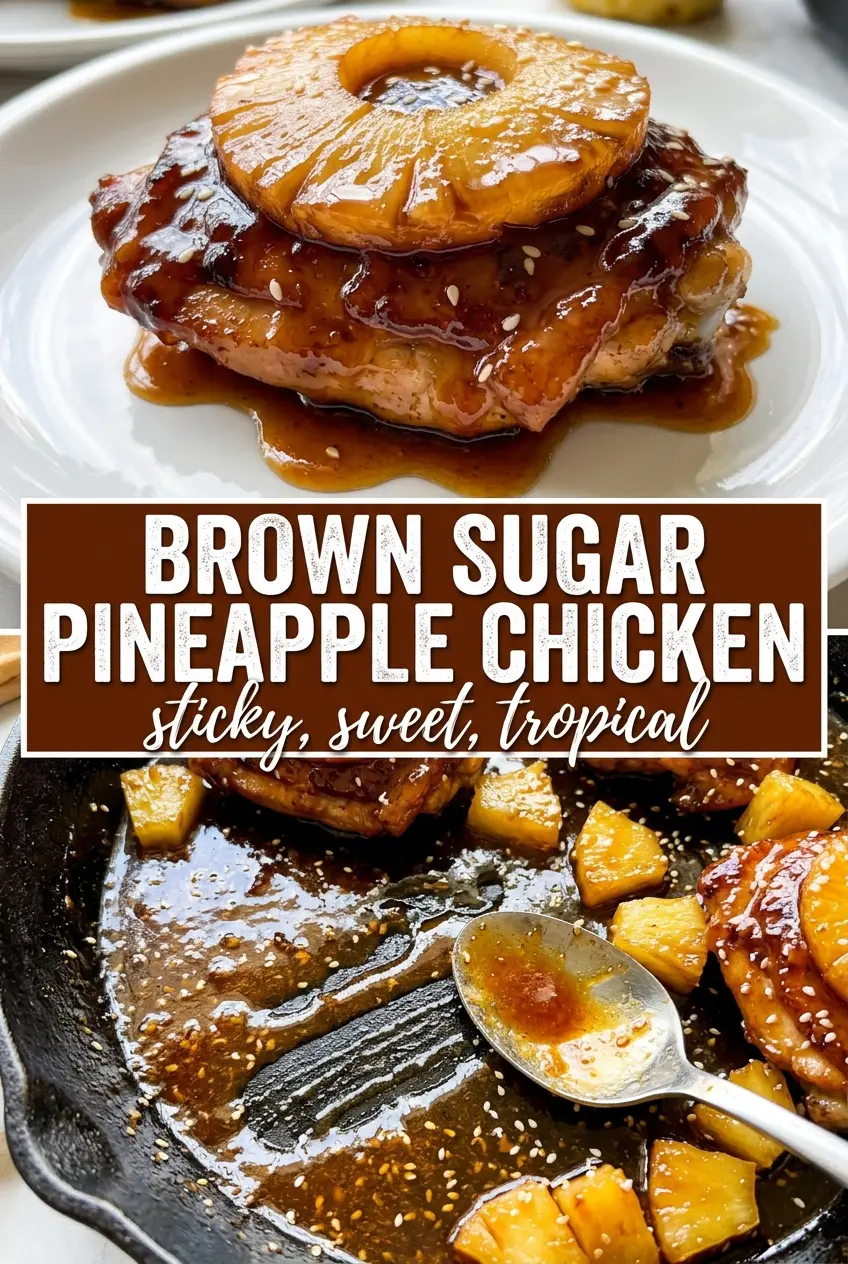
Sticky, glossy brown sugar pineapple chicken hits that sweet-savory spot that keeps people coming back for seconds. The glaze clings to the chicken instead of pooling in the pan, and the pineapple chunks soften just enough to stay bright while still caramelizing at the edges. It tastes like takeout in the best possible way, but it comes together in one skillet with ingredients you probably already have.
The trick is building the glaze in the same pan after the chicken sears. Those browned bits on the bottom dissolve into the sauce and give it depth, while the cornstarch slurry tightens everything into a coating that actually stays on the chicken. Letting the chicken rest in the sauce for the last couple of minutes matters, too — it soaks up flavor without drying out.
Below you’ll find the part that matters most: how to keep the glaze from turning thin or grainy, which ingredient gives the sauce its best balance, and a few smart ways to adapt it for different diets or what’s already in your kitchen.
The sauce thickened into a real glaze in just a couple of minutes, and the pineapple kept it from tasting too sweet. My husband kept going back for the sticky bits at the bottom of the skillet.
Like this brown sugar pineapple chicken? Save it to Pinterest for a sticky skillet dinner with caramelized edges and a glaze that clings.
The Glaze Thickens at the Pan, Not in the Air
The biggest mistake with pineapple chicken is letting the sauce stay watery long after it should have tightened up. Pineapple juice brings a lot of liquid, and if you don’t reduce it before the slurry goes in, you end up with a thin sauce that slides off the chicken instead of coating it. This recipe fixes that by simmering the base first, then giving the cornstarch just enough time to turn it glossy.
Another thing worth knowing: brown sugar and ketchup do more than sweeten. They help the glaze darken and cling, but only if the heat stays at a steady simmer. Crank it too high and the sauce can go from glossy to sticky-grainy in a hurry. Keep it bubbling gently and it will stay smooth.
- Chicken breasts — Boneless, skinless breasts work well here because they sear fast and hold up under the glaze. If yours are thick, pound them to an even thickness so the centers cook before the outside goes dry.
- Pineapple juice — This is the backbone of the sauce. Bottled juice is fine, but don’t swap in syrup from canned pineapple unless you want a much sweeter glaze with less brightness.
- Brown sugar — This gives the sauce its deep, caramel note. Light brown sugar works best; dark brown sugar will taste a little heavier and molasses-forward.
- Cornstarch slurry — This is what turns the sauce from thin to glossy. Mix it with cold water before it goes into the pan, or it can clump on contact.
How to Sear the Chicken Before the Sauce Goes In
Seasoning and Browning the Chicken
Pat the chicken dry before it hits the pan, then season it well with salt, pepper, garlic powder, and smoked paprika. Dry chicken browns; wet chicken steams. Heat the oil until it shimmers, then lay the chicken in without crowding the pan so each piece gets a real sear instead of a pale simmer.
Cooking to the Right Point
Let the first side cook undisturbed until it releases easily and the underside is deep golden. Flip and cook the second side until the thickest part reaches 165°F. If the chicken is still underdone when the outside is browned, lower the heat and give it a few more minutes instead of forcing the sauce in early.
Building the Glaze in the Same Skillet
Once the chicken comes out, pour the pineapple juice, brown sugar, soy sauce, ketchup, garlic, and ginger into the same pan. Stir and scrape up every browned bit from the bottom. That’s where the depth comes from. Bring it to a steady simmer before adding the slurry, then stir until the sauce turns shiny and lightly coats the spoon.
Finishing with Pineapple and Chicken
Add the pineapple chunks after the glaze has thickened so they keep some shape. Return the chicken to the pan and spoon the sauce over the top until everything is lacquered and sticky. Two minutes is enough here; any longer and the chicken starts to dry out while the glaze gets too tight.
Three Smart Ways to Bend This Recipe Without Breaking It
Use Chicken Thighs for a Juicier Result
Boneless skinless thighs work beautifully if you want a richer, more forgiving main dish. They take a few minutes longer than breasts, but they stay tender even if the skillet runs a little hot. The glaze will taste a touch deeper because thighs bring their own fat to the party.
Make It Gluten-Free Without Losing the Sticky Finish
Use tamari or a certified gluten-free soy sauce in place of regular soy sauce. The glaze will still have that salty backbone and glossy finish, and nothing else needs to change. Just check your ketchup label if you’re cooking strictly gluten-free.
Swap in Chicken Tenderloins for Faster Nights
Tenderloins cook faster and soak up the glaze quickly, which makes this a good move when you’re short on time. They’re leaner, though, so pull them as soon as they hit 165°F or they’ll turn stringy. The sauce helps, but they don’t have the same built-in cushion as thighs.
Add Heat Without Losing the Sweet Balance
A pinch of red pepper flakes or a little sriracha in the glaze adds heat that cuts through the brown sugar. Start small, taste the sauce after it simmers, and add more only if it still feels flat. Too much heat can bury the pineapple, which is part of what makes the dish work.
Storage and Reheating
- Refrigerator: Store leftovers in an airtight container for up to 3 days. The glaze will thicken as it chills, and the chicken will hold up well.
- Freezer: It freezes reasonably well for up to 2 months, though the pineapple will soften a bit after thawing. Freeze in portions with plenty of sauce so the chicken doesn’t dry out.
- Reheating: Warm it gently in a skillet over low heat with a splash of water or pineapple juice. High heat makes the glaze seize up and can overcook the chicken before the center is warm.
Answers to the Questions Worth Asking
Brown Sugar Pineapple Chicken
Ingredients
Equipment
Method
- Season the chicken breasts with salt, pepper, garlic powder, and smoked paprika, then let them rest for 20 minutes to marinate in the skillet while you prep the glaze ingredients.
- Measure out the pineapple juice, brown sugar, soy sauce, ketchup, minced garlic, grated ginger, cornstarch slurry (cornstarch mixed with water), and pineapple chunks so the sauce can simmer without delays.
- Heat the olive oil in a large skillet over medium-high heat and sear the chicken for 5-6 minutes per side until golden and cooked through to 165°F, then remove to a plate.
- In the same skillet, whisk together pineapple juice, brown sugar, soy sauce, ketchup, garlic, and ginger, then bring to a simmer over medium heat.
- Stir in the cornstarch slurry and cook for 2-3 minutes until the sauce thickens into a glaze.
- Add the pineapple chunks and simmer briefly so the fruit starts to caramelize in the amber sauce.
- Return the chicken to the pan and turn to coat in the glaze, then cook for 2 more minutes so the edges caramelize.
- Garnish with sesame seeds and sliced green onions, then serve the pineapple glaze chicken over steamed rice.