Brown sugar meatloaf lands on the table with a sticky, crackled glaze and slices that hold together without turning dense. The sweet-savory balance is what keeps people coming back for seconds: ketchup and brown sugar give you that deep amber finish, while Worcestershire, onion, and garlic keep the meatloaf from tasting flat or one-note.
The trick is in the glaze timing and the mix. Half the glaze goes on early so it can soak into the top and start caramelizing, then the rest goes on near the end so it stays glossy and thick instead of burning. The meat mixture itself stays tender when the onion is grated and the breadcrumbs have enough milk to soften before baking.
Below, you’ll find the small details that matter most here — how to keep the loaf juicy, when the glaze should go on, and the easiest way to tell when it’s done without cutting into it too soon.
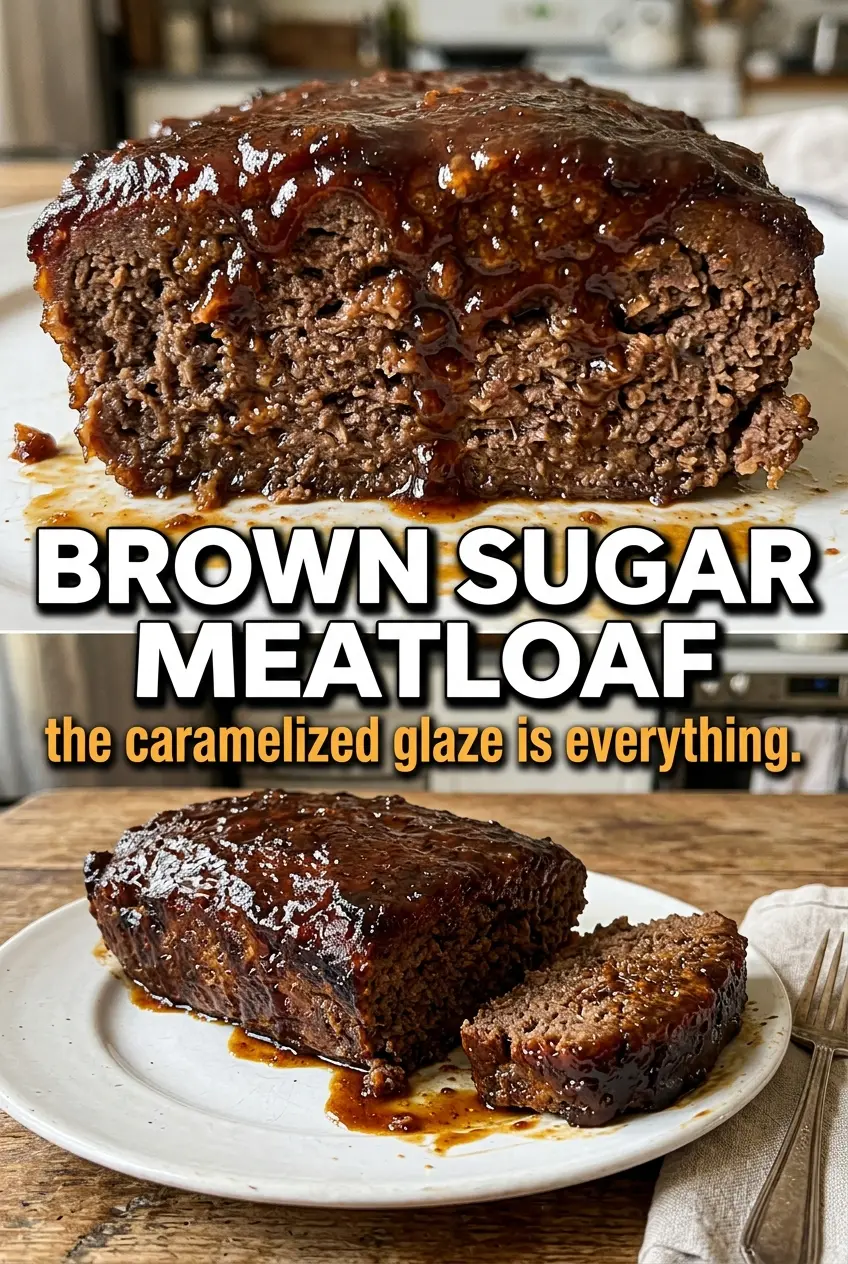
The glaze caramelized into this sticky crust and the loaf sliced cleanly after resting. I used the full 10 minutes and it held together perfectly, even with leftovers the next day.
Like this brown sugar meatloaf? Save it to Pinterest for the nights when you want a sticky glaze and tender slices with barely any fuss.
The Glaze Goes Wrong When It's Added All at Once
The biggest mistake with a brown sugar meatloaf is treating the glaze like an afterthought. If all of it goes on at the start, the sugar has too much time over direct heat and the top can scorch before the loaf is cooked through. Split the glaze. The first layer bakes into the surface and gives the loaf its signature color, while the second layer stays fresher and turns sticky instead of dry.
Resting matters here too. Meatloaf straight from the oven will crumble and leak juices if you cut it immediately. Ten minutes gives the breadcrumbs time to finish setting up, which is what keeps those slices neat and soft instead of mushy.
What Each Ingredient Is Actually Doing in This Loaf
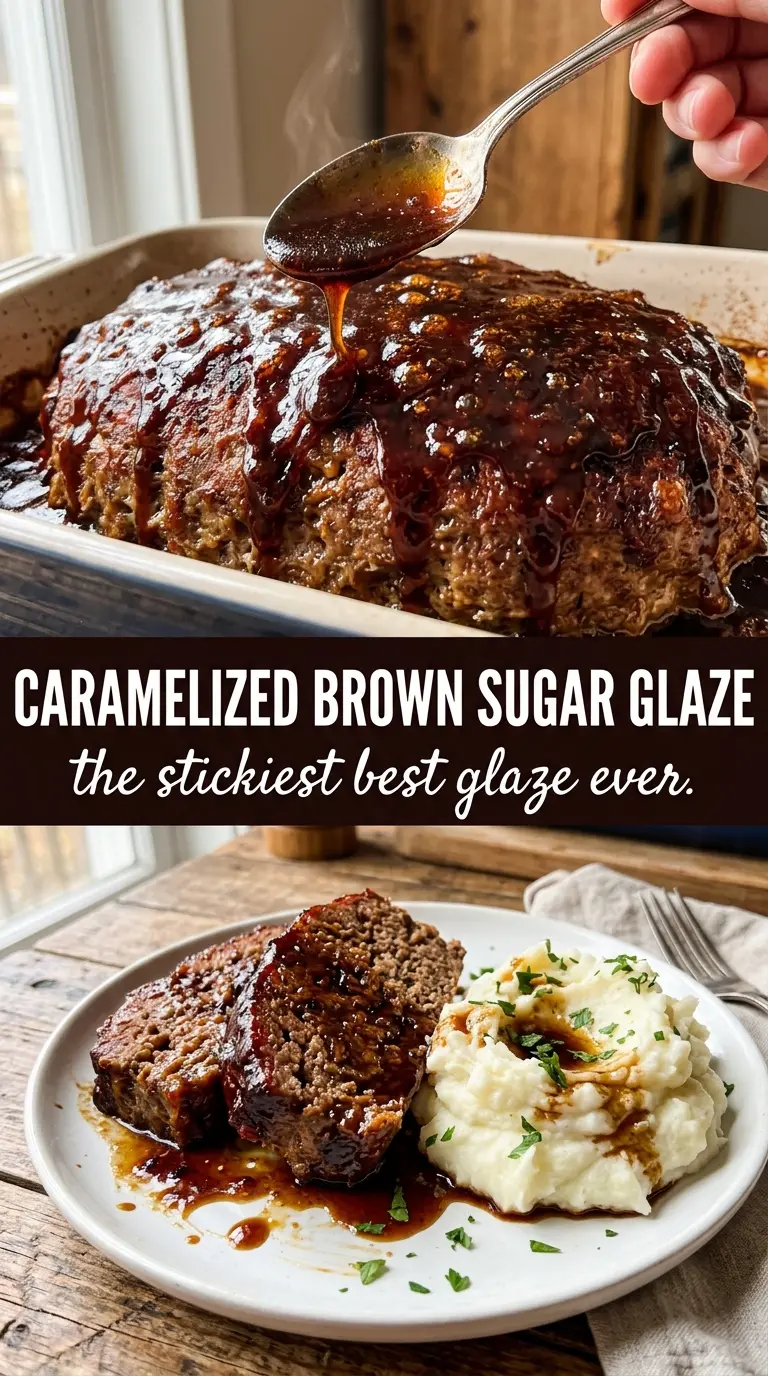
- Ground beef — Use 80/20 if you can. It has enough fat to keep the loaf juicy without turning greasy, and leaner beef can bake up dry unless you add extra moisture.
- Breadcrumbs and milk — This is the binder that keeps the texture soft. The milk hydrates the crumbs so they disperse through the meat instead of staying gritty.
- Grated onion — Grating matters more than chopping. It melts into the loaf, adding moisture and flavor without leaving hard pieces behind.
- Worcestershire sauce — This is the savory backbone that keeps the sweetness in check. There isn’t a substitute that gives quite the same depth, but soy sauce plus a splash of vinegar can stand in if needed.
- Brown sugar glaze — Packed brown sugar gives the glaze its dark, caramel edge, while ketchup brings acidity and body. Dijon and apple cider vinegar keep it from tasting candy-sweet.
Building the Loaf So It Stays Tender and Slices Cleanly
Mix the binder before the meat
Start by combining the breadcrumbs, milk, eggs, onion, garlic, Worcestershire, thyme, salt, and pepper before you add the beef. That gives the seasonings a head start and keeps you from overworking the meat while trying to distribute everything evenly. Once the beef goes in, mix only until you stop seeing dry pockets. If you keep going after that, the loaf gets tight and bouncy instead of tender.
Press it into the pan without packing it down
Use a loaf pan for this version and press the mixture in just enough to remove obvious air gaps. Don’t mash it hard. A packed-down meatloaf traps fat and moisture in a way that makes the middle dense, and it can also bake unevenly. Smooth the top so the glaze spreads in an even layer and doesn’t run off the sides too quickly.
Watch the glaze, not the clock alone
After 50 minutes, spread on the remaining glaze and finish baking until the internal temperature reaches 160°F. The surface should look dark amber, glossy, and slightly blistered at the edges. If the top is browning too fast before the center is done, tent it loosely with foil for the last 10 to 15 minutes. That keeps the glaze from burning while the loaf finishes through.
Let it rest before the first slice
Pull the meatloaf from the oven and let it sit for 10 minutes before slicing. The juices settle back into the loaf during that time, which is why the slices hold together instead of falling apart on the cutting board. Use a sharp knife and cut straight down for the cleanest pieces.
Three Ways to Adjust This Meatloaf Without Losing the Glaze
Make it dairy-free
Swap the whole milk for unsweetened oat milk or another plain, unflavored dairy-free milk. The loaf still stays tender because the breadcrumb binder does the heavy lifting, but you want a neutral milk here, not anything sweetened or strongly flavored.
Use gluten-free breadcrumbs
Replace the breadcrumbs with a gluten-free version in the same amount. The texture stays nearly the same, but GF crumbs can vary a little more in absorbency, so if the mixture feels loose after mixing, let it sit for 5 minutes before deciding whether it needs anything else.
Turn it into mini meatloaves
Divide the mixture into a muffin tin or shape it into smaller loaves on a sheet pan. The glaze still works the same way, but the bake time drops a lot, and the edges caramelize more because of the extra surface area. Start checking earlier so the centers don’t dry out.
Make the glaze a little sharper
If you like a less sweet finish, add an extra teaspoon of apple cider vinegar or a bit more Dijon. That cuts through the brown sugar without thinning the glaze too much, and it keeps the final bite balanced instead of syrupy.
Storage and Reheating
- Refrigerator: Store slices in an airtight container for up to 4 days. The glaze will firm up, but the flavor gets even deeper by day two.
- Freezer: Freeze tightly wrapped slices for up to 3 months. I like to wrap individual portions first so they thaw evenly and don’t stick together.
- Reheating: Warm covered in a 300°F oven with a spoonful of water or a little extra ketchup over the top. Microwave reheating works, but do it in short bursts so the edges don’t dry out while the center heats.
Questions I Get Asked About This Recipe
Brown Sugar Meatloaf
Ingredients
Equipment
Method
- Preheat oven to 350°F and grease a loaf pan so the meatloaf releases cleanly after baking.
- Combine ground beef, breadcrumbs, eggs, milk, onion, garlic, Worcestershire sauce, dried thyme, salt, and pepper until evenly mixed.
- Press the mixture into the loaf pan and smooth the top for even cooking and glazing.
- Mix ketchup, brown sugar, Dijon mustard, and apple cider vinegar until smooth, then spread half of the glaze over the meatloaf.
- Bake for 50 minutes at 350°F, then spread the remaining glaze over top as the loaf cooks through.
- Continue baking 15–20 minutes at 350°F until the internal temperature reaches 160°F and the glaze is caramelized into a sticky, deep amber crust.
- Rest the meatloaf for 10 minutes before slicing so the juices set and the slices hold their shape.