Brown gravy meatloaf turns a simple loaf of beef into a proper dinner. The meat stays tender and savory, the edges pick up a little crust in the oven, and the gravy brings everything together with that deep, beefy finish that makes each slice feel complete. Poured over mashed potatoes, it’s the kind of meal that disappears fast and earns repeat requests without any convincing.
The key is in the balance. Grated onion melts into the meat so you get flavor without chunks that fall apart the slices, while breadcrumbs, milk, and eggs keep the texture soft instead of dense. The gravy starts with a quick roux, which gives it body and that darker color before the broth goes in. If you skip the resting time, the loaf sheds juices the second you slice it, and the gravy never has a chance to cling the way it should.
Below, I’m walking through the small things that matter here: how to keep the meatloaf from turning heavy, how to get the gravy smooth, and what to do if you want to make it ahead or stretch it for a second meal.
The gravy came out smooth and glossy, and the grated onion kept the meatloaf unbelievably tender. I baked it right at 70 minutes and it sliced cleanly after resting.
Love a rich brown gravy over tender meatloaf? Save this recipe for the nights when you want classic comfort food with real pan-dripping flavor.
The Trick to Meatloaf That Slices Clean Instead of Falling Apart
Meatloaf goes wrong when it’s packed too tightly or baked until it dries out trying to hold itself together. The mixture needs just enough binder to set up in the oven, but not so much that it turns bready. Grated onion helps here because it disappears into the meat and releases moisture evenly, which keeps the texture from getting heavy or crumbly.
The other mistake is slicing too soon. Once the loaf comes out of the oven, the juices need a few minutes to settle back into the meat. If you cut immediately, the center can look fine on the board but end up wet and loose on the plate. Ten minutes is enough to calm everything down without losing heat.
- Ground beef — Use 80/20 if you can. Leaner beef works, but it can eat a little dry once the gravy is gone.
- Breadcrumbs and milk — This is the panade that keeps the loaf tender. The breadcrumbs soak up the milk so the meat stays soft instead of tight.
- Grated onion — This is better than diced onion here. It melts into the loaf and gives you moisture and flavor without chunks.
- Worcestershire — It adds the savory backbone that keeps the meatloaf from tasting flat. There isn’t a true stand-in for it, but soy sauce can work in a pinch if you use a little less and expect a slightly different finish.
What Each Ingredient Is Actually Doing in This Meatloaf
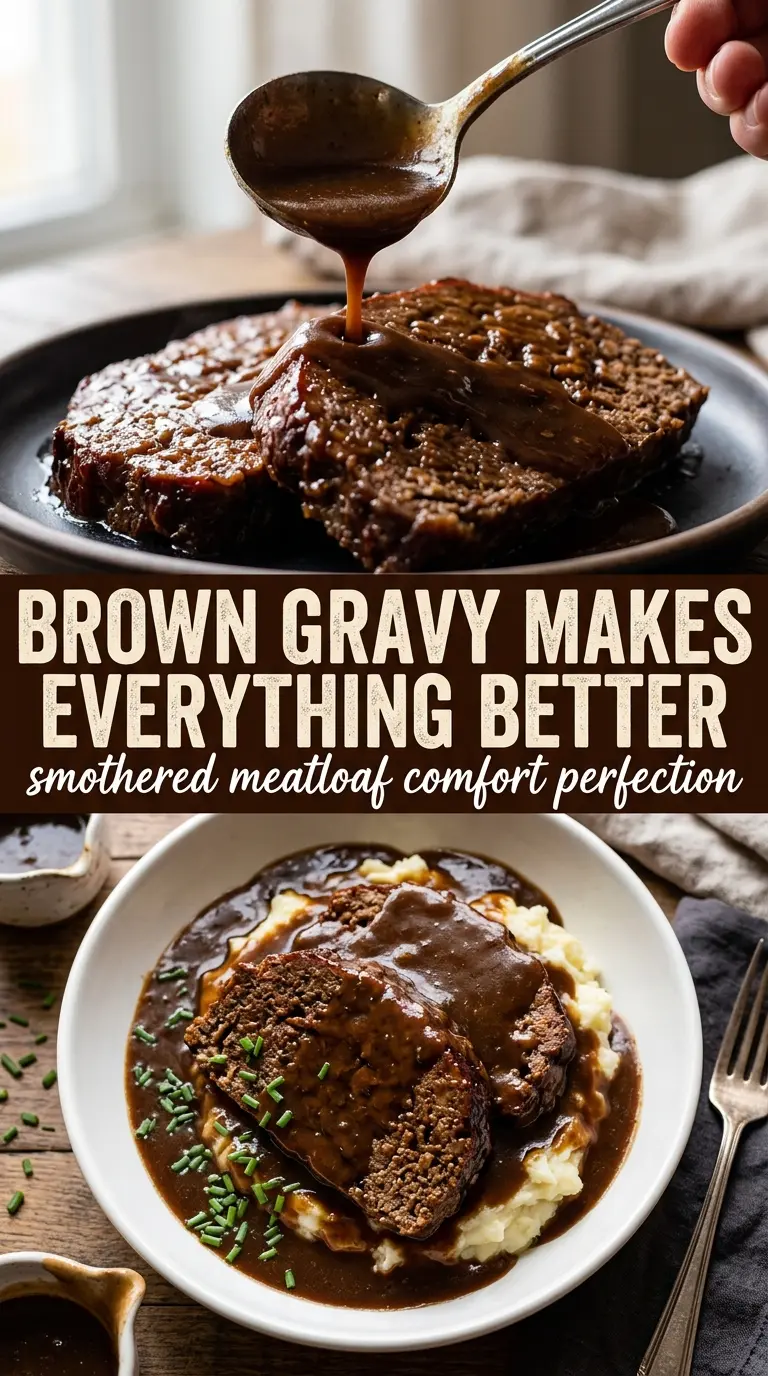
- Ground beef (the protein foundation) — Use 80/20 so the meatloaf stays moist. Leaner beef dries out easily during baking.
- Breadcrumbs (the binder and structure) — These hold everything together and keep the meatloaf from being dense. Soak them in milk first for better moisture.
- Egg (the binding agent) — This holds the meatloaf together during baking. Beat it lightly before mixing so it distributes evenly.
- Onion and garlic (the aromatics) — Mince finely so they distribute throughout. Raw onion softens as it bakes and becomes part of the texture.
- Seasonings (salt, pepper, Worcestershire, mustard) — Don’t underseason. The meatloaf itself carries all the flavor, so season boldly at the beginning.
- Milk (the moisture keeper) — This keeps the meatloaf tender instead of dense and dry. Soak the breadcrumbs in it first for best results.
- Glaze or sauce (ketchup-based or gravy) — This adds sweetness, moisture, and flavor to the outside. Apply halfway through baking for best adhesion.
- Resting after baking (5-10 minutes) — This lets the meatloaf set so it slices cleanly. Cutting too soon makes it fall apart on the serving plate.
Building the Loaf and the Gravy in the Right Order
Mixing the Meat Without Overworking It
Combine the meatloaf ingredients just until everything looks evenly distributed. Use your hands and stop as soon as the breadcrumbs disappear into the mixture. If you knead it like bread, the proteins tighten up and the finished loaf gets dense. The mixture should hold together when pressed, but still look loose enough to mound gently into the pan.
Baking Until the Center Is Done, Not Dry
Press the mixture into a greased loaf pan and bake at 350°F until the center reaches 160°F. That temperature gives you a safe, juicy loaf without pushing it into dry territory. If the top looks dark before the middle is ready, lay a loose piece of foil over it for the last part of baking. Pull it from the oven, then let it rest before moving on to the gravy.
Making the Brown Gravy from the Pan Drippings
Melt the butter in a saucepan, whisk in the flour, and cook it for 1 to 2 minutes until it smells nutty and takes on a light golden color. That short cook removes the raw flour taste and gives the gravy a deeper color. Whisk in the broth slowly so the mixture stays smooth. If you dump it in all at once, the roux can seize into lumps. Add the Worcestershire, garlic powder, and reserved drippings, then simmer until the gravy thickens enough to coat a spoon.
Make It Without the Onion Texture
If you want the flavor of onion without any visible pieces, grate it fine and keep the juices in the bowl. That gives the loaf moisture and seasoning without changing the slice. Onion powder can replace it, but the meatloaf will taste a little flatter and less juicy.
Gluten-Free Brown Gravy Meatloaf
Use gluten-free breadcrumbs in the loaf and substitute a 1:1 gluten-free flour blend in the gravy. The texture stays close to the original, though the gravy may need an extra minute or two to thicken. Whisk constantly so the gluten-free flour doesn’t clump at the bottom of the pan.
Extra Savory Meatloaf and Gravy
Swap half the beef broth in the gravy for the reserved drippings if you have enough, then add an extra splash of Worcestershire. The flavor gets darker and beefier, which works well if you’re serving the loaf over mashed potatoes or buttered noodles. Just watch the salt, since drippings can be seasoned already.
Storage and Reheating
- Refrigerator: Store the sliced meatloaf and gravy separately for up to 4 days. The loaf firms up a bit in the fridge, which makes the slices hold together even better.
- Freezer: Meatloaf freezes well. Wrap slices tightly and freeze for up to 3 months; freeze the gravy in a separate container so it doesn’t turn grainy when thawed.
- Reheating: Reheat slices covered in the oven at 325°F with a spoonful of gravy over the top, or warm gently in a skillet with a splash of broth. The biggest mistake is blasting it in the microwave until the edges toughen and the gravy splits.
Questions I Get Asked About This Recipe
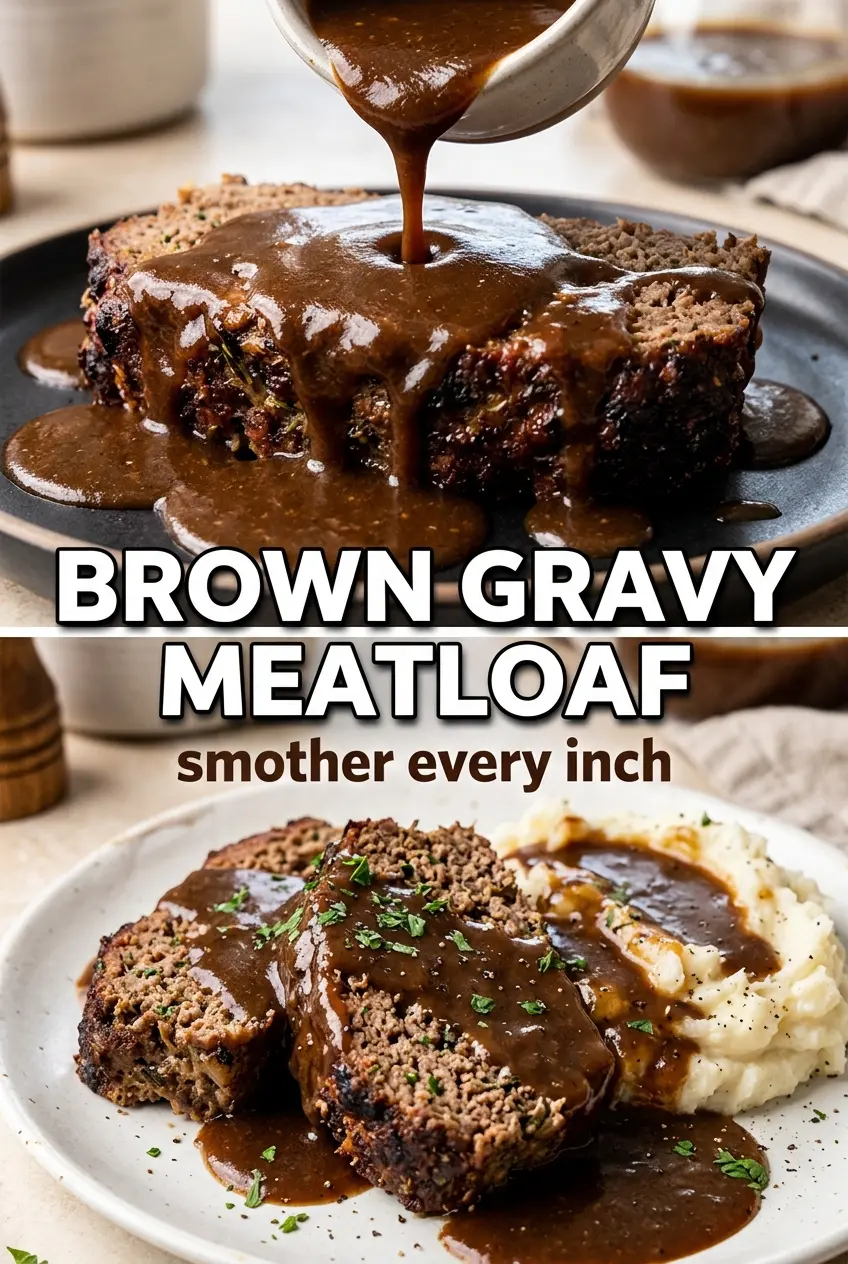
Brown Gravy Meatloaf
Ingredients
Equipment
Method
- Preheat the oven to 350°F and grease a loaf pan with a light coating. Use a pan you can easily pour pan drippings from after baking.
- Mix the ground beef, breadcrumbs, eggs, milk, grated onion, minced garlic, and Worcestershire until evenly combined. Press the mixture firmly into the greased pan.
- Bake for 60–70 minutes at 350°F until the internal temperature reaches 160°F. The loaf should look set on top with no wet spots in the center.
- Rest the meatloaf for 10 minutes and reserve any pan drippings. This helps the juices settle so slices stay intact.
- Melt the butter in a saucepan over medium heat and whisk in the flour. Cook for 1–2 minutes until the roux turns golden and smells nutty.
- Whisk in the beef broth, Worcestershire sauce, garlic powder, and any reserved pan drippings. Bring to a simmer and cook for 5 minutes until thickened and glossy.
- Slice the meatloaf and serve immediately with the brown gravy poured over each slice. Spoon extra sauce around the edges so every bite is coated.