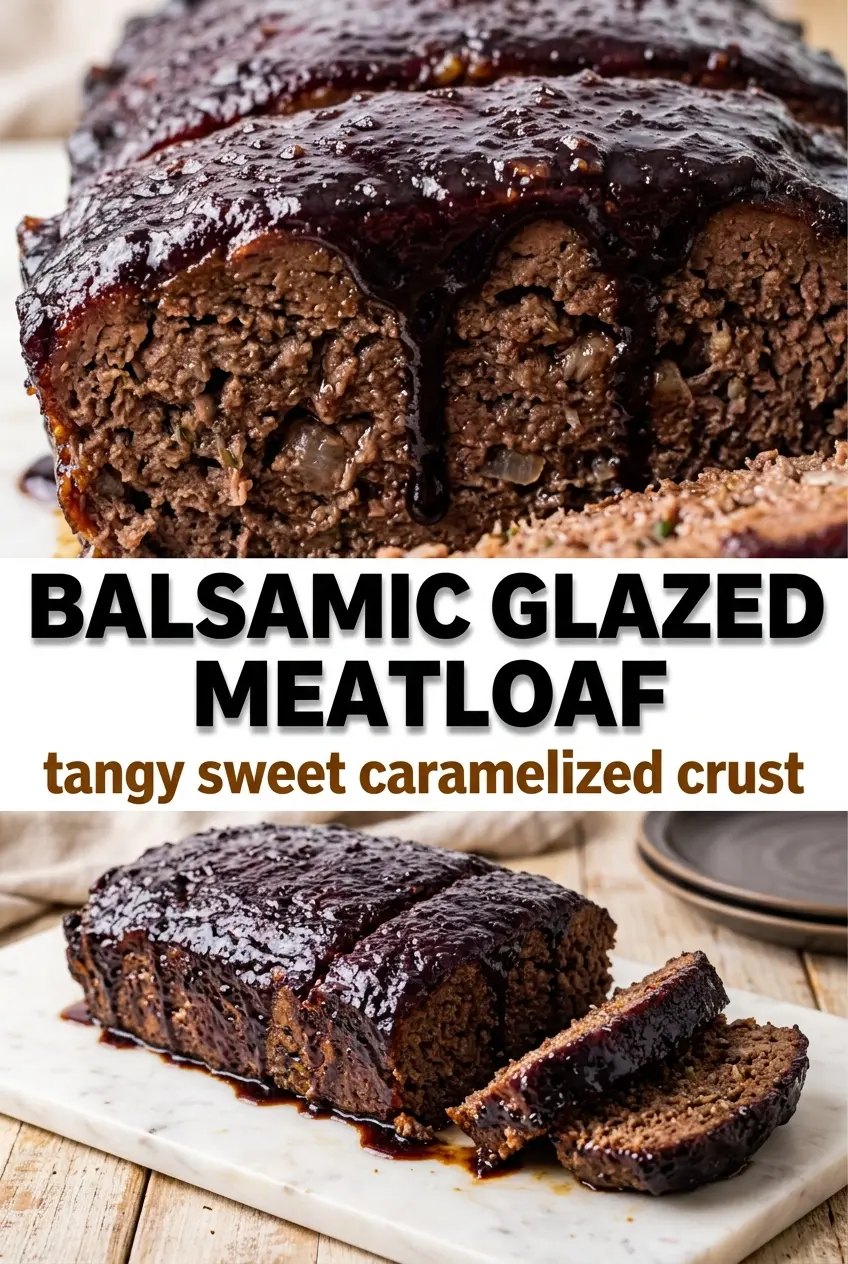
Balsamic glazed meatloaf earns its place at the table because the glaze doesn’t just sit on top; it bakes into a sticky, mahogany crust that cuts cleanly and keeps the slices tasting rich all the way through. The balance here is what makes it work: savory beef and pork, a little sweetness from the glaze, and enough tang from the balsamic and Dijon to keep every bite lively instead of heavy.
The trick is treating the glaze like a quick reduction, not a thin sauce. Let it cook until it turns syrupy before it ever hits the loaf, and you’ll get that lacquered finish instead of a watery runoff. The onion is grated rather than chopped so it melts into the meat mixture and helps keep the loaf tender without leaving crunchy bits behind.
Below, you’ll find the exact cue for when the loaf is ready, the smartest way to keep it juicy, and a few variations if you want to change up the meat or make the glaze a little sharper.
The glaze set up with that sticky finish I was hoping for, and the loaf sliced beautifully after the rest. Even my picky eater went back for seconds.
Like this balsamic glazed meatloaf? Save it for the nights when you want a glossy, savory-sweet main dish that still feels special.
The Glaze Has to Reduce Before It Hits the Oven
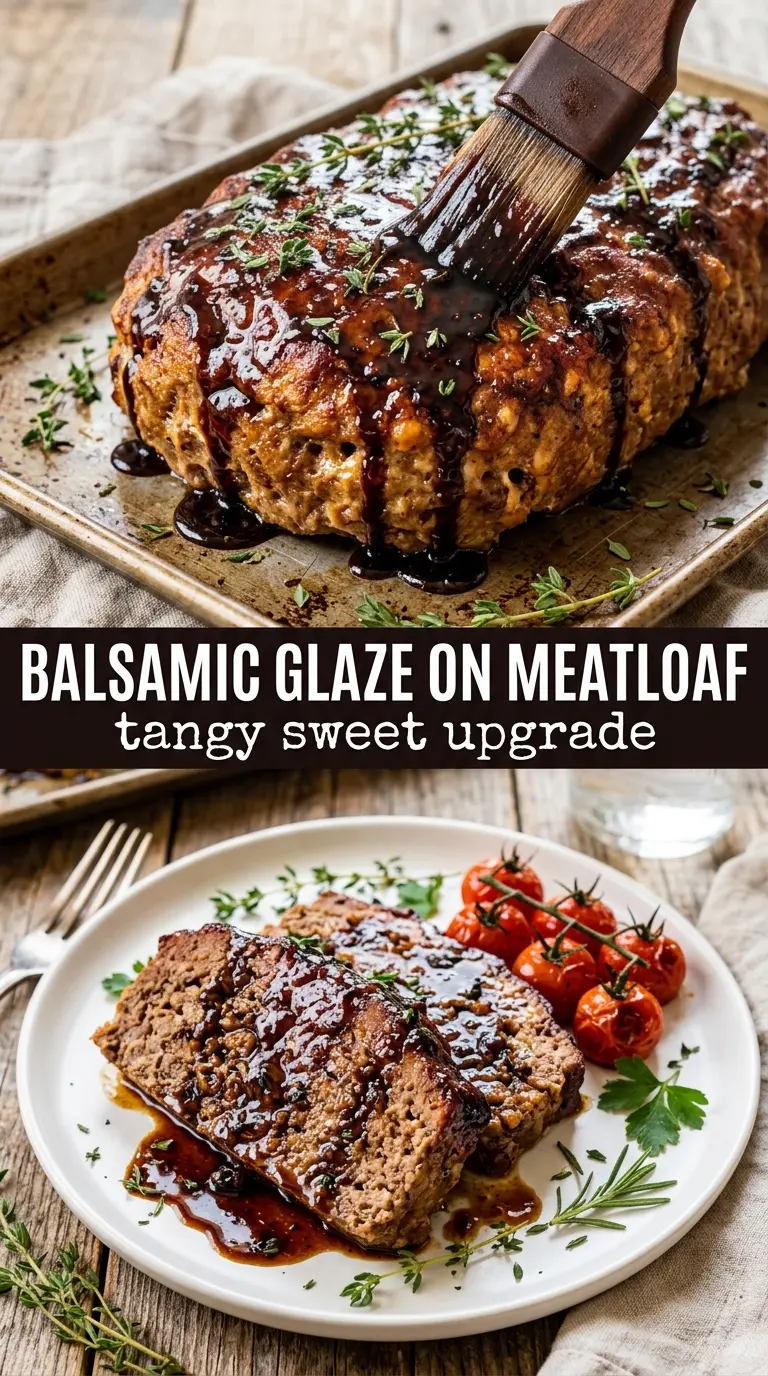
A lot of meatloaf glaze problems start right here. If you brush on a thin balsamic mixture, it slips off the loaf, pools on the pan, and never develops that dark, crackly finish people are actually hoping for. Simmering the glaze for just a few minutes concentrates the vinegar and melts the brown sugar into something glossy and clingy.
You also don’t want to wait until the loaf is fully baked to add all of it. The first layer gives the surface time to absorb and caramelize, and the second layer turns into that deep, lacquered top that slices cleanly without tasting burned. If the glaze looks thick enough to coat a spoon, it’s ready.
What Each Ingredient Is Actually Doing in This Meatloaf
- Ground beef and ground pork — The beef brings the meaty backbone, while the pork adds fat and tenderness. If you skip the pork, the loaf still works, but it will be a little firmer and less juicy.
- Breadcrumbs, eggs, and milk — This is the binder trio that keeps the loaf from crumbling. The milk softens the breadcrumbs so they hold moisture instead of stealing it from the meat.
- Grated onion — Grating the onion is worth the extra minute because it melts into the mixture and seasons the meat from the inside out. Chopped onion works in a pinch, but you’ll get a chunkier texture.
- Worcestershire and thyme — Worcestershire brings savoriness and a little tang, while thyme gives the loaf that classic herb finish that keeps the balsamic glaze from tasting one-note.
- Balsamic vinegar, brown sugar, ketchup, and Dijon — This glaze needs all four pieces. The vinegar adds sharpness, the sugar helps it caramelize, the ketchup gives body, and the Dijon keeps the sweetness in check.
Building the Loaf So It Stays Juicy
Mixing Without Packing It Down
Combine the meat mixture just until everything is evenly distributed. Overmixing turns meatloaf dense and springy instead of tender, especially once the breadcrumbs start absorbing liquid. Use your hands and stop the moment you no longer see streaks of milk or pockets of seasoning.
Shaping a Free-Form Loaf
Form the mixture into a loaf on a foil-lined baking sheet instead of pressing it into a pan. That exposes more surface area, which means better browning and a glaze that caramelizes instead of steaming. Aim for an even shape so the center cooks at the same rate as the ends; a skinny tail will dry out before the middle is done.
Glazing in Two Rounds
Brush on half the glaze before the first bake and save the rest for the finish. The first coating bonds to the surface and starts building color, while the second turns sticky in the last stretch of cooking. If you add everything at once, the sugars can darken too fast and the top can go from glossy to bitter before the meat reaches temperature.
Resting Before the First Slice
Let the loaf rest for 10 minutes after it comes out of the oven. That pause keeps the juices from running straight onto the cutting board, and it gives the glaze time to set into that glossy shell. If you slice too early, the loaf will still taste good, but the pieces won’t hold together nearly as well.
How to Adapt This for a Different Table
Dairy-Free Meatloaf
Swap the milk for an unsweetened plain non-dairy milk or even beef broth. The texture stays close to the original as long as you still soak the breadcrumbs, and the loaf won’t lose moisture the way it can if you leave that liquid out entirely.
All-Beef Version
You can use 2 1/2 pounds of ground beef instead of the beef-and-pork mix, but choose beef with some fat so the loaf doesn’t dry out. If your beef is very lean, add an extra splash of milk or a tablespoon of olive oil to help keep the crumb tender.
Gluten-Free Meatloaf
Use certified gluten-free breadcrumbs or finely crushed gluten-free crackers. The structure stays the same, but gluten-free crumbs can be a little thirstier, so watch the mixture and add an extra tablespoon of milk only if it looks dry.
Sharper, Less Sweet Glaze
If you like the balsamic edge to stay front and center, cut the brown sugar down to 2 tablespoons and add an extra teaspoon of Dijon. You’ll get a glaze that’s darker and tangier, with less candy-like sweetness on top.
Storage and Reheating
- Refrigerator: Store leftovers in an airtight container for up to 4 days. The glaze stays tasty, though it will lose a little of its shine.
- Freezer: Freezes well for up to 2 months. Wrap slices tightly and freeze them separately so you can thaw only what you need.
- Reheating: Warm slices covered in a 325°F oven with a splash of broth or water in the pan. The common mistake is blasting meatloaf in the microwave until the edges dry out while the glaze turns sticky in the wrong way.
Questions I Get Asked About This Recipe
Balsamic Glazed Meatloaf
Ingredients
Equipment
Method
- Preheat the oven to 350°F and line a baking sheet with foil. Place the sheet on the lower-middle rack so the loaf heats evenly.
- Combine ground beef, ground pork, breadcrumbs, eggs, whole milk, grated onion, minced garlic, Worcestershire sauce, fresh thyme, salt, and pepper. Mix just until the mixture is evenly combined and sticky.
- Shape the mixture into a free-form loaf on the lined baking sheet. Pat it into a uniform thickness so it cooks through without dry edges.
- Simmer balsamic glaze ingredients in a small saucepan for 3–4 minutes until slightly syrupy. Whisk often and watch for a glossy, spoon-coating consistency.
- Brush half of the balsamic glaze over the loaf. Spread to the edges so the top browns in an even mahogany layer.
- Bake for 55 minutes, keeping the oven at 350°F. Look for set edges and a glaze that begins to glisten and caramelize.
- Brush the remaining glaze over the loaf, then bake for 15 more minutes. Continue until the internal temperature reaches 160°F and the glaze turns caramelized and crackles at the surface.
- Rest the meatloaf for 10 minutes before slicing. Letting it sit helps the juices reabsorb for clean, sliceable pieces.