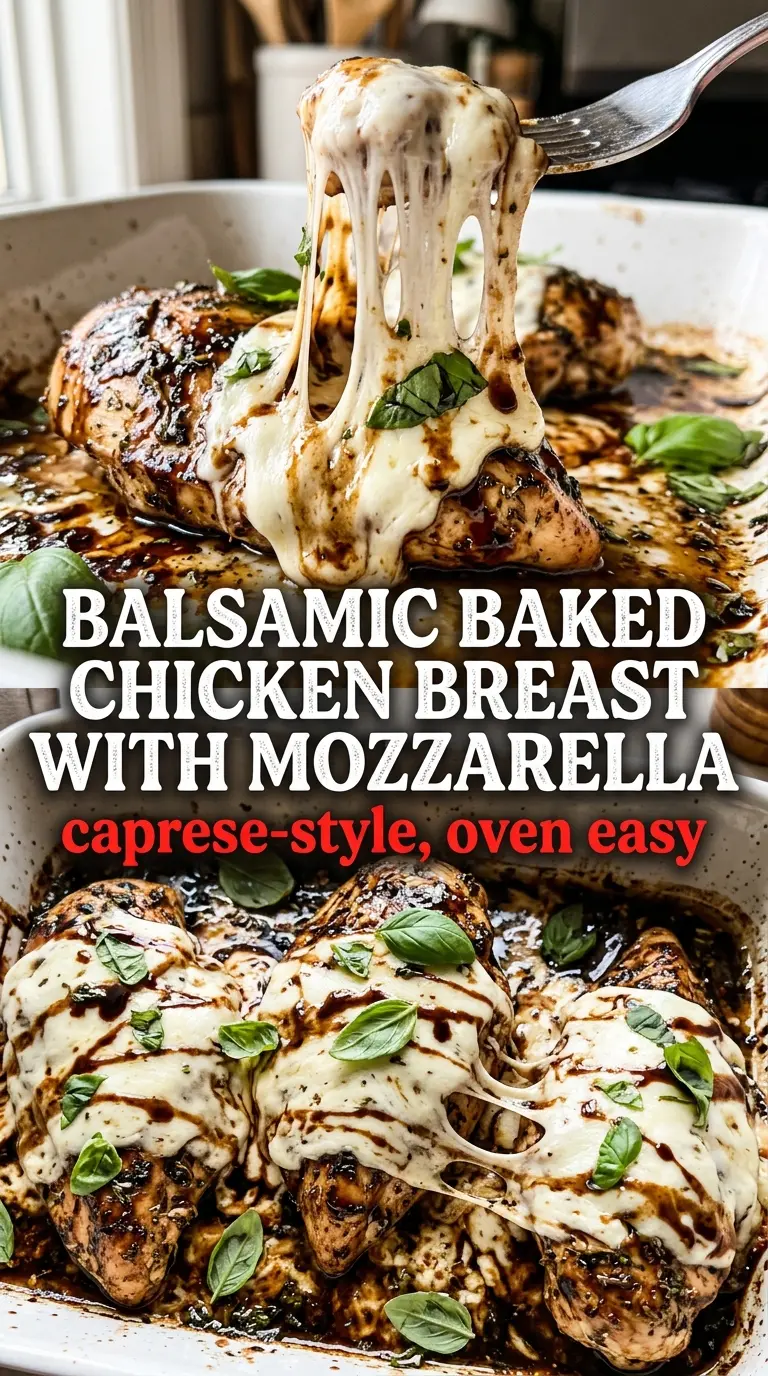
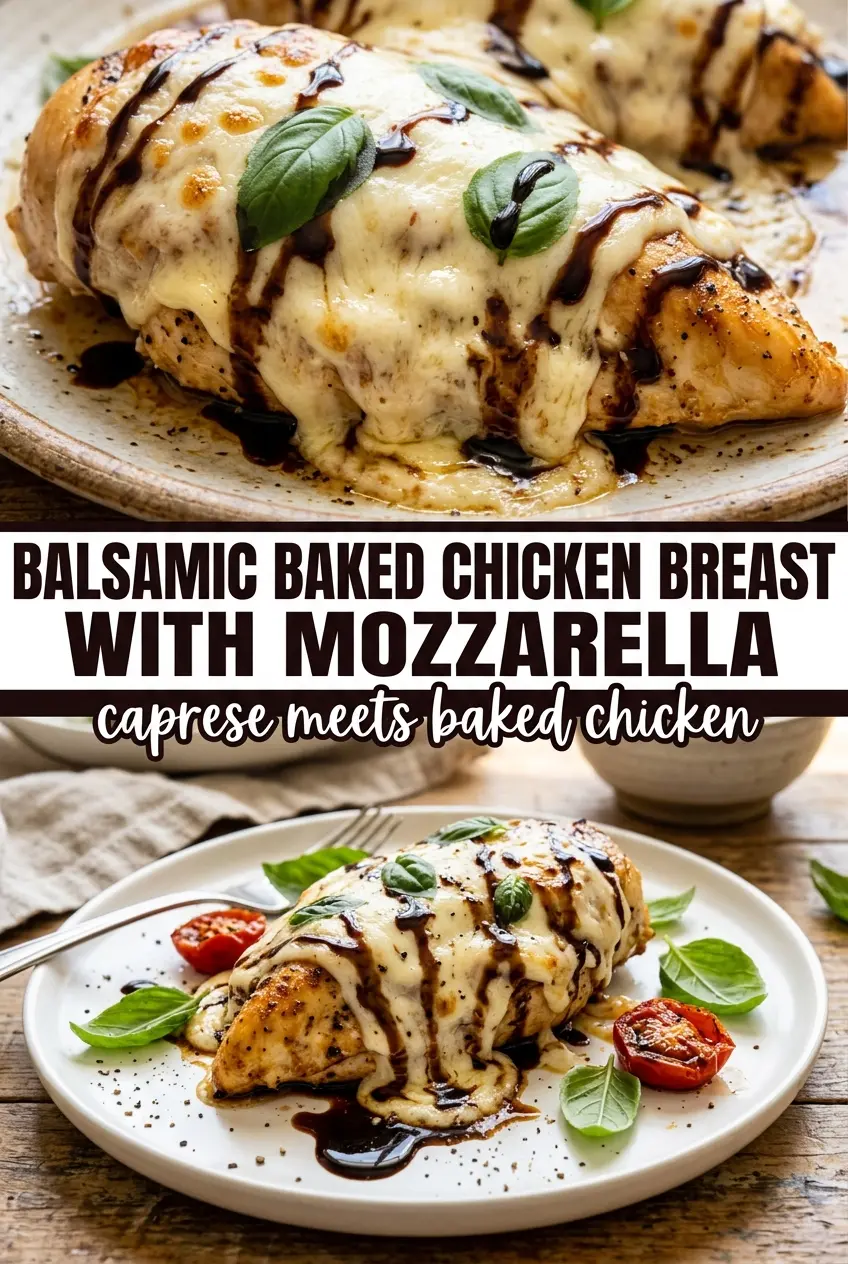
Juicy chicken breasts with a glossy balsamic finish and melted mozzarella are the kind of dinner that looks like you put in far more effort than you did. The glaze turns tangy-sweet and sticky in the oven, the cheese melts into the top without drowning the chicken, and the cherry tomatoes bring just enough brightness to keep every bite balanced.
What makes this version work is the short marinade and the quick stovetop sear before baking. The vinegar, honey, garlic, and Dijon give the chicken flavor all the way through, while the sear builds color before the oven finishes the job gently. That sequence matters. If you skip the sear, the chicken still cooks, but you miss the caramelized edges that make the sauce taste deeper and less sharp.
Below, I’ve laid out the part that matters most: how to keep the chicken juicy, when to add the mozzarella so it melts instead of disappearing, and what to change if you need a dairy-free or lower-carb version.
The balsamic glaze thickened up beautifully in the oven, and the mozzarella melted into the tomatoes without getting rubbery. I’ve made a lot of baked chicken, and this one stayed juicy even after the sear.
Save this balsamic baked chicken breast with mozzarella for a simple dinner with a sticky glaze, melty cheese, and fresh caprese-style topping.
Why the Chicken Needs the Sear Before the Oven
The oven does the cooking here, but the skillet gives you the part that tastes like effort. Chicken breasts can go pale and flat in the oven if they start raw and untouched. A quick sear over medium-high heat changes that fast: the surface browns, the marinade picks up a deeper edge, and the chicken gets a head start on building flavor before it finishes gently in the oven.
The other trap is crowding the pan. If the breasts are packed too tightly, they steam instead of sear, and you lose that browned coating that keeps the balsamic from tasting one-note. Give each piece room, and stop cooking the moment the internal temperature reaches 165°F. Past that point, chicken breast dries out fast, even under a layer of cheese.
What Each Ingredient Is Actually Doing in This Dish
- Balsamic vinegar — This is the backbone of the glaze. It needs the honey and Dijon to round it out, because straight balsamic can taste sharp once it reduces in the oven.
- Honey — It softens the vinegar and helps the glaze cling to the chicken. Maple syrup works in a pinch, but it shifts the flavor and browns a little faster, so watch the edges.
- Dijon mustard — You won’t taste mustard on its own. It helps emulsify the marinade so the oil and vinegar stay blended long enough to coat the chicken evenly.
- Fresh mozzarella — Use the real stuff here. Low-moisture mozzarella melts fine, but fresh mozzarella gives you that soft, milky top that fits the caprese-style finish.
- Cherry tomatoes — They burst in the oven and bring a little acidity back into the dish after the balsamic reduces. Halve them so they soften and release juice instead of just wrinkling on top.
- Fresh basil — Add it at the end, not before. Heat dulls basil fast, and its bright finish is what keeps the final plate from tasting heavy.
How to Build the Glaze So It Stays Sticky, Not Bitter
Mixing the Marinade
Whisk the balsamic vinegar, olive oil, honey, garlic, and Dijon until the mixture looks glossy and slightly thickened. That sheen tells you the oil and vinegar are working together instead of separating immediately. Season the chicken well before it goes in, because the marinade is there for flavor and browning, not to replace the salt on the surface. Twenty minutes is enough. Much longer and the vinegar starts to work the texture too hard.
Searing the Chicken
Heat the skillet until it’s properly hot, then lay the chicken in without moving it for the first few minutes. If it sticks at first, it’s not ready to flip. When the underside releases and shows a deep golden crust, turn it over and repeat. You’re not trying to cook it through here. You’re building color so the balsamic has somewhere rich to land.
Baking and Topping
Transfer the skillet to the oven with the remaining marinade and bake until the chicken reaches 165°F at the thickest point. The sauce should look darker and slightly syrupy around the edges, not burned. Add the mozzarella and tomatoes only after the chicken is cooked through, then return the pan just long enough for the cheese to melt. If you leave it in too long, the cheese tightens and the tomatoes dry out instead of softening.
Finishing With Basil and Glaze
Drizzle the balsamic glaze over the top after the chicken comes out of the oven. This keeps the finish shiny instead of baking away into the pan. Tear or scatter the basil right before serving so it stays bright and fragrant. The final plate should taste balanced: tangy, sweet, salty, and fresh all at once.
How to Adapt This for Different Kitchens and Different Nights
Dairy-Free Version
Leave off the mozzarella and finish with extra tomatoes and basil. You lose the creamy melt on top, but the balsamic chicken still stands on its own, and the fresh garnish keeps the dish from feeling bare.
Lower-Sugar Swap
Replace the honey with a low-carb sweetener that measures like sugar, then taste the marinade before it goes on the chicken. You still need a little sweetness to balance the vinegar, or the glaze turns sharp instead of sticky.
Using Chicken Thighs Instead
Boneless thighs work well if you want more forgiving meat and a little extra richness. They’ll need a bit longer in the oven, and the glaze will be slightly deeper and more savory because thighs carry more fat than breasts.
Storage and Reheating
- Refrigerator: Store leftovers in an airtight container for up to 3 days. The mozzarella firms up as it chills, but the flavor holds well.
- Freezer: You can freeze the chicken without the fresh basil and tomatoes, but the texture of the cheese changes after thawing. For the best result, freeze only the cooked chicken and sauce, then add fresh toppings after reheating.
- Reheating: Reheat covered in a 325°F oven until warmed through, or use the microwave at medium power in short bursts. High heat dries the chicken out and makes the cheese oily, so go slow.
Questions I Get Asked About This Recipe
Balsamic Baked Chicken Breast with Mozzarella
Ingredients
Equipment
Method
- Whisk balsamic vinegar, olive oil, honey, garlic, and Dijon mustard in a bowl, then season with salt, pepper, garlic powder, and Italian seasoning. Add chicken, spoon sauce over, and marinate for 20 minutes while reserving some marinade.
- Preheat the oven to 400°F. Sear the marinated chicken in an oven-safe skillet over medium-high heat for 3 minutes per side until golden.
- Transfer the skillet to the oven with the remaining marinade and bake for 18-20 minutes until the internal temperature reaches 165°F.
- Remove from the oven and top each breast with mozzarella slices and cherry tomatoes. Return to the oven for 4-5 minutes until the cheese is melted and lightly golden at the edges.
- Drizzle with balsamic glaze and garnish with fresh basil leaves.