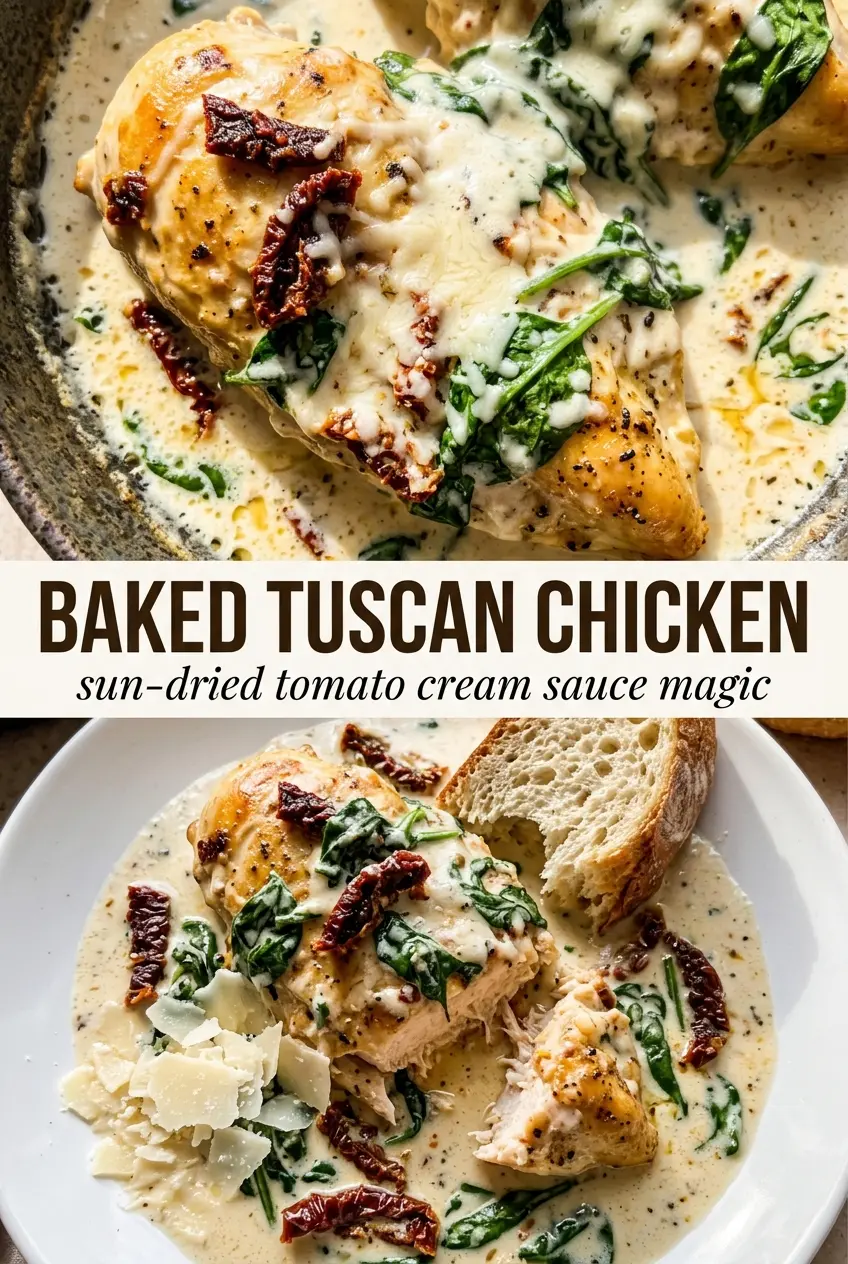
Golden chicken thighs tucked into a sun-dried tomato and spinach cream sauce make this baked Tuscan chicken feel like a restaurant dinner without asking much more than one skillet and half an hour. The skin stays crisp on top, the sauce turns rich and glossy in the oven, and every bite gets a little hit of Parmesan, garlic, and sweet tomato against the savory chicken.
What keeps this version from turning heavy is the order of operations. The chicken gets a hard sear first, which gives you deep flavor and helps the skin stay intact through the bake. Then the sauce is built in the same pan, so the browned bits left behind melt into the cream instead of being lost. Spinach goes in at the end so it wilts without disappearing, and the chicken finishes uncovered so the sauce reduces slightly around the edges.
Below, I’ve included the small details that matter most: how to keep the sauce from splitting, which ingredient swaps actually work, and what to do if you want to turn this into a lower-carb or dairy-free dinner without losing the spirit of the dish.
The sauce turned out silky and never split, and the chicken skin stayed crisp even after baking. My husband said the sun-dried tomatoes made it taste like something from a good Italian place.
Save this Baked Tuscan Chicken for the nights when you want crispy chicken thighs, a silky Parmesan sauce, and almost no cleanup.
The Skillet Step That Keeps the Chicken from Going Soft
Most baked chicken in cream sauce misses the part that matters most: the skin has to be rendered and browned before it ever goes near the oven. If you skip that, the chicken steams in the sauce and the top turns rubbery instead of crisp. A proper sear gives you flavor, texture, and a little protection so the thighs can finish baking without drying out.
The other place this dish goes wrong is heat. Cream and Parmesan don’t like a hard boil. Once the sauce is in the pan, you want a brief simmer just to bring it together, then the oven finishes the job gently. That keeps the sauce smooth instead of grainy and helps the chicken stay juicy while the flavors concentrate.
What Each Ingredient Is Actually Doing in the Pan

- Bone-in, skin-on chicken thighs — These are the right cut for this dish because they stay juicy through the oven time and the skin has enough fat to crisp. Boneless thighs work in a pinch, but you lose some of that deep roasted texture and the cooking time shortens.
- Sun-dried tomatoes in oil — This is where the Tuscan character comes from. The oil-packed kind has better texture and a rounder, richer flavor than dry-packed tomatoes; drain them, then slice them so they melt into the sauce instead of sitting in big chewy pieces.
- Heavy cream and Parmesan — Heavy cream gives the sauce body, and Parmesan adds salt, depth, and a little thickness as it melts. Use finely grated Parmesan, not the sandy shelf-stable kind, because it melts more smoothly and is less likely to turn the sauce gritty.
- Fresh baby spinach — Add it at the end so it just wilts. If it cooks too long, it turns dull and stringy, and the sauce loses that bright green contrast that makes the dish look and taste balanced.
- Chicken broth — This loosens the pan sauce just enough to keep it pourable before baking. If you substitute water, the sauce tastes flatter, so broth is worth keeping here.
Building the Sauce Around the Browning, Not After It
Season and Sear the Thighs Hard
Pat the chicken dry first, then season it well so the spices cling to the skin instead of sliding off into the pan. Place the thighs skin-side down in hot olive oil and let them sit long enough to turn deeply golden and release on their own; if you try to move them too early, the skin sticks and tears. The goal here is not to cook them through. You’re building flavor and getting the skin halfway to crisp before the oven takes over.
Cook the Aromatics in the Leftover Fat
Once the chicken comes out, leave the browned bits in the pan and add the garlic for just 30 seconds. If it browns, it turns bitter fast, so the moment it smells fragrant, in go the sun-dried tomatoes and broth. Scrape the bottom as the liquid hits the pan; that little deglaze pulls all the good flavor into the sauce instead of leaving it glued to the skillet.
Let the Cream Thicken Before the Chicken Goes Back In
Stir in the cream, Parmesan, Italian seasoning, and red pepper flakes, then let the sauce simmer briefly until it looks slightly thicker and coats the spoon. If it looks broken or oily, the heat is too high and the cheese is tightening too fast; pull the pan off the burner and stir until it smooths out. Add the spinach last so it wilts right into the sauce, then nestle the chicken skin-side up so the top stays exposed and crisp while it bakes.
Bake Until the Sauce Bubbles at the Edges
Put the skillet in the oven uncovered and bake until the chicken reaches 165°F at the thickest part. You want active bubbling around the edges and a sauce that looks slightly reduced, not sloshy. Let the pan rest for a few minutes before serving so the sauce settles and thickens just enough to cling to the chicken instead of running all over the plate.
How to Adapt This for Different Kitchens and Different Diets
Boneless Chicken Thighs Instead of Bone-In
Boneless thighs cook faster and are easier to serve, but they won’t hold onto the same deep roasted flavor. Start checking them a few minutes early and pull them as soon as they hit 165°F so they stay tender. The sauce still works the same way.
Dairy-Free Version
Use full-fat coconut cream or an unsweetened dairy-free cooking cream in place of heavy cream, and skip the Parmesan or use a dairy-free Parmesan-style alternative. The sauce will be a little less sharp and a touch sweeter if you use coconut cream, but it still turns silky and coats the chicken well.
Gluten-Free Without Any Extra Work
This dish is naturally gluten-free as written, as long as your chicken broth and Parmesan are certified gluten-free. The texture and cooking method don’t need to change at all, which makes this a good one for serving a mixed crowd without separate pans.
Make It Lighter Without Losing the Sauce
Swap half-and-half for the cream if you want a lighter sauce, but keep the heat low and don’t let it boil. It won’t be as rich or thick, so expect a looser sauce that clings more lightly to the chicken. The flavor stays there, just with less weight.
Storage and Reheating
- Refrigerator: Store leftovers in an airtight container for up to 3 days. The sauce will thicken as it chills.
- Freezer: This freezes, but the cream sauce can separate a little when thawed. If you do freeze it, cool it completely and thaw overnight in the fridge.
- Reheating: Reheat gently on the stovetop over low heat or in a covered dish in the oven at 325°F. Add a splash of broth if the sauce has tightened up, and don’t boil it or the cream can break.
Questions I Get Asked About This Recipe
Baked Tuscan Chicken
Ingredients
Equipment
Method
- Preheat oven to 400°F. Season the chicken thighs generously with salt, pepper, garlic powder, Italian seasoning, and smoked paprika.
- Heat olive oil in an oven-safe skillet over medium-high heat and sear chicken skin-side down for 6-7 minutes until deeply golden.
- Flip the chicken and sear for 3 more minutes, then remove to a plate.
- Cook the minced garlic for 30 seconds. Add sun-dried tomatoes and cook for 1 minute, stirring, then deglaze with chicken broth.
- Stir in heavy cream, Parmesan, Italian seasoning, and red pepper flakes, then simmer briefly until the sauce looks smooth and slightly thickened.
- Stir in baby spinach until wilted. Nestle the chicken back into the sauce skin-side up.
- Bake uncovered at 400°F for 18-20 minutes until the internal temperature reaches 165°F, with the Parmesan sauce bubbling around the thighs.
- Garnish with fresh basil, then serve hot.