Bubbly cream sauce, bronzed chicken skin, and sweet sun-dried tomatoes make this baked Tuscan chicken casserole the kind of dinner that disappears fast. The sauce settles into a silky, spoon-coating layer around the chicken, and the spinach gives it just enough freshness to keep every bite balanced. It’s rich, but not heavy in the way that makes you stop after a few forkfuls.
The trick here is building flavor in stages. First, the chicken gets a hard sear so the skin can turn crisp and the pan can collect those browned bits. Then the garlic and sun-dried tomatoes cook in the same skillet before the broth goes in, which means the sauce starts with real depth instead of tasting like cream stirred into a pan at the end.
Below you’ll find the exact cues I use for a sauce that stays smooth, how to keep the chicken skin from softening, and the swaps that still keep the casserole tasting like a proper Tuscan-style bake.
The sauce thickened up perfectly in the oven and the chicken skin stayed crisp on top instead of turning soggy. My husband went back for seconds and kept talking about the sun-dried tomatoes.
Like this baked Tuscan chicken casserole? Save it for the nights when you want crisp chicken, a silky Parmesan sauce, and one pan that does the work.
The Step That Keeps the Chicken Skin Crisp Instead of Steaming
The biggest mistake in a casserole like this is crowding the pan with sauce before the chicken has a chance to brown. Skin-on thighs need direct contact with the hot skillet first. That sear does two jobs at once: it gives you a deep golden crust and it renders enough fat to flavor the sauce without making it greasy.
Once the chicken goes back into the oven, keep it skin-side up and uncovered. If you cover the pan, the steam softens the skin and you lose the best texture in the whole dish. The sauce will still bubble around the chicken and reduce a little, which is exactly what you want.
- Bone-in, skin-on chicken thighs — These stay juicy in the oven and bring enough fat to keep the sauce rich. Chicken breasts can work, but they cook faster and won’t give you the same forgiving texture.
- Sun-dried tomatoes in oil — They’re concentrated and chewy, and that matters here. The oil they’re packed in can also be used for a little extra flavor if you want to swap it in for part of the olive oil.
- Heavy cream — This is what turns the pan juices into a real sauce. Half-and-half can split more easily and won’t give you the same body.
- Parmesan — Grate it fresh if you can. Pre-grated cheese often melts into a grainier sauce, especially once the pan goes into the oven.
- Baby spinach — Add it at the end so it stays bright and tender. Frozen spinach works in a pinch, but thaw it and squeeze it very dry first or the sauce turns watery.
Building the Sauce in the Same Pan Without Breaking It
Season and sear first
Pat the chicken thighs dry before they hit the skillet, then season them well. Moist skin is the enemy of browning, and a properly dry surface is what gives you that crisp, shattery top. Sear skin-side down until the skin is deep golden and releases easily from the pan; if it sticks, give it another minute. The first side takes longer than the second, and that’s normal.
Use the browned bits, don’t lose them
After the chicken comes out, cook the garlic and sun-dried tomatoes in the same pan for about a minute. The garlic should smell fragrant, not sharp, and the tomatoes should start to soften at the edges. When you pour in the broth, scrape the bottom of the pan hard enough to lift every browned bit. That’s where the flavor is.
Keep the cream on a gentle heat
Stir in the cream, Parmesan, Italian seasoning, and red pepper flakes, then let everything settle into a smooth sauce before the chicken goes back in. If the heat is too high, the cream can look grainy or separate around the cheese. A gentle simmer is enough. The sauce should look glossy and slightly loose going into the oven, because it thickens as it bakes.
Finish with spinach after baking
Once the chicken reaches temperature, stir in the spinach and let it wilt right into the sauce. If you add it before baking, it can go limp and dull, and you lose that fresh green contrast. Fresh basil at the end wakes everything up and cuts through the richness without fighting the other flavors.
Three Ways to Make This Casserole Fit What You’ve Got
Swap in chicken breasts for a leaner version
Boneless or bone-in chicken breasts will work, but they need less time in the oven and can dry out if you leave them in as long as thighs. Start checking early and pull them as soon as they hit 165°F. You’ll get a lighter result, but you’ll lose some of the rich, dark meat flavor that makes the original so satisfying.
Make it gluten-free without changing the texture
This recipe is naturally gluten-free as written, which is one reason it works so well for a casserole dinner. Just check the chicken broth and sun-dried tomatoes to confirm they’re labeled gluten-free if you’re cooking for someone with a strong sensitivity. The sauce thickens from cream and Parmesan, not flour, so nothing needs to be replaced.
Turn down the heat for a milder dinner
If you don’t want any bite from the red pepper flakes, leave them out completely or cut the amount in half. The sauce still has plenty of depth from the garlic, Parmesan, and sun-dried tomatoes. This change keeps the casserole kid-friendly without making it bland.
Use kale when spinach isn’t around
Chopped kale can replace the spinach, but it needs a little extra time to soften. Stir it into the hot sauce after baking and let it sit for a few minutes so the leaves lose their raw bite. The texture will be heartier and the color deeper, which works well if you want the dish to feel a little more rustic.
Storage and Reheating
- Refrigerator: Store leftovers in an airtight container for up to 4 days. The sauce will thicken as it chills.
- Freezer: It freezes, but the cream sauce can separate a little after thawing. Freeze in portions if you want to use it later, then stir well as it reheats.
- Reheating: Warm gently in a covered skillet or baking dish at 325°F with a splash of broth or cream. High heat is what breaks the sauce and dries out the chicken.
Answers to the Questions Worth Asking
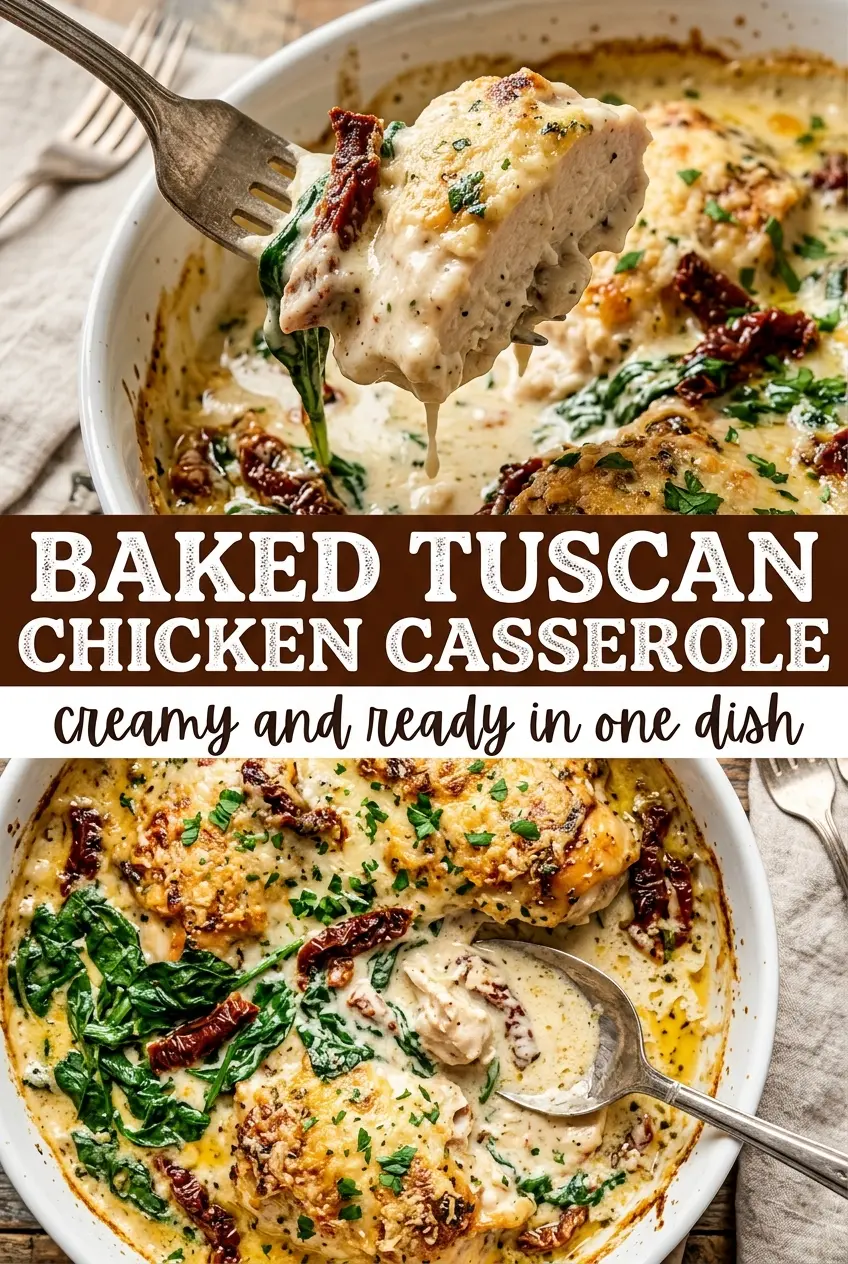
Baked Tuscan Chicken Casserole
Ingredients
Equipment
Method
- Preheat the oven to 400°F. Season the chicken thighs with salt, pepper, garlic powder, Italian seasoning, and smoked paprika.
- Heat olive oil in a large oven-safe skillet or braiser over medium-high heat. Sear the chicken skin-side down for 6-7 minutes until deeply golden.
- Flip the chicken and sear for 3 more minutes. Remove the chicken from the pan.
- In the same pan, cook the garlic and sun-dried tomatoes for 1 minute. Stir and keep them moving so the garlic doesn’t brown.
- Pour in the chicken broth and deglaze the pan. Stir to lift any browned bits from the bottom.
- Add the heavy cream, Parmesan, Italian seasoning, and red pepper flakes. Stir until the cheese melts and the sauce looks smooth and thickening.
- Return the chicken to the pan skin-side up. Transfer to the oven and bake uncovered for 20-22 minutes until the chicken reaches 165°F.
- Stir the baby spinach into the hot sauce until wilted. Fold gently so the spinach disperses through the creamy base.
- Garnish with fresh basil and serve. Let it stand for 3 minutes so the sauce settles into a silky pool.