Golden baked Greek lemon chicken comes out with crisp edges, juicy meat, and pan juices that taste like they’ve been working all afternoon, even though the oven does most of the job. The chicken skin picks up color fast at 425°F, while the lemon, garlic, and oregano reduce into a bright, savory glaze that clings to every piece.
What makes this version work is the balance between acid, fat, and enough roasting heat to caramelize without drying out the meat. The marinade is strong enough to season the chicken past the surface, but it still needs that brief rest so the lemon and garlic can settle in. A little broth in the pan keeps the drippings from scorching and gives you enough liquid to baste the chicken halfway through, which is where the flavor turns from good to memorable.
Below, I’ve included the part that matters most when you want deeply browned chicken instead of pale, steamed pieces, plus a few smart swaps if you need to adjust for what’s in your kitchen.
The chicken came out beautifully browned and the lemon-garlic juices at the bottom of the pan were incredible over rice. I marinated it for about an hour and the flavor went all the way through, not just on the skin.
Save this baked Greek lemon chicken for nights when you want crisp skin, caramelized lemon slices, and a pan sauce that practically makes its own side dish.
The Mistake That Keeps Greek Lemon Chicken Pale Instead of Roasted
The biggest miss with this kind of chicken is crowding it into a dish that’s too small or roasting it at a temperature that’s too gentle. When the pieces sit on top of one another, the skin steams before it ever has a chance to brown, and you lose the sharp, caramelized edges that make this dish worth repeating. A hot oven and enough space between the pieces are what turn the marinade into a proper roast.
The other thing that changes everything is the pan juices. Chicken broth looks minor on paper, but it keeps the drippings from burning while the lemon and garlic cook down into something spoonable instead of bitter. That little pool at the bottom also gives you a base to baste with halfway through, which deepens the color and keeps the meat from drying out.
- 425°F oven heat — This is hot enough to brown the skin before the chicken overcooks. Lower heat leaves you with soft skin and thin pan juices.
- Skin-side up placement — The skin needs direct heat from the start. If the chicken is turned too early, you lose the crackly finish.
- Broth in the pan — It protects the drippings and builds sauce. Water works in a pinch, but it won’t add the same depth.
- Halfway basting — Spoon the juices over the chicken once during roasting. That keeps the top glossy and helps the lemon-garlic mixture cling instead of drying onto the pan.
What the Lemon, Garlic, and Oregano Are Actually Doing Here

- Fresh lemon juice and zest — The juice brings brightness and helps season the chicken, while the zest carries the perfume that makes the pan smell unmistakably Greek. Bottled juice won’t give you the same lift, so fresh lemons matter here.
- Olive oil — This carries the herbs and helps the skin brown instead of drying out. A decent everyday olive oil is fine; save the fancy finishing oil for the table.
- Garlic — Minced garlic melts into the marinade and then softens in the oven until sweet and jammy. Don’t leave the pieces too coarse or they’ll scorch before the chicken is done.
- Dried oregano and thyme — Dried herbs hold up better in the oven than fresh ones inside the marinade. Fresh oregano belongs on top at the end, where its flavor stays bright.
- Chicken pieces with skin and bone — Bone-in pieces stay juicier and roast with better flavor than boneless cuts. If you use boneless thighs, cut the cooking time and watch the temperature closely.
Getting the Skin Brown and the Sauce Glossy at the Same Time
Building the Marinade
Whisk the olive oil, lemon juice, zest, garlic, oregano, thyme, smoked paprika, salt, and pepper until the mixture looks emulsified, then coat the chicken evenly. Thirty minutes of marinating is enough to season the surface and give the lemon time to work without turning the meat mealy. If you leave it much longer, the acid starts to change the texture on the outside before it’s had a chance to cook.
Arranging the Pan
Set the chicken skin-side up in a single layer and tuck the lemon slices around and under the pieces rather than piling them on top. That keeps the skin exposed so it can brown, while the lemons soften into the drippings instead of drying out on the surface. Pour the broth around the chicken, not over it, or you’ll wash the marinade off the skin before roasting even starts.
Roasting to the Right Color
Roast until the skin turns deep golden and the edges of the lemon slices look caramelized, then baste once halfway through with the juices from the pan. If the top is browning too fast before the chicken reaches 165°F, loosely tent the pan with foil for the last stretch. The chicken is ready when the juices run clear and the meat near the bone feels tender, not tight.
Finishing with the Pan Drippings
Let the chicken rest for a few minutes, then spoon the caramelized juices over the top before serving. This step matters because the broth, lemon, garlic, and browned bits in the pan are the built-in sauce, and they taste best when they stay with the chicken instead of being left behind. Fresh oregano at the end keeps the whole dish from feeling heavy.
How to Adjust This Baked Greek Lemon Chicken Without Losing the Character of the Dish
Make It Dairy-Free Without Changing a Thing
This recipe is naturally dairy-free, which is part of why it tastes so clean and bright. Keep the olive oil and broth as written, and you still get a rich pan sauce without any cream or butter getting in the way.
Use Boneless Thighs for Faster Weeknights
Boneless thighs work if you want a shorter cook, but they won’t give you the same dramatic roasted look or the same depth from the bones. Start checking early and pull them when they’re just cooked through so they stay juicy.
Swap the Broth for White Wine
A splash of dry white wine adds a sharper, more aromatic pan sauce if you want a little extra lift. Use part wine and part broth so the juices don’t get too aggressive, and keep the total liquid about the same so the drippings still have room to caramelize.
Stretch It for a Crowd
You can scale this up, but don’t overcrowd the pan. Use two baking dishes if needed so the chicken roasts instead of steaming, and rotate the pans once during cooking if your oven has hot spots.
Storage and Reheating
- Refrigerator: Store leftovers for up to 4 days. The skin softens, but the flavor in the juices deepens overnight.
- Freezer: It freezes well if you remove the lemon slices first. Wrap the chicken tightly with some of the pan juices so it doesn’t dry out.
- Reheating: Rewarm covered in a 325°F oven until hot through. Don’t use high heat, or the skin will tighten up and the garlic in the drippings can turn bitter.
Answers to the Questions Worth Asking
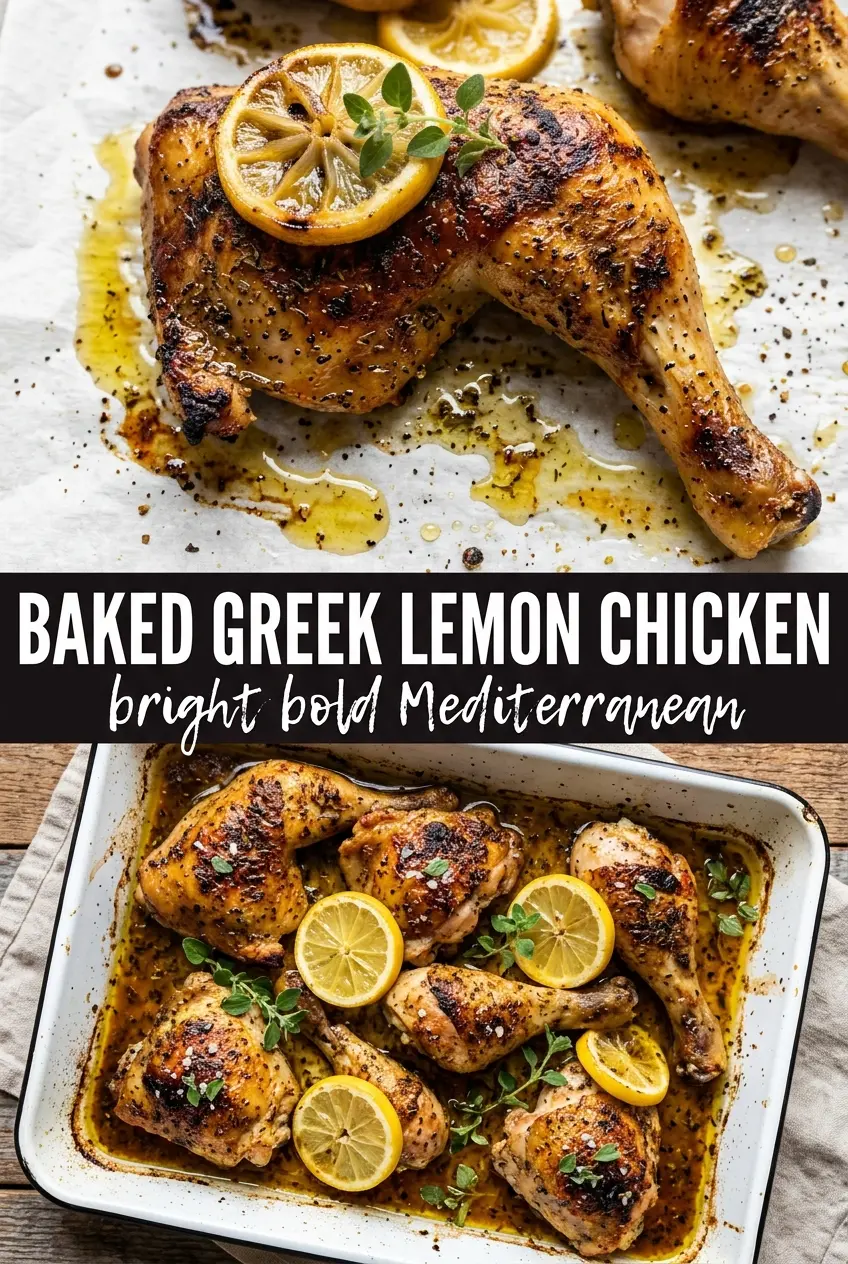
Baked Greek Lemon Chicken
Ingredients
Equipment
Method
- Whisk together olive oil, lemon juice, lemon zest, garlic, dried oregano, dried thyme, smoked paprika, salt, and cracked black pepper until combined.
- Place chicken pieces in a dish and coat thoroughly with the marinade; marinate for at least 30 minutes.
- Preheat oven to 425°F and arrange the marinated chicken skin-side up in a large roasting pan or baking dish.
- Pour chicken broth around the chicken, then tuck lemon slices around and under the pieces for even roasting.
- Roast for 40-45 minutes, basting with pan juices once halfway through, until the skin is deeply golden and internal temperature reaches 165°F.
- Spoon the caramelized pan drippings over the chicken right before serving to glaze the roasted pieces.
- Garnish with fresh oregano for a bright herbal finish.