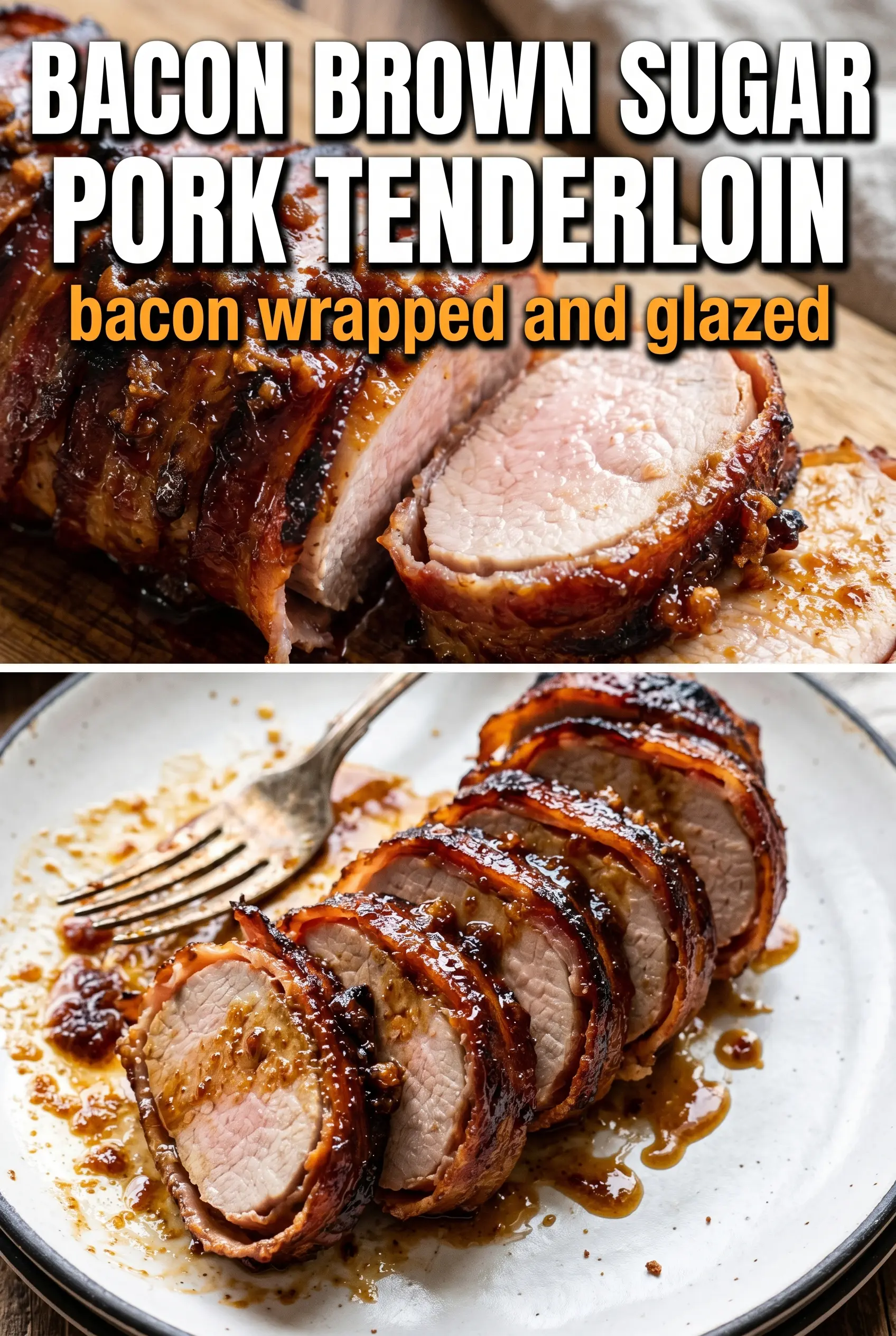
Bacon-wrapped pork tenderloin turns into something special fast: crisp bacon on the outside, juicy pink pork in the middle, and a brown sugar glaze that melts into a sticky, caramelized shell. It’s the kind of main dish that looks like you spent all afternoon on it, even though the actual hands-on work is quick and straightforward.
What makes this version work is the balance. The pork tenderloin stays lean and tender, while the bacon basts the meat as it roasts. The brown sugar glaze adds sweetness, but the Dijon, soy sauce, garlic powder, and smoked paprika keep it from tasting flat or one-note. If you’ve ever had bacon-wrapped pork that came out greasy or pale, the fix is simple: start with a hot oven, wrap the bacon snugly, and roast until the bacon can actually crisp instead of steaming.
Below, I’ve included the small details that matter most, from keeping the glaze from burning to choosing the right bacon thickness. Those are the things that separate a good pork tenderloin from one you’ll make again without needing to check the recipe.
The bacon got crisp all the way around and the glaze turned into this glossy, caramelized coating without burning. I used an instant-read thermometer and pulled it right at 145, and the pork stayed unbelievably juicy.
Pin this bacon brown sugar pork tenderloin for a juicy dinner with crispy bacon and a caramelized glaze.
The Detail That Keeps the Bacon Crisp Instead of Steaming
Pork tenderloin is lean, which is exactly why it can dry out if you overcook it by even a few minutes. Bacon adds protection, but it also creates a trap: if the oven runs too low or the strips are packed too loosely, the bacon renders slowly and stays soft instead of forming that crisp outer layer. A 400°F oven gives the bacon enough heat to brown while the pork cooks through before it loses its juiciness.
The other thing that matters here is spacing. Wrap the bacon snugly, but don’t overlap it so heavily that you build a thick blanket around the meat. Too much overlap leaves you with pale, chewy spots. A little overlap is fine; you want coverage, not insulation.
- Pork tenderloin — This cut cooks quickly and stays tender when you stop at 145°F. Don’t swap in pork loin without adjusting the timing; it’s thicker and needs longer heat, which changes the whole recipe.
- Bacon — Regular-cut bacon works best because it crisps in the time it takes the tenderloin to cook. Thick-cut bacon often needs extra time and can leave the pork overdone before the fat fully renders.
- Brown sugar — This is what gives the glaze its lacquered finish. Dark brown sugar works too and brings a deeper molasses note, but it can brown faster, so watch the edges closely.
- Dijon and soy sauce — These keep the glaze from tasting like straight sweetness. Dijon adds sharpness, and soy sauce adds salt plus a little depth that makes the pork taste seasoned all the way through.
Wrapping, Roasting, and Glazing Without Losing the Juice
Season the Pork First
Pat the tenderloins dry, then season them with salt and pepper before the glaze goes on. Dry surface = better browning. If the pork is damp, the glaze slides around and the bacon has a harder time adhering cleanly.
Build the Glaze and Brush It Lightly
Mix the brown sugar, Dijon, soy sauce, garlic powder, and smoked paprika until smooth, then brush on only half before the bacon goes over top. That first layer flavors the meat; the second layer finishes the bacon. If you slather on too much at the start, the sugar can drip off and burn in the pan instead of caramelizing on the pork.
Wrap the Bacon Tightly
Lay the bacon strips on the tenderloin with a slight overlap and secure the ends with toothpicks. The bacon should sit flush against the meat, not bridge across it. Loose strips shrink, pull away, and leave gaps where the pork can dry out.
Roast Until the Bacon Snaps at the Edges
Roast for 25 to 30 minutes, checking the internal temperature near the thickest part. Pull it at 145°F, even if the center still looks slightly rosy. If you wait for the pork to look fully opaque all the way through, it will go dry by the time the bacon finishes crisping.
Rest Before Slicing
Let the pork rest for 5 minutes before removing the toothpicks and slicing. That short rest keeps the juices where they belong instead of running out onto the cutting board. Slice across the grain for the cleanest, most tender pieces.
How to Adapt This Bacon Wrapped Pork Tenderloin for Different Dinners
Use maple instead of part of the brown sugar
Swap 1 tablespoon of the brown sugar for maple syrup if you want a softer, deeper sweetness. The glaze will be a little looser and it will caramelize faster, so keep an eye on the last 5 minutes of roasting.
Make it gluten-free
Use a certified gluten-free soy sauce or tamari. The flavor stays the same, and the glaze still gets the salty depth it needs without changing the texture of the finished pork.
Add heat without changing the method
Add 1/4 teaspoon cayenne or a pinch of red pepper flakes to the glaze. It doesn’t change the roasting time, but it cuts through the sweetness and gives the bacon a sharper finish.
Storage and Reheating
- Refrigerator: Store sliced pork in an airtight container for up to 3 days. The bacon softens a little, but the flavor holds up well.
- Freezer: Freeze tightly wrapped slices for up to 2 months. Thaw in the refrigerator overnight for the best texture; freezing whole is possible, but sliced portions reheat more evenly.
- Reheating: Warm in a 300°F oven, covered loosely with foil, until just heated through. High heat dries out the pork and can turn the glaze sticky in the wrong way.
Questions I Get Asked About This Recipe
Bacon-Brown Sugar Pork Tenderloin
Ingredients
Equipment
Method
- Preheat oven to 400°F and set out a roasting pan. Keep it hot so the bacon starts crisping as soon as the pork goes in.
- Season the pork tenderloins with salt and pepper. Rub them evenly so every bite has seasoning through the meat.
- Mix the brown sugar glaze ingredients in a bowl. Brush half of the glaze over the pork tenderloins so it can caramelize as it roasts.
- Wrap each tenderloin tightly in bacon strips, overlapping slightly, and secure the ends with toothpicks. Arrange seams on the underside to help the bacon stay in place.
- Place the tenderloins in the roasting pan and brush the remaining glaze over the bacon. Make sure the glaze touches the bacon so it caramelizes instead of just coating the meat.
- Roast for 25–30 minutes at 400°F until the bacon is crispy and the internal temperature reaches 145°F. Watch for a deep golden-brown bacon color and bubbling glaze at the edges.
- Rest the tenderloin for 5 minutes after roasting. This lets juices redistribute so the interior stays juicy when sliced.
- Remove toothpicks and slice the tenderloin into medallions. Serve once sliced so the bacon shell stays crisp.