Pico de gallo should taste bright, crisp, and tomato-forward, with just enough jalapeño heat and lime to make you reach for another chip. When it’s done right, the tomatoes stay chunky instead of collapsing into juice, the onion sharpness softens just enough, and every bite feels freshly cut. That balance is what turns a simple bowl of chopped vegetables into the condiment people keep spooning beside tacos, eggs, grilled meat, or straight onto tortilla chips.
The trick is in the cut and the drain. Roma tomatoes hold their shape better than juicy slicing tomatoes, but they still need their seeds and excess liquid removed or the salsa turns watery fast. A short rest after salting gives the onion and tomato time to season each other, and it also pulls out just enough moisture to bring the whole bowl together without making it soggy.
Below, I’ll show you the one step that keeps pico de gallo crisp, what each ingredient is doing, and how to adjust the heat without losing the fresh, clean taste that makes this version worth making on repeat.
I always had watery pico until I tried removing the tomato seeds first. This version stayed chunky, the lime flavor came through, and it was gone by the time the tacos were gone.
Save this fresh pico de gallo for tacos, chips, and eggs when you want a chunky salsa that stays crisp, not watery.
Why Most Pico de Gallo Turns Watery Before the Chips Are Gone
The biggest mistake with pico de gallo is treating the tomatoes like they’re the whole sauce. They’re not. They’re the base, but the liquid inside them is what makes the bowl slump if you don’t deal with it first. Roma tomatoes give you more flesh and less juice, which is exactly what you want here, but even they need to be seeded and diced with a little care.
The other part people miss is the rest time. Right after mixing, the onion can taste sharp and the salt hasn’t had time to pull the flavors together. After 15 minutes, the bowl tastes cleaner and more integrated, and the tomatoes give up just enough juice to season the rest without flooding it.
- Roma tomatoes — These hold their shape better than most tomatoes. If you use a juicier variety, seed them even more aggressively or the mixture will turn soupy.
- White onion — It brings the sharp bite that makes pico de gallo taste authentic. Red onion works, but it’s sweeter and a little less traditional.
- Jalapeños — They add heat without taking over. Leave some seeds in for more kick, or remove them all for a milder bowl.
- Fresh lime juice — Bottled lime juice tastes flat here. Fresh juice keeps the whole salsa bright.
Building the Bowl So It Stays Crisp, Not Soupy
Cut the Tomatoes for Structure
Core the tomatoes, then dice them into small, even pieces and let the extra seeds and juice run off before they go into the bowl. If you skip this, the salt will pull even more liquid out later and the mixture will loosen fast. You want pieces that hold their edges after tossing, not a soft tomato salad.
Balance the Heat and Sharpness
Mince the jalapeños finely so the heat spreads evenly instead of landing in one aggressive bite. Finely diced white onion should be small enough to season the whole bowl without feeling crunchy and raw in a bad way. If your onion is especially strong, rinse the diced pieces briefly in cold water and drain well before adding them.
Let the Salt Do Its Work
Once everything is mixed, let the pico sit for at least 15 minutes before serving. The salt draws the flavors together and softens the edges of the onion and lime. If you serve it immediately, it’ll taste separate and a little harsh; if you wait too long, especially with very ripe tomatoes, it can get loose, so serve it while it still looks glossy and chunky.
Three Ways to Adjust Pico de Gallo Without Losing the Fresh Bite
Milder pico de gallo for kids or heat-sensitive guests
Remove every seed and white rib from the jalapeños, or use just one pepper instead of two. You’ll keep the fresh pepper flavor without the back-of-the-throat burn, and the lime will still keep it lively.
Low-sodium version
Cut the salt back to 1/2 teaspoon and let the bowl rest, then taste before serving. The lime and tomato will still read bright, but the flavor will be less rounded, so this version works best when you’re using it as a topping rather than eating it by the spoonful.
No-cilantro variation
If cilantro tastes soapy to you, leave it out and add a little extra onion and a touch more lime. You’ll lose that classic herbal finish, but the salsa will still taste fresh and balanced instead of muddy.
Storage and Reheating
- Refrigerator: Store covered for up to 2 days. It will release more liquid as it sits, so drain off the excess before serving.
- Freezer: Don’t freeze it. The tomatoes turn mushy and the onion loses its snap.
- Reheating: This isn’t a reheated dish. Serve it cold or at room temperature, and stir it again right before serving so the juices redistribute evenly.
Answers to the Questions Worth Asking
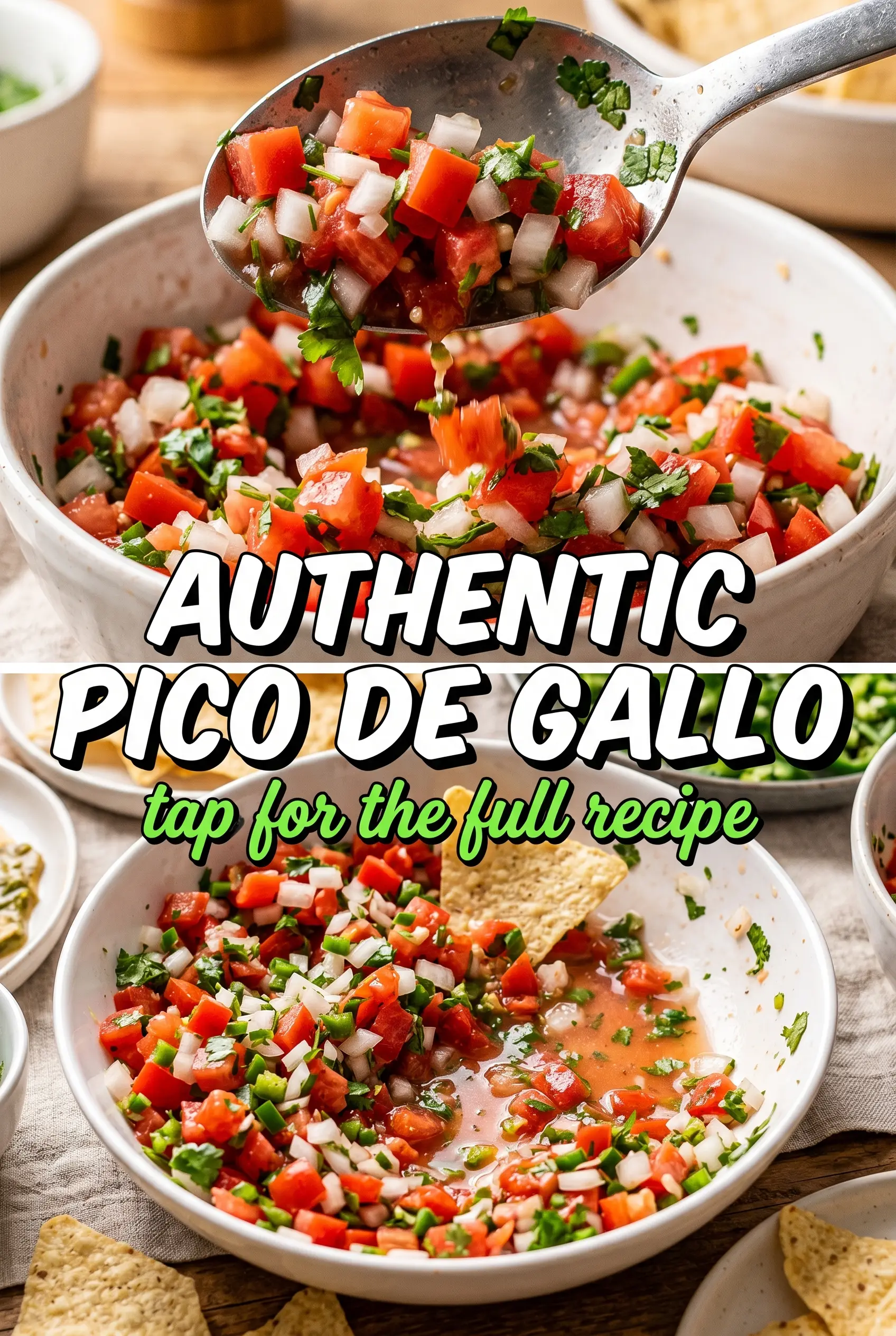
Authentic Pico de Gallo
Ingredients
Method
- Dice the Roma tomatoes, removing excess seeds and juice, then place them in a bowl. Use an even dice so the salsa stays chunky.
- Finely dice the white onion and add it to the bowl with the tomatoes. Keep the pieces small for balanced bites.
- Mince the jalapeños and cilantro, then add them to the bowl. Spread them around so the heat and herb flavor are evenly distributed.
- Squeeze the lime juice over the mixture and sprinkle with salt and black pepper. Toss lightly so seasoning coats the tomatoes.
- Gently toss all ingredients together until combined. Avoid crushing the tomatoes to keep the texture bright and crisp.
- Let the salsa sit for at least 15 minutes before serving. This resting time lets the flavors meld while the mixture remains fresh.
- Serve pico de gallo as a condiment with tacos, chips, or eggs. Spoon it over toppings for a chunky, fresh finish.